The humming of a power grid is a sound most people never notice until it stops. It is the invisible heartbeat of a modern city, the steady pulse that keeps refrigerators cold, hospital ventilators rhythmic, and the digital world accessible. When that pulse falters, the silence is heavier than any noise. In the high-stakes chess match between Washington and Tehran, that silence has become the primary weapon.
Recent reports and declarations from the American side suggest that the strategic dismantling of Iranian infrastructure is no longer a theoretical exercise. It is a reality that has already begun. The message is blunt: the first two waves of "knocking out" critical systems have landed. A third is looming. This isn't just about blowing up concrete bunkers or intercepting shipments; it is about the systematic deconstruction of a nation's ability to function.
The Anatomy of a Blackout
Consider a family in a middle-class neighborhood in North Tehran. They aren't the generals moving pieces on a map or the diplomats arguing in Geneva. They are people trying to heat dinner. When the "first wave" hits—metaphorically or through the silent intrusion of a cyber-weapon—it doesn't look like a Hollywood explosion. It looks like a flickering LED bulb. It looks like a bank's ATM screen turning blue.
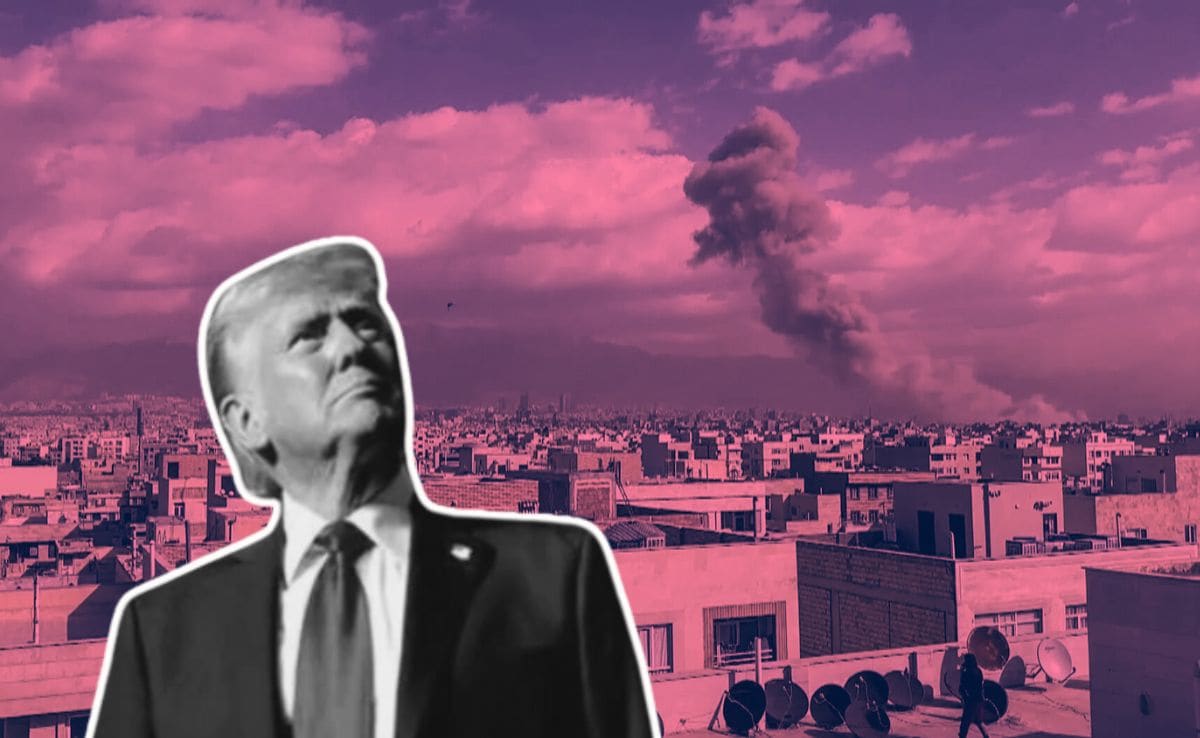
Modern warfare has moved past the era of the front line. The new front line is the fiber-optic cable buried beneath the street. When Donald Trump speaks of everything being "knocked out," he is referencing a sophisticated capability to paralyze the nerves of a country. This involves targeting the Supervisory Control and Data Acquisition (SCADA) systems that manage everything from water purification to the flow of natural gas.
The complexity of these systems is their greatest vulnerability. Imagine a giant clock with ten thousand gears. If you jam just one, the hands stop moving. In the context of the current tensions, the "knocking out" refers to this mechanical paralysis. It is a demonstration of dominance that says: we don't need to occupy your streets if we can simply turn off your life support.
The Invisible Tides
There is a psychological weight to this kind of pressure that traditional sanctions fail to achieve. Sanctions are a slow erosion, a grinding down of the economy over years. Kinetic or digital strikes against infrastructure are an immediate shock. They create a sense of profound insecurity.
The warnings of a "3rd Wave" serve a specific purpose in the theater of international relations. It is the threat of the unknown. If the first wave disrupted communications and the second wave compromised energy production, the third wave represents the total dark. It is the final gear in the clock.
This strategy relies on a concept known as "escalation dominance." It is the ability to increase the pressure to a level that the opponent cannot match. For Iran, the dilemma is agonizing. To retaliate is to invite the third wave. To stay silent is to accept the slow dismantling of their sovereign capabilities.
Behind the Rhetoric
The language used in these warnings—"Everything's knocked out"—is intentionally broad. It creates a vacuum of information that the opponent’s fear fills. While the official narrative focuses on military targets and nuclear facilities, the reality of modern infrastructure means the lines are blurred. A power plant that fuels a research facility also lights a school. A server that handles military data might also manage the regional food supply chain.
The technical reality of a "third wave" likely involves a deeper dive into the digital architecture of the state. We are talking about the potential for long-term, persistent outages. It is the difference between a fuse blowing and the entire house being rewired to fail.
Critics often argue that this approach risks a humanitarian catastrophe. They aren't entirely wrong. When a nation's "everything" is knocked out, the most vulnerable are the first to feel the cold. The master storytellers in Washington, however, view this as a necessary deterrent—a way to win a war without ever putting a boot on the ground. It is the ultimate expression of technological leverage.
The Human Cost of High-Level Chess
We often talk about these events in the abstract, using terms like "strategic assets" or "geopolitical leverage." But for the person on the ground, "geopolitics" is just a fancy word for why the water stopped running.
In the hypothetical but very real scenario of a total blackout, the social fabric begins to fray. People stop trusting the systems they rely on. They stop trusting the government that promised to protect those systems. This internal pressure is exactly what the "waves" are designed to produce. It is a siege conducted through code and signals rather than walls and cannons.
The current trajectory suggests that the window for a diplomatic off-ramp is narrowing. The 3rd Wave isn't just a threat; it is a countdown. Each day that passes without a resolution is a day closer to a silent, digital midnight.
The terrifying thing about this new form of conflict is that there are no sirens. There is no warning shot across the bow. There is only the sudden realization that the world has stopped working. You reach for a light switch, and nothing happens. You try to call a loved one, and the network is dead.
The strategy is clear: make the cost of defiance higher than the cost of concession. But in the dark, it is hard to see the way out. The third wave remains suspended over the horizon, a massive weight held by a single, fraying thread. If that thread snaps, the silence that follows will be the loudest thing anyone has ever heard.
The world waits to see if the lights come back on, or if the next wave will wash away the last remnants of the grid.


