The desert outside Kashan does not forgive. It is a place of white heat and absolute silence, where the horizon dissolves into a shimmering haze of salt and dust. But beneath that scorched earth, buried under layers of concrete and steel that would make a pharaoh envious, lies the beating heart of a global crisis.
When the reports began to trickle out through the state-run media in Tehran, they carried the dry, mechanical tone of a ledger. Iran’s nuclear ambassador, Mohsen Naziri Asl, spoke of "vile acts" and "breaches of international law." He pointed a finger across the Mediterranean and over the Atlantic, accusing the United States and Israel of a coordinated aerial assault on the Natanz enrichment facility.
To the world, it was another headline in a decades-long game of geopolitical chess. To the engineers working three stories below the desert floor, it was the sound of a world ending.
Imagine, for a moment, a technician named Arash. He is not a warmonger or a spy; he is a man who studied fluid dynamics and spent his youth obsessed with the elegance of a spinning top. In this hypothetical but grounded reality, Arash is monitoring a bank of monitors that track the health of thousands of IR-1 centrifuges. These machines are delicate. They spin at speeds that defy intuition, hovering on a needle-thin margin between scientific achievement and catastrophic mechanical failure.
At these speeds, the slightest vibration is a death sentence.
When the impact came, it wasn't just a noise. It was a pressure wave that traveled through the bedrock, a physical punch delivered by a force miles above. The lights flickered. The high-pitched whine of the spinning rotors shifted—a sickening, grinding dissonance that told Arash his life's work was shattering into a million pieces of carbon fiber and steel.
The Invisible War for the Atom
The strike at Natanz represents more than a tactical maneuver. It is the latest chapter in a conflict that has moved beyond the traditional battlefield. This is a war of invisible stakes. While the diplomats in Vienna and Geneva trade barbs over the nuances of the Joint Comprehensive Plan of Action (JCPOA), the reality on the ground is dictated by kinetic energy and cyber-warfare.
Ambassador Naziri Asl’s allegations weren't just about broken machines. He was describing an erosion of the very idea of sovereignty. When a nation’s most secure facility—a fortress encased in mountains—can be reached by a missile or a drone, the message is clear: there is no such thing as a "safe" distance.
The complexity of the Natanz site is hard to overstate. It isn't a single building; it is a subterranean city. To reach the enrichment halls, one must pass through multiple security checkpoints, heavy blast doors, and airlocks designed to contain radioactive gas. The facility is the crown jewel of Iran’s nuclear program, a symbol of national pride and technological defiance.
But pride is a fragile shield against a bunker-buster.
Consider the physics of the alleged strike. For a weapon to penetrate the meters of reinforced concrete and specialized soil covering Natanz, it requires more than just explosive power. It requires intelligence. It requires the kind of precision that knows exactly where the ventilation shafts are, where the power conduits run, and where the structural weaknesses lie.
The Human Cost of a Binary Conflict
We often talk about these events in the abstract. We discuss "breakout times," "kilograms of enriched hexafluoride," and "enrichment percentages." These are cold, bloodless metrics. They ignore the human beings caught in the gears.
When a facility like Natanz is targeted, the risk isn't just a setback in a research timeline. The risk is an environmental and humanitarian disaster. Hexafluoride gas is toxic. If the containment systems fail, the desert wind becomes a carrier of poison. The villages surrounding the facility—places where families raise goats and children play in the dust—don't have the luxury of debating the merits of the NPT (Non-Proliferation Treaty). They simply breathe the air.
The ambassador’s rhetoric was fueled by this sense of violation. He claimed the strikes were an attempt to "sabotage the peaceful progress of a sovereign nation." Whether or not you believe the "peaceful" part of that sentence depends entirely on which flag you stand under. But the "sabotage" part is undeniable.
This is the central tension of our age. We have built a world where the most powerful weapons are often the ones you cannot see until they explode. It started with Stuxnet, the digital worm that famously caused these same Natanz centrifuges to spin themselves to death while the monitoring screens showed everything was normal. That was a ghost in the machine. Now, if the allegations are true, the ghosts have traded their code for kinetic payloads.
The Shadow of the Past
To understand why the world is holding its breath, you have to look back. This isn't the first time Natanz has bled. There have been "accidental" fires, power outages that lasted for days, and the targeted assassinations of the scientists who walked its halls.
Each event adds a layer of scar tissue to the Iranian psyche. It creates a cycle of paranoia and retaliation that makes the work of diplomacy nearly impossible. When a nation feels cornered, its response is rarely to surrender. It is to dig deeper. It is to build more centrifuges, more hidden facilities, and more resentment.
The US-Israeli alliance, for its part, views the situation through the lens of existential survival. For them, a nuclear-armed Iran is not a theoretical problem for the next generation; it is a clear and present danger that justifies almost any means of prevention. They see Natanz not as a laboratory, but as a ticking clock.
And so, the strikes happen. The ground shakes. The ambassadors give their speeches.
The Friction of Progress
What happens the day after?
The rubble is cleared. The broken centrifuges are carted away as scrap. New ones, often more advanced and faster than their predecessors, are moved in. This is the great irony of the Natanz saga: every attempt to destroy the program seems to accelerate its evolution. Sabotage acts as a brutal form of natural selection. Only the most resilient systems survive, and the engineers learn how to harden their defenses for the next time the sky falls.
The ambassador’s words in the aftermath were designed to evoke a sense of global outrage. He appealed to the International Atomic Energy Agency (IAEA), calling for an investigation and a condemnation of the "aggressors." But in the hallowed halls of the UN, words often carry less weight than the reality of a crater.
The truth is that we are living in a period of unprecedented volatility. The old rules of engagement—where wars were declared and borders were clearly defined—have evaporated. We are in a state of permanent, low-level friction. It is a world of deniable operations and "unattributed" explosions.
The Weight of the Silence
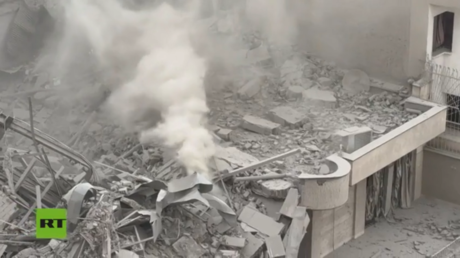
Back in the desert, as the sun sets over the salt flats, the silence returns. The smoke from the impact site dissipates into the darkening sky. Inside the facility, the surviving machines continue their relentless, invisible work. They spin. They separate. They concentrate.
There is a specific kind of loneliness in that sound. It is the sound of a species that has mastered the fundamental building blocks of the universe but has yet to master the impulse to destroy one another. We can split the atom, but we cannot seem to bridge the gap between two people sitting across a table.
As the news cycle moves on to the next crisis, the people of the region are left with the fallout—literal and metaphorical. The ambassador's allegations will be filed away in a cabinet of grievances, a list that grows longer with every passing year. The technicians will go back to their monitors, their eyes scanning for the next flicker in the power grid, their ears strained for the next sound that doesn't belong in the deep, dark earth.
The most terrifying thing about the Natanz strike isn't the explosion itself. It is the realization that we have reached a point where such an event is almost expected. It is the normalization of the unthinkable.
Somewhere in that facility, a single centrifuge continues to whirl, a silver blur in the fluorescent light, carrying within it the terrifying potential of both total illumination and total darkness.