The glow of a smartphone screen in a dark room is a modern campfire. It draws thousands of people into a shared space, a digital circle where the boundary between the viewer and the performer dissolves into a stream of scrolling text and colorful emojis. In this space, the "streamer" isn't just a content creator; they are a constant companion, a chaotic friend, a god of their own tiny, high-definition universe.
But when the camera leaves the bedroom and enters the driver’s seat, that universe begins to bleed into our physical reality. The stakes shift. The pixelated laughter of a chat box doesn't weigh as much as two tons of steel moving at forty miles per hour.
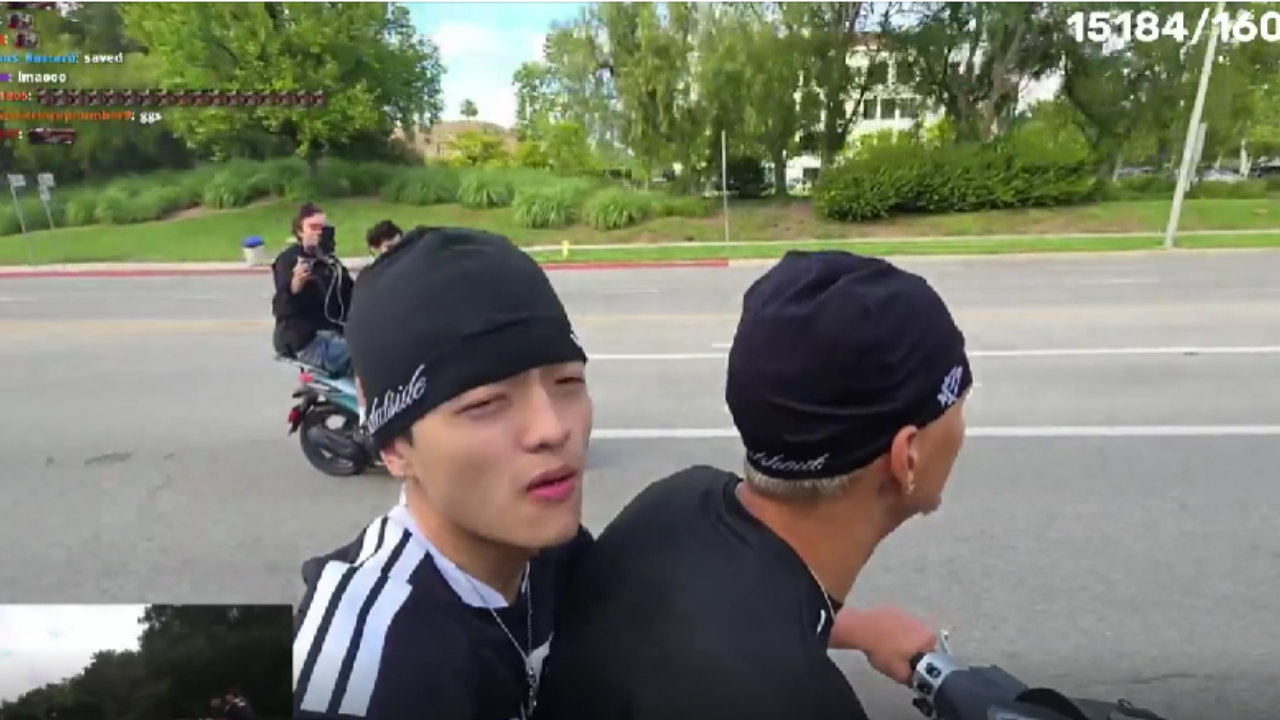
Recently, the digital campfire flickered violently. JasonTheWeen, Marlon, and StableRonaldo—names that carry the weight of empires in the Twitch and streaming communities—found themselves at the center of a storm that wasn't generated by a video game glitch or a scripted prank. It was a storm of real-world physics and public safety. While live-streaming to an audience of thousands, the trio was captured on camera casually bypassing the fundamental rules of the road. A red light ignored. A stop sign treated like a suggestion.
To the uninitiated, it might seem like a minor traffic infraction, the kind of thing handled by a ticket and a lecture. But in the architecture of modern celebrity, these moments are cracks in the foundation.
The Dopamine Trap
Streaming is a relentless beast. It demands more. More energy, more risk, more "content." To keep the numbers climbing, to keep the "LULs" and "W"s flooding the chat, the environment must remain high-stakes. When you are sitting in a car with your friends, and thirty thousand people are watching your every move, the mundane act of driving becomes a stage.
The pressure to perform is an invisible passenger in the backseat. It whispers that a smooth, law-abiding commute is boring. It suggests that a little bit of rebellion, a "main character" moment where the rules don't apply, is exactly what the audience wants.
Consider a hypothetical driver, let’s call him Leo. Leo is twenty-one, charismatic, and his bank account is growing faster than he can track. He isn't a "bad" person. He’s just a person who has been rewarded, over and over, for pushing boundaries. In his world, the digital world, consequences are often temporary. A "ban" lasts three days. A "cancelation" lasts a week. The internet has a short memory, and the algorithm favors the bold.
But the asphalt doesn't care about your sub-count.
When Leo—or in this case, Jason, Marlon, or Ronaldo—decides that a stop sign is an optional pause in their narrative, they are betting against a tragedy they cannot control. They are betting that the intersection is empty. They are betting that the mother driving home from a late shift or the teenager on a bicycle isn't entering that same space at that same millisecond.
The Weight of Two Tons
We have become desensitized to the car. We treat it like an extension of our living rooms, a mobile office, a recording studio. We forget that every time we turn the key, we are taking responsibility for a lethal instrument.
The statistics aren't just numbers; they are lives interrupted. In the United States, intersection-related accidents account for a staggering percentage of traffic fatalities. Many of these occur because someone thought they had the "right of way" of convenience. When a streamer runs a red light on camera, they aren't just breaking the law; they are broadcasting a tutorial on negligence.
The danger isn't merely the physical impact of a potential crash. It is the cultural impact.
These creators have audiences composed largely of young, impressionable viewers. These are the "next-gen" drivers, the kids who look to JasonTheWeen or StableRonaldo for the blueprints of how to act, how to speak, and how to navigate the world. When a role model treats a red light like a minor inconvenience for the sake of "content," they are effectively telling their audience that safety is secondary to entertainment.
It creates a vacuum of accountability. If the biggest stars on the platform can flout the rules of the road without immediate consequence, why should the viewer care about their local traffic laws? It is a slow erosion of the social contract.
The Invisible Stakes
There is a specific kind of silence that follows a car accident. It is the ringing in the ears, the smell of burnt rubber and deployed airbags, the sudden, terrifying realization that the world has shifted from "content" to "catastrophe."
The streamers involved in this recent controversy have faced a wave of backlash, and rightfully so. The "clip" of the incident circulated not as a highlight reel, but as evidence. In the cold light of a screen recording, the bravado of the stream evaporates. What remains is a group of young men in a car, acting with a level of recklessness that belies their influence.
The invisible stakes are the lives they didn't hit.
We often judge the severity of an action by its outcome. If no one was hurt, we call it a "mistake." If someone dies, we call it a "crime." But the intent and the action remain the same in both scenarios. The only difference is luck. And relying on luck while piloting a vehicle is a form of arrogance that the public is increasingly unwilling to tolerate.
The streaming industry is at a crossroads. For years, it has operated in a "Wild West" atmosphere where the rules are written as they go. But as the platforms grow and the stars become household names, the "it's just a prank" defense is losing its power.
We are seeing a shift in how we view digital responsibility. The "human element" here is the realization that these streamers are not invincible avatars. They are citizens. They share the same roads we do. They breathe the same air. And their "content" does not give them a VIP pass to endanger the public.
The Mirror of the Chat
If you watch the VODs of these incidents, you see a fascinating, often disturbing, split in the audience. Half the chat is screaming "L," "CLIPPED," or "COPS," reveling in the chaos. The other half is voicing genuine concern, calling out the danger, and pleading for the driver to focus.
This internal conflict within the fan base shows that the audience is often more mature than the creator they are watching. The viewers recognize the reality of the situation even when the person behind the wheel is blinded by the lights of fame.
It is a lonely feeling to be the one voice of reason in a room of thirty thousand people cheering for a disaster. But that voice is the only thing keeping the community grounded.
The backlash against JasonTheWeen, Marlon, and StableRonaldo isn't about "hating" or "cancel culture." It is about a collective demand for growth. It is an expression of the fear that someone we enjoy watching might, in a moment of staged adrenaline, do something that can never be undone.
Beyond the Ticket
What happens after the stream ends?
The clips remain. The headlines fade. But the precedent is set.
True maturity in the digital age isn't about avoiding "getting caught." It’s about the decisions made when the camera is off—or, more importantly, the decisions made when the camera is on and the pressure to perform is at its peak.
We live in a world where the line between "private citizen" and "public figure" has been blurred into oblivion. Everyone with a smartphone is a broadcaster. Everyone with a car is a pilot.
The real story here isn't a traffic violation. It is the struggle of young people who have been given the keys to the kingdom before they have learned how to drive. It is the story of an industry that rewards "edgy" behavior and then acts surprised when that edge cuts someone.
There is no "undo" button in the physical world. There is no "respawn" at the last save point. There is only the road, the rules that keep us from colliding, and the hope that the people we watch through our screens remember that we are out here too.
The next time a light turns red, the choice isn't just about a signal. It’s a choice between the fleeting thrill of a viral moment and the quiet, heavy responsibility of being a human being among other human beings. The camera can capture the action, but it can never capture the weight of the silence that follows a mistake you can't take back.