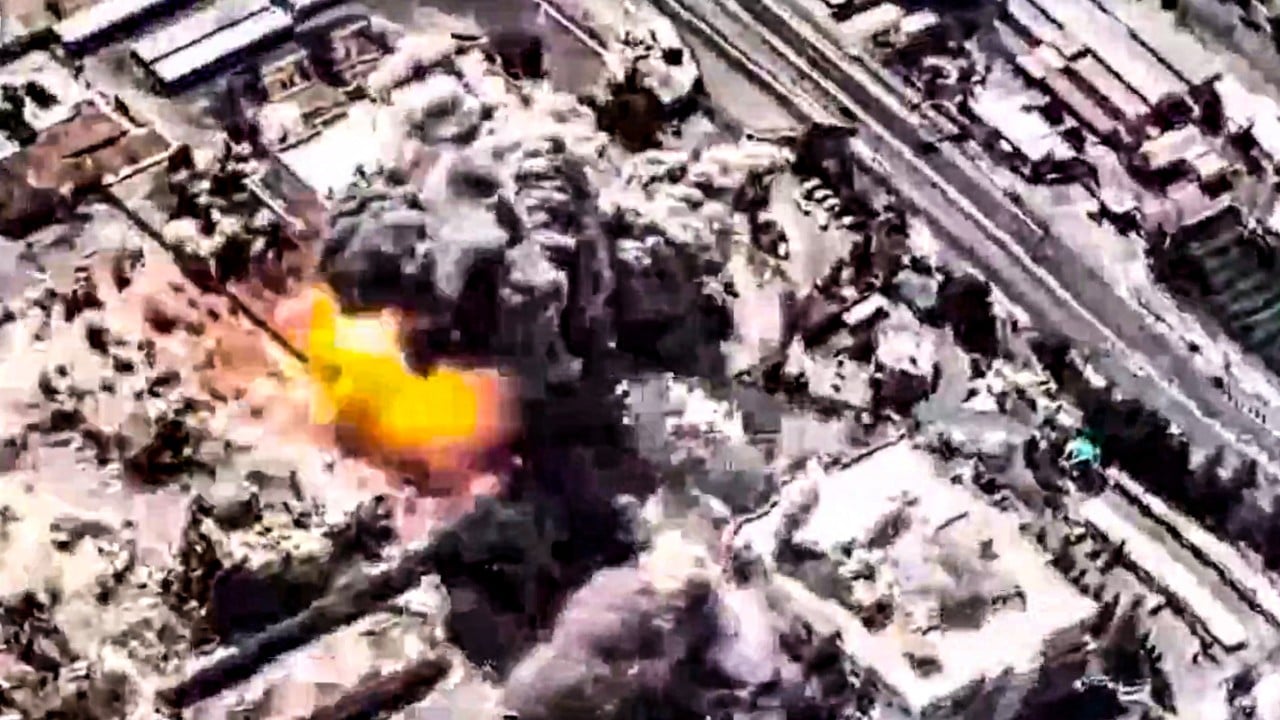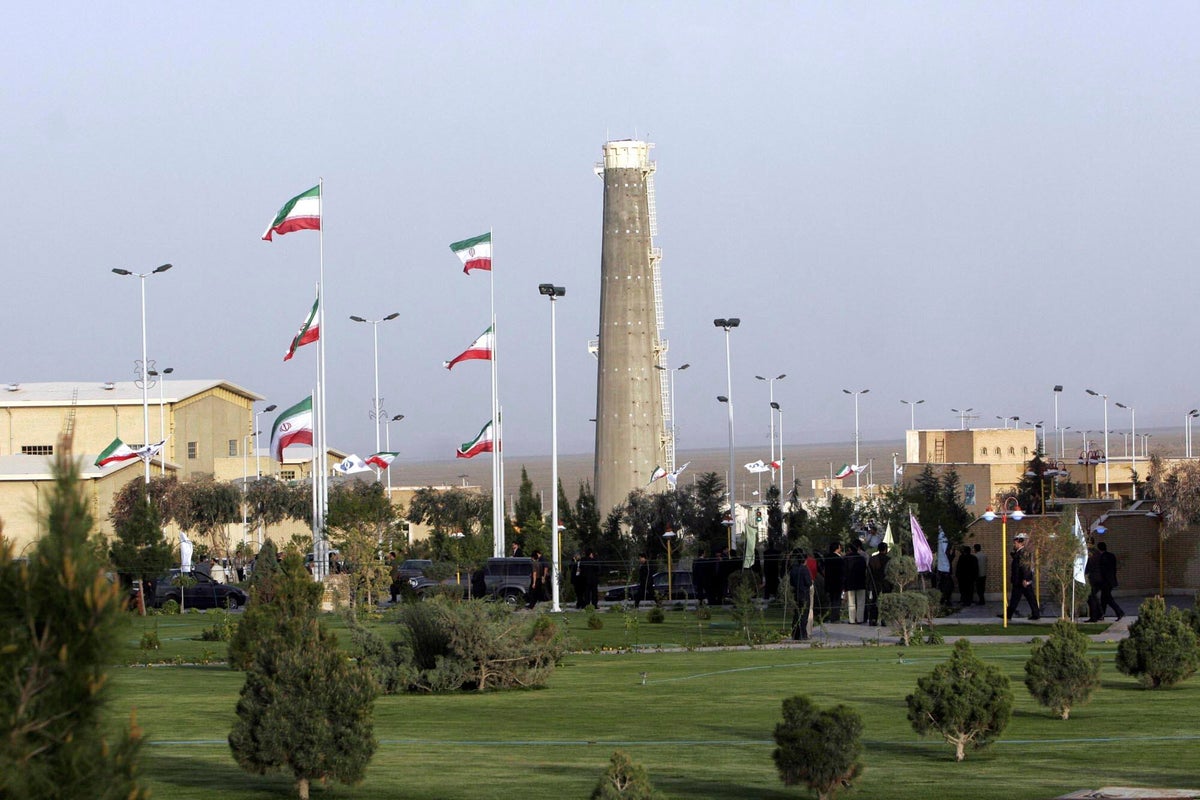
The headlines are bleeding again. "Airstrikes at Natanz." "Regional Tensions Boil." "Nuclear Ambassador Alleges Sabotage." It is the same tired script we have been reading since the early 2000s. The media treats every flickering light bulb in the Iranian desert like a countdown to Armageddon.
They are missing the point. Entirely. Also making headlines in related news: Finland Is Not Keeping Calm And The West Is Misreading The Silence.
If you believe an airstrike on the Natanz enrichment facility is a strategic setback for a modern nuclear program, you are living in 1981. You are thinking about the Osirak reactor in Iraq—a single, vulnerable point of failure. Iran’s nuclear infrastructure is not a building; it is a distributed network of intellectual property, hard-won engineering expertise, and redundant, subterranean geography.
Stop asking if the facility was hit. Start asking why the Iranians want you to look at it. More information regarding the matter are detailed by Associated Press.
The Myth of the Kinetic Solution
The "lazy consensus" among defense analysts is that kinetic action—dropping heavy ordnance on a concrete roof—buys time. It doesn't. In the age of advanced materials science and decentralized manufacturing, kinetic strikes are often nothing more than an expensive way to accelerate a program's evolution.
When you blow up a centrifuge hall, you don't destroy the knowledge of how to build a centrifuge. You actually force the engineers to iterate. You move them from the older IR-1 models to the more resilient, more efficient IR-6 or IR-8 designs. You provide the political justification for moving operations deeper underground, into facilities like Fordow, which are carved into the sides of mountains that even a GBU-57 Deep Penetrator struggles to crack.
I have spent decades watching intelligence agencies map these sites. The obsession with Natanz is a relic. It’s the "loud" part of the program. It’s where the IAEA cameras sit. It’s where the ambassadors make their speeches. It is a stage.
Why Sabotage Is a Sign of Weakness
The constant allegations of "US-Israeli airstrikes" or "cyber-sabotage" at Natanz are a form of geopolitical theater that serves both sides.
- For the West: It projects an image of control. It suggests that a few well-placed missiles or a clever bit of code like Stuxnet can pause history.
- For Tehran: It creates a narrative of victimhood and "resistance" that fuels internal nationalism. It allows them to explain away technical failures as foreign interference.
The reality? Most "sabotage" events are just as likely to be the result of a rushed procurement cycle or the use of substandard Chinese industrial components. When a power grid fails at a high-voltage facility, it’s easier to blame the Mossad than it is to admit your domestic electrical engineering is fraying under the weight of a decade of sanctions.
The Decentralization of Enrichment
We need to talk about the physics of the $UF_6$ cycle. The "competitor" narrative assumes that if you hit the enrichment hall, the "fuel" disappears.
It doesn't.
Enrichment is a process of refinement, not a single-step manufacture. Iran has mastered the cascade. Once you understand the math behind the Taylor expansion of the separation power, you realize that the physical footprint required to reach 60% or 90% enrichment shrinks as the concentration increases.
$$SWU = V(N_p)P + V(N_t)T - V(N_f)F$$
As the feed material ($F$) gets richer, the number of Separative Work Units ($SWU$) needed to reach weapons-grade ($N_p$) drops precipitously. You don't need a massive hall at Natanz to finish the job. You need a basement. You need a nondescript warehouse in a Tehran suburb.
By the time an ambassador is screaming about airstrikes at a known, monitored facility, the high-enriched material is likely already somewhere else. Natanz is the distraction. The real work happens in the shadows where there are no IAEA seals and no satellite-tracked convoys.
The Intelligence Trap
People also ask: "If the US and Israel can hit Natanz, why don't they just destroy the whole program?"
This question is fundamentally flawed because it assumes "the program" is a physical object. You cannot bomb a PhD. You cannot assassinate a supply chain that has already been domesticated.
In my experience working within the intersection of signal intelligence and physical security, the biggest mistake an adversary can make is believing their own battle damage assessment (BDA). A hole in a roof is measurable. The shift in a nation's resolve or the secret acceleration of a clandestine backup site is not.
If an airstrike actually occurred at Natanz, it wasn't to stop a bomb. It was a signal. It’s a diplomatic note written in high explosives. But signals are often misinterpreted. The West thinks it’s showing strength; the Iranian hardliners see it as a green light to kick out inspectors and go dark.
The Technical Reality of 2026
We are now in an era where additive manufacturing (3D printing) of high-strength maraging steel and carbon fiber components is a reality. The "bottleneck" of centrifuge production that existed in 2010 has vanished.
If I am an Iranian nuclear engineer, I am not crying over a destroyed hall at Natanz. I am taking the insurance payout—political and financial—and setting up five smaller, modular facilities that you will never find on a satellite feed.
The "contrarian" truth is that every strike on Natanz makes the world less safe. Not because it provokes war, but because it pushes the program into a state of total opacity. We are trading visibility for the illusion of delay.
Stop Looking at the Desert
The fixation on Natanz is a security blanket for the "experts" who need a map coordinate to feel useful.
The real threat isn't a facility that everyone knows about. The real threat is the logic of the "Breakout Time" being a static number. It’s not. It’s a variable that depends entirely on what you don't see.
If there were airstrikes, they were a failure of imagination. They were an attempt to solve a 21st-century distributed-knowledge problem with 20th-century kinetic tools. It’s like trying to stop the internet by blowing up a single router in New Jersey.
The ambassador’s allegations aren't a warning of an impending nuclear crisis. They are a confirmation that the theater is still running, the actors know their lines, and the audience—the media and the public—is still looking at the wrong stage.
Stop reading the BDA reports. Start looking for the facilities that aren't on the map.
Go find the basements.