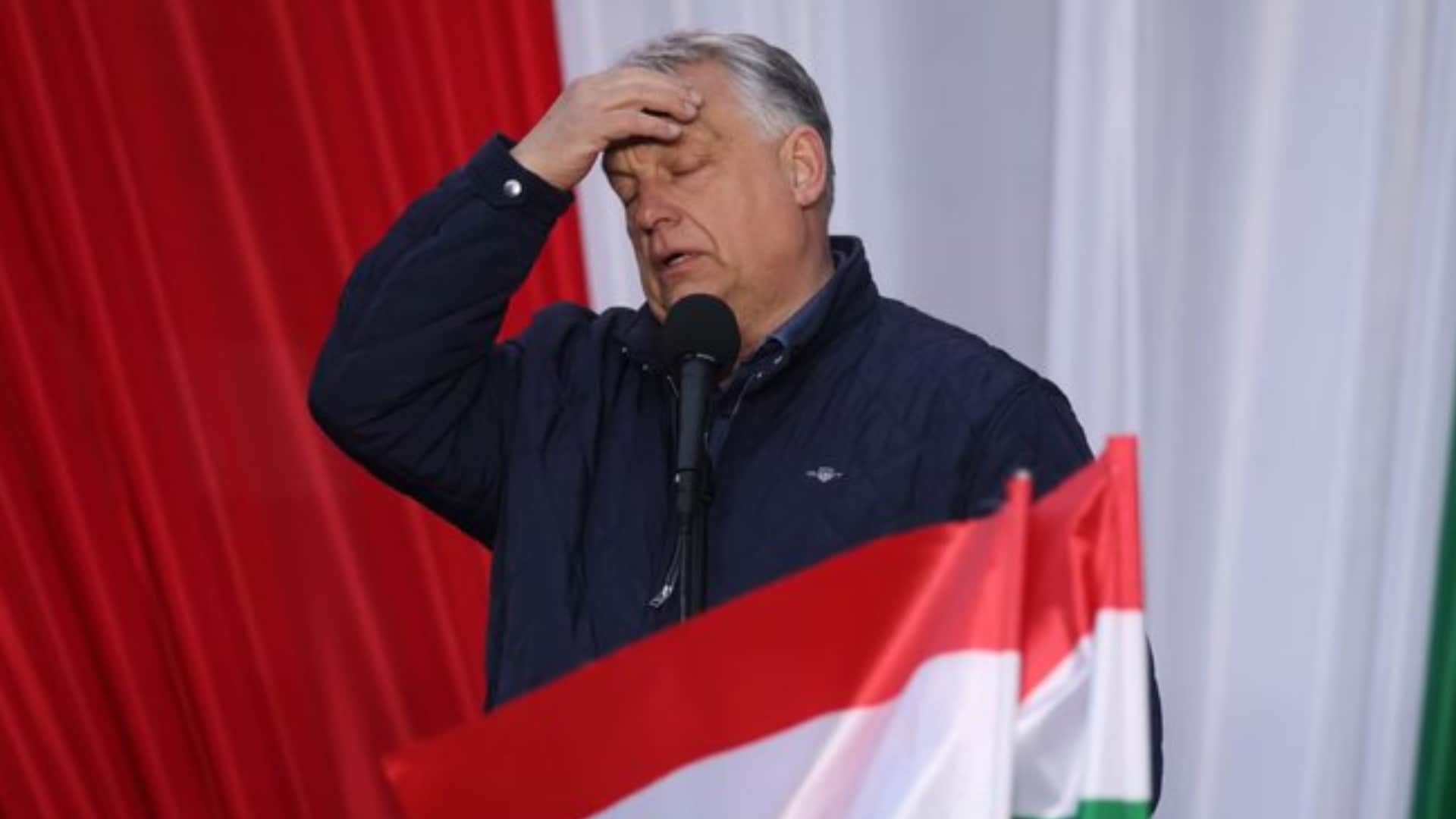
The international press is popping champagne over a ghost. If you believe the headlines, Hungary just woke up from a sixteen-year fever dream, shook off the "illiberal" shackles of Viktor Orbán, and is sprinting back into the warm, bureaucratic embrace of Brussels. They are calling it a "sweep from power." They are calling it a "victory for democracy."
They are wrong.
What the mainstream media misses—largely because they’ve spent a decade reporting from the inside of a Budapest specialty coffee shop—is that Orbán didn’t lose because his ideology failed. He lost because his mechanics broke. To view this as a sudden Hungarian appetite for Western neoliberalism is a catastrophic misreading of Central European gravity. If the new coalition thinks they have a mandate to turn Hungary into a carbon copy of the German Bundestag, they will be out of a job before the next budget cycle.
The Competence Trap
The lazy consensus suggests that the Hungarian electorate finally grew tired of "authoritarianism." This is a comforting lie Western journalists tell themselves to feel relevant.
In reality, voters in the Puszta don’t lose sleep over the independence of the judiciary. They lose sleep over the price of pork and the reliability of the electrical grid. Orbán’s Fidesz party didn't build a decade-plus hegemony on ideology alone; they built it on a promise of state-sponsored stability. When inflation hit 25% and the "price caps" on fuel and basic groceries started creating shortages rather than savings, the social contract didn't just bend—it snapped.
I’ve watched political machines from the Balkans to the Rust Belt collapse. It is never the "values" that kill them. It’s the logistics. Orbán stopped being the guy who protected your wallet and started being the guy who explained why it was empty.
The Opposition’s Poisoned Chalice
The media portrays the winning coalition as a "unified front for progress." In the industry, we call this a "suicide pact."
The only thing binding this new government together is a shared hatred for the man they just ousted. You have former far-right elements sitting at the same table as urban greens and old-school socialists. This isn't a government; it’s a hostage situation.
The "Lazy Consensus" view:
- Unity is strength.
- The EU will now flood Hungary with "recovery funds."
- Rule of law will be restored overnight.
The Contrarian Reality:
- Gridlock is the new baseline. Every major policy decision will be a street fight between coalition partners with diametrically opposed views on the economy.
- The EU Money Trap. Brussels doesn't give money for free. They want structural reforms that will, in the short term, cause massive pain to the very voters who just switched sides. If the new government cuts utility subsidies to please the IMF or the European Commission, the rural heartland will be begging for Orbán’s return within twelve months.
- Institutional Capture. Orbán didn't just rule; he terraformed. From the media authority to the universities and the largest land-holdings in the country, the "Deep State" in Hungary is painted Fidesz orange. Changing the Prime Minister is like changing the captain of a ship where the crew, the engines, and the map are all owned by the guy you just fired.
Why "Democracy" Is the Wrong Metric
People also ask: "Will Hungary now become a loyal EU member again?"
The question itself is flawed. It assumes that Orbán’s friction with Brussels was a personal quirk. It wasn't. It was a reflection of a deep-seated Hungarian skepticism of centralized power that predates the Soviet era.
Hungary has always been the "pebble in the shoe" of empires. Whether it was the Habsburgs, the Soviets, or now the technocrats in Brussels, the Hungarian political identity is built on being the difficult outlier. The new government can’t just "flip a switch" and become a compliant satellite state. If they try, they will be branded as "Brussels’ Puppets"—a label that is political cyanide in the Hungarian countryside.
The Economic Mirage
Let’s talk about the data the "swept from power" articles ignore.
The Hungarian economy is built on a high-risk gamble of foreign direct investment (FDI), specifically from German carmakers and Chinese battery manufacturers. Orbán played these two sides against each other with Machiavellian precision.
The "liberal" move now would be to pivot hard toward the West and distance the country from Beijing.
That would be economic suicide. Hungary’s infrastructure is now fundamentally tied to Eastern capital. You cannot "democratize" a battery plant that employs 10,000 people and relies on Chinese supply chains. If the new government attempts to "clean up" these deals for ideological purity, they will trigger a capital flight that makes the 2008 crisis look like a minor market correction.
The Authoritarianism Paradox
Here is the truth nobody admits: The Western obsession with "saving democracy" in Hungary actually kept Orbán in power longer.
By making him a pariah, the West allowed Orbán to frame every domestic failure as "foreign sabotage." Every time a Swedish politician or a DC think-tank criticized Budapest, Orbán gained five points in the polls. He fed on the antagonism.
The new government doesn't have a villain to hide behind. They are now responsible for the messy, unglamorous work of governing a country with a massive debt-to-GDP ratio and an aging population.
The Playbook for the New Regime (If They Want to Survive)
If I were advising the incoming administration—and I’ve seen enough "revolutionary" governments fail to know the signs—I’d tell them to stop talking about "values" immediately.
- Keep the Subsidies. Do not touch the "Rezsicsökkentés" (utility price caps) yet. You think you're being economically "responsible" by cutting them? You're actually just handing the keys back to Fidesz.
- Weaponize the Deep State. Don't try to dismantle the Fidesz-appointed boards overnight. You’ll tie the courts up for years. Instead, find the ones who are ready to flip. Pragmatism beats purity every time.
- Stay "Difficult" with Brussels. If you agree with everything the European Commission says, you lose the nationalist vote forever. Pick a fight with the EU early on—something symbolic and low-stakes—to prove you aren't a lapdog.
The Real Lesson
The "fall" of Orbán isn't the end of a chapter; it’s the start of a much more dangerous one.
We are moving from a period of predictable, centralized "illiberalism" into a period of chaotic, unstable "reformism." For the investor, the diplomat, and the citizen, the latter is often much harder to navigate.
Stop looking at the map and start looking at the plumbing. The pipes in Hungary are still orange. The water might be new, but it’s flowing through the same old system. If you think a change at the top fixes the foundation, you haven't been paying attention to how power actually works in the East.
The celebration is premature. The "sweep" was just a change of clothes. The body politic remains exactly what it was: skeptical, struggling, and deeply uninterested in the West's lectures.
Don't pack your "Mission Accomplished" banners just yet.