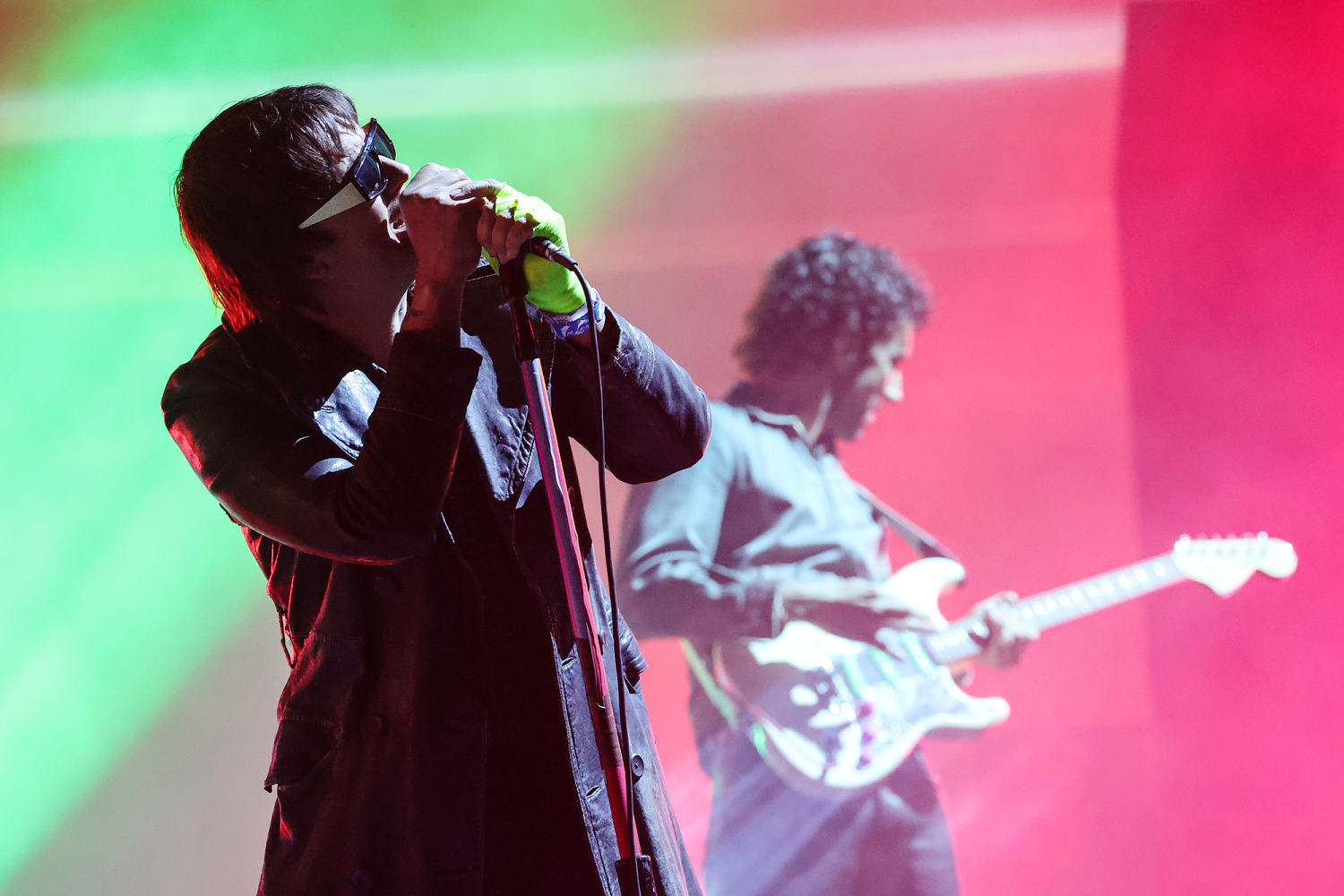
The intersection of high-profile entertainment and geopolitical commentary often fails due to a lack of structural relevance; however, The Strokes’ recent performance at Coachella represents a calculated deployment of cultural capital to address the external costs of U.S. foreign policy. When Julian Casablancas utilized a global streaming platform to condemn military interventionism, the action functioned not merely as a moral stance but as a disruption of the "bread and circuses" feedback loop inherent to massive commercial festivals. To analyze this event through a consulting lens, one must look past the emotional resonance and examine the Three Pillars of Performer-Led Geopolitical Critique: Audience Capture, Platform Scalability, and the Erosion of Neoliberal Neutrality.
The Infrastructure of the Protest
The efficacy of a stage-based protest is defined by the delta between the audience's expectation of escapism and the performer's delivery of friction. Coachella operates as a high-density node of the global attention economy, where brand partnerships and influencer-led aesthetics dictate a sanitized environment. By injecting discourse regarding U.S. interventionism into this space, the band exploited a bottleneck in the attention economy: the audience is physically and digitally locked into a specific stream of content, making the cost of ignoring the message significantly higher than in a decentralized digital environment.
The Mechanism of Disruption
The Strokes’ critique centers on the concept of Externalities of Power. While the U.S. domestic economy often experiences military intervention as a remote, abstract variable, the band’s rhetoric framed these interventions as a direct failure of democratic accountability. The logic follows a clear causal chain:
- Resource Misallocation: Capital that could be deployed toward domestic social infrastructure is redirected toward the maintenance of global hegemony.
- Sovereignty Erosion: Interventionism destabilizes foreign governance structures, creating long-term geopolitical volatility that eventually requires further intervention—a self-perpetuating feedback loop.
- The Complicity of Silence: The silence of cultural institutions at events like Coachella acts as a tacit endorsement of the status quo.
By verbalizing these points, Casablancas shifted the band's performance from a commodity to a political intervention. This transition creates a Reputational Risk Profile for the festival organizers. If they censor the artist, they risk a backlash regarding free speech; if they allow the protest, they risk alienating corporate sponsors who prioritize a "brand-safe" environment.
Quantitative Reach and Qualitative Impact
The impact of this protest cannot be measured solely by the decibel level of the crowd's response. It must be evaluated through the Amplification Coefficient. A statement made on the Coachella main stage undergoes three distinct phases of distribution:
- Primary Distribution: The 100,000+ attendees on-site experiencing the raw data of the performance.
- Secondary Distribution: The millions of viewers on the global live stream, where the message is stripped of its physical context and becomes a viral digital asset.
- Tertiary Distribution: The news cycle and social media aggregation, which converts the protest into a permanent data point in the band's historical archive.
The band’s strategy avoids the common pitfall of "Performative Activism" by aligning the message with their long-term brand identity. Since the New Abnormal era, The Strokes have increasingly integrated systemic critiques into their public personas. This consistency reduces the Authenticity Discount—the skepticism audiences feel when a celebrity adopts a cause for temporary relevance.
The Cost Function of Interventionist Critique
Artists who engage in high-stakes political commentary face a specific set of economic trade-offs. We can categorize these using the Risk-Reward Matrix for Public Figures:
| Variable | Impact on Performer | Systemic Result |
|---|---|---|
| Sponsorship Retention | High Risk of Attrition | Brands may pivot to "safer" artists. |
| Fanbase Polarization | Medium Risk | Shifts the demographic from casual listeners to core advocates. |
| Media Saturation | High Reward | Guarantees coverage beyond music trade publications. |
| Platform Access | Variable | Potential blacklisting from conservative-leaning venues or states. |
The band's decision to focus on U.S. interventionism is particularly potent because it challenges the fundamental premise of American Exceptionalism. This is not a "safe" protest about a domestic social issue that has already achieved cultural consensus; it is an attack on the foundational foreign policy of the state.
Structural Failures in the Traditional Media Narrative
The competitor coverage of this event largely focused on the "shock value" of the statements. This approach misses the Institutional Resistance that such a protest uncovers. The real story is not that a rock star said something controversial; it is the friction created between the artist’s intent and the festival’s commercial machinery.
Modern festivals are designed to be "frictionless" experiences. Every touchpoint—from mobile ticketing to VIP lounges—is optimized for maximum consumption and minimum cognitive load. The introduction of heavy geopolitical themes reintroduces Cognitive Friction. This forces the consumer to reconcile their participation in a luxury event with the reality of the global conflicts funded by their tax dollars or supported by their government.
The Feedback Loop of Modern Dissent
We are seeing the emergence of the Iterative Protest Model. Unlike the static protests of the 1960s, a modern protest at a venue like Coachella is designed for the algorithm. The Strokes did not just speak to the crowd; they provided a "clip-ready" moment. The linguistic structure of Casablancas’ statements—short, punchy, and emotive—is optimized for the TikTok and Reels ecosystem. This represents a sophisticated understanding of Information Warfare. By providing the digital architecture for their dissent to be shared, they ensure the message outlasts the 60-minute set.
The Limitations of Stage-Based Activism
One must acknowledge the Efficacy Ceiling of this strategy. While the protest raises awareness and disrupts the narrative, it lacks a direct legislative lever. The band is operating in the "Awareness" and "Opinion Shaping" tiers of the influence funnel, but they are far removed from the "Policy Implementation" tier.
The primary limitation is the Luxury Paradox. Protesting U.S. interventionism from the stage of a festival where tickets cost $500 to $1,000 creates a dissonance that can be easily weaponized by critics. This "Hypocrisy Tax" is a constant variable for any high-net-worth individual engaging in systemic critique. To mitigate this, the message must be focused on structural change rather than individual lifestyle choices, a distinction Casablancas largely maintained by focusing on government policy rather than consumer behavior.
Strategic Realignment of Cultural Influence
The Strokes have signaled a shift in how legacy acts maintain relevance in an oversaturated market. As the "cool" factor of traditional rock stardom wanes, artists are pivoting toward Values-Based Leadership. This isn't just about music; it's about the artist as a curator of a specific worldview.
For the music industry, this creates a new set of operational requirements. Talent managers and festival promoters must now account for the Political Volatility Index of their headliners. The Strokes have proven that a mainstage slot is no longer just a musical performance; it is a broadcast platform for a specific geopolitical agenda.
The long-term impact of this event will be measured by whether other top-tier artists follow suit. If Coachella becomes a site for regular geopolitical discourse, the brand will undergo a fundamental transformation from a lifestyle festival to a forum for cultural and political contestation. This would require a complete overhaul of the current festival business model, which relies on the illusion of a world without conflict.
The strategic play for artists in this position is to move beyond the verbal protest and toward Direct Institutional Pressure. This involves using the leverage of their headliner status to demand transparency in festival financing or to redirect a portion of ticket revenues toward the causes they champion. Until the protest moves from the microphone to the contract, it remains a powerful, yet ultimately contained, disruption of the status quo.
Artists must now decide if they are willing to weaponize their rider agreements to force institutional change, rather than simply using the stage as a soapbox. The Strokes have laid the groundwork; the next phase requires the integration of these critiques into the actual business architecture of the live music industry.