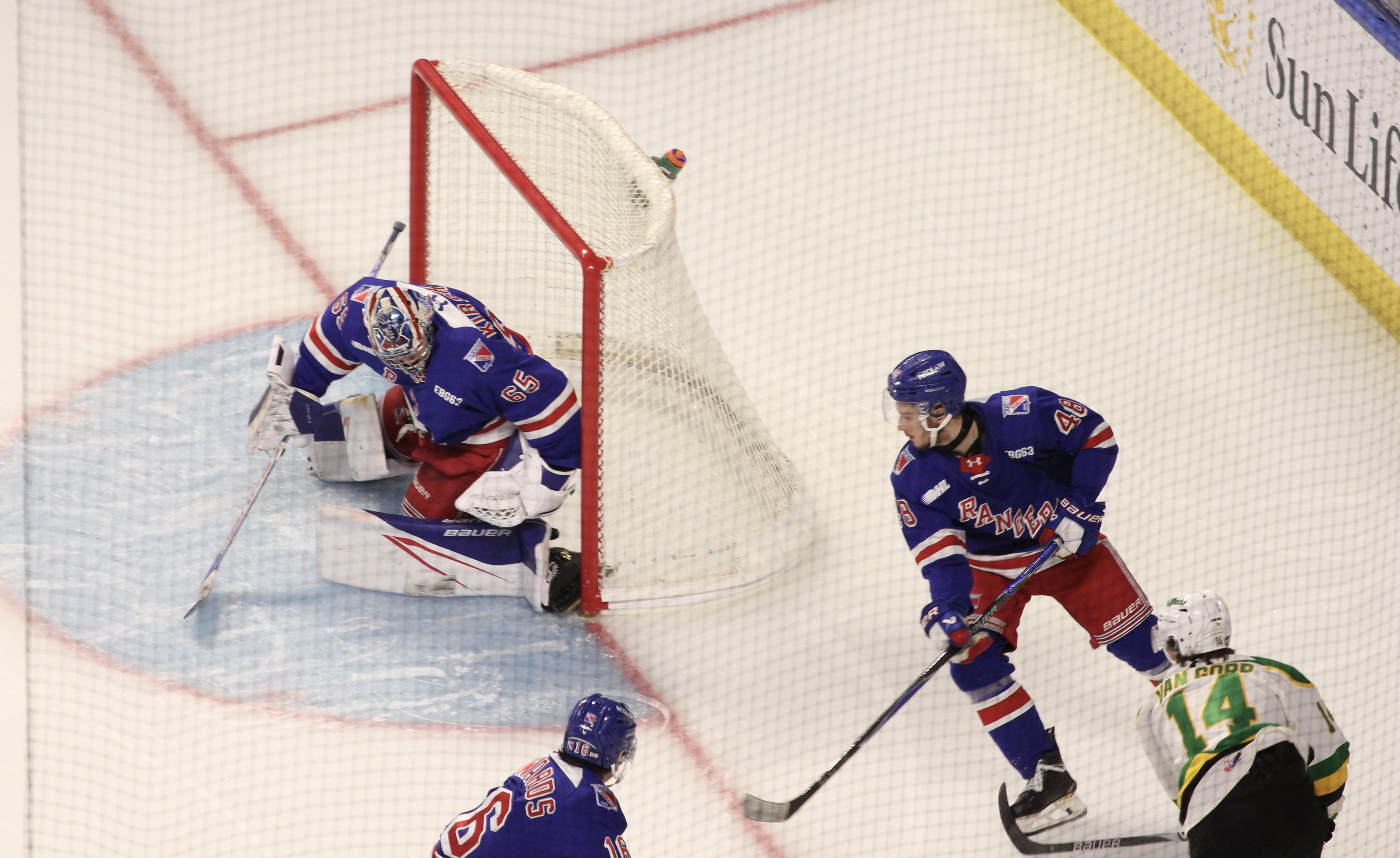
Winning the Midwest Division used to mean something. It used to be a badge of sustainable dominance in the OHL, a signal that your program had the depth to outlast the meat grinder of the Western Conference. But as the Kitchener Rangers celebrate their clinching victory over the London Knights, the local media is busy polishing a trophy that is effectively a lead weight.
The "lazy consensus" among scouts and beat reporters is that this win provides "momentum" and "home-ice security." That is a fundamental misunderstanding of how the modern OHL playoff bracket punishes winners. By clinching this title, the Rangers haven't secured a path to the Memorial Cup; they’ve painted a massive target on their backs while simultaneously locking themselves into a high-pressure narrative that their current roster construction cannot support.
The Regular Season Fallacy
Let’s look at the math. In a high-variance league like the OHL, regular-season point totals are often the result of specialized power-play units and beating up on rebuilding teams in the basement. The Rangers have thrived on a high-octane transition game that feasts on the defensive lapses of bottom-tier squads.
The London Knights, despite losing this specific game, are playing the long game. Historically, Dale Hunter-led teams don't care about a divisional banner in March. They care about physical attrition. While Kitchener burned their top-six forwards for 22 minutes a night to secure this "clinch," London was busy refining a suffocating neutral-zone trap that is designed to kill the very speed Kitchener relies on.
Victory in the Midwest usually demands a "burn the boats" mentality. The Rangers have spent significant emotional capital to finish first. History shows us that the team finishing second or third in the West often has the fresher legs and the chip on their shoulder required for a deep run.
The Home Ice Myth
The argument for clinching early always centers on home-ice advantage. "The Aud is a fortress," they say.
I’ve seen teams walk into Kitchener and use that crowd energy against the home team. When you are the division leader, the pressure to perform in front of a sell-out crowd at The Memorial Auditorium becomes a liability the moment you drop Game 1. A divisional title creates an expectation of a sweep in the first round. If the Rangers face a scrappy eighth seed that drags them to six or seven games, the "advantage" of home ice dissolves into a toxic atmosphere of anxiety.
True contenders don’t need the home-ice crutch. They need a system that travels. The Rangers’ system, built on high-risk, high-reward stretch passes, is inherently fragile. It works in the regular season when teams are tired or coasting on road trips. It doesn’t work when every shift is a war.
Why the London Knights are Smarter Than You Think
The Knights’ loss to Kitchener wasn’t a failure. It was a data-gathering mission.
Look at the film from the third period. While Kitchener was celebrating a divisional title, London was testing different defensive pairings and experimenting with line matching on the fly. They were scouting for cracks in the Rangers' breakout.
The media focuses on the scoreboard. The insiders focus on the adjustments. London has a roster built for the slog of May. Kitchener has a roster built for the highlight reels of February. The Rangers’ reliance on elite individual talent—the kind of players who win you division titles—is their biggest weakness. When those players get shut down by a dedicated checking line, the depth scoring vanishes.
The London Knights didn't "lose" the division. They traded a meaningless banner for a clear blueprint on how to dismantle the Rangers when the games actually matter.
The Depth Scoring Delusion
The Rangers' top line has been carrying a load that would break a professional team’s back. The OHL is notorious for this: a "division-winning" team has two lines that produce at an elite clip and a bottom six that is effectively there to kill penalties and not get scored on.
When you win the Midwest, you aren’t just playing against a team. You are playing against the scouting reports of every assistant coach in the Western Conference. They know exactly who to hit, exactly who to rattle, and exactly who to ignore on the Kitchener bench.
- Line 1 & 2: Overworked, high-skill, targeted daily.
- Line 3 & 4: Reliable, but lacking the finishing touch required to bail out the stars.
The "nuance" the local beat writers miss is the exhaustion factor. The Rangers have played playoff hockey for the last three weeks just to clinch. Their rivals have been in "maintenance mode," managing ice time and healing nagging injuries.
The Institutional Arrogance of First Place
Being at the top of the standings breeds a specific kind of complacency. It convinces a coaching staff that "our game" is enough. It isn't.
Winning the Midwest Division Title is the worst thing that could have happened to the Kitchener Rangers. It validates their current flaws. It makes them believe that their high-risk defensive transitions are sustainable against the heavy forecheck of the playoffs. It silences the internal critics who should be demanding a more disciplined, defensive-first approach.
The "People Also Ask" crowds want to know if Kitchener is the favorite for the Memorial Cup. The answer is a resounding "No." They are the most vulnerable team in the top four seeds. They are a team that has peaked too early, on a philosophy that is too thin, in a division that is too unforgiving.
The trophy at The Aud is a shiny reminder that you won the race. It doesn't mean you have enough gas left to win the war.
Stop celebrating. Start worrying.