The arrest and guilty plea of a 22-year-old Indian national for orchestrating human smuggling operations across the United States-Canada border exposes a critical shift in the unit economics of illicit migration. By examining the operational mechanics of this specific case—where the facilitator charged as little as $100 per individual—it becomes clear that the traditional high-margin, low-volume smuggling model is being disrupted by a high-frequency, low-friction logistical strategy. This shift indicates a sophisticated understanding of cross-border infrastructure and a systematic exploitation of regional labor markets.
The Economic Architecture of Low-Cost Border Facilitation
Smuggling operations typically operate on a risk-adjusted pricing model. Historically, high fees reflected the physical danger of the route, the complexity of evasion, and the potential legal consequences for the facilitator. The $100 per-head fee reported in the guilty plea of Simranjit Singh represents an outlier that suggests a specific logistical framework.
The Volume-Risk Trade-off
In a traditional smuggling venture, a $100 fee would fail to cover the basic fuel and labor costs of a single trip. The existence of this price point implies a high-volume business model where the facilitator functions more as a logistical dispatcher than a high-stakes guide. This approach relies on three primary variables:
- Low Marginal Cost: Utilizing personal or low-overhead vehicles on established road networks reduces the operational cost per transit to near zero.
- Frequency of Operation: Success is predicated on the number of crossings rather than the profit of a single event.
- Risk Dispersion: By using multiple "drivers" or conduits, the primary architect isolates themselves from the immediate physical act of crossing, though in this instance, the legal chain of custody eventually led back to the organizer.
The Incentivization of the Labor Pool
The recruitment of low-level transporters—often individuals with valid legal status or minimal criminal records—creates a buffer. The $100 fee paid by the migrant likely represents only a fraction of the total "contract" or is part of a multi-stage payment structure. If the facilitator is charging $100 for the final "mile" of the journey, it suggests the upstream segments of the migration path are where the primary capital accumulation occurs.
Geographic Exploitation and the Canadian Conduit
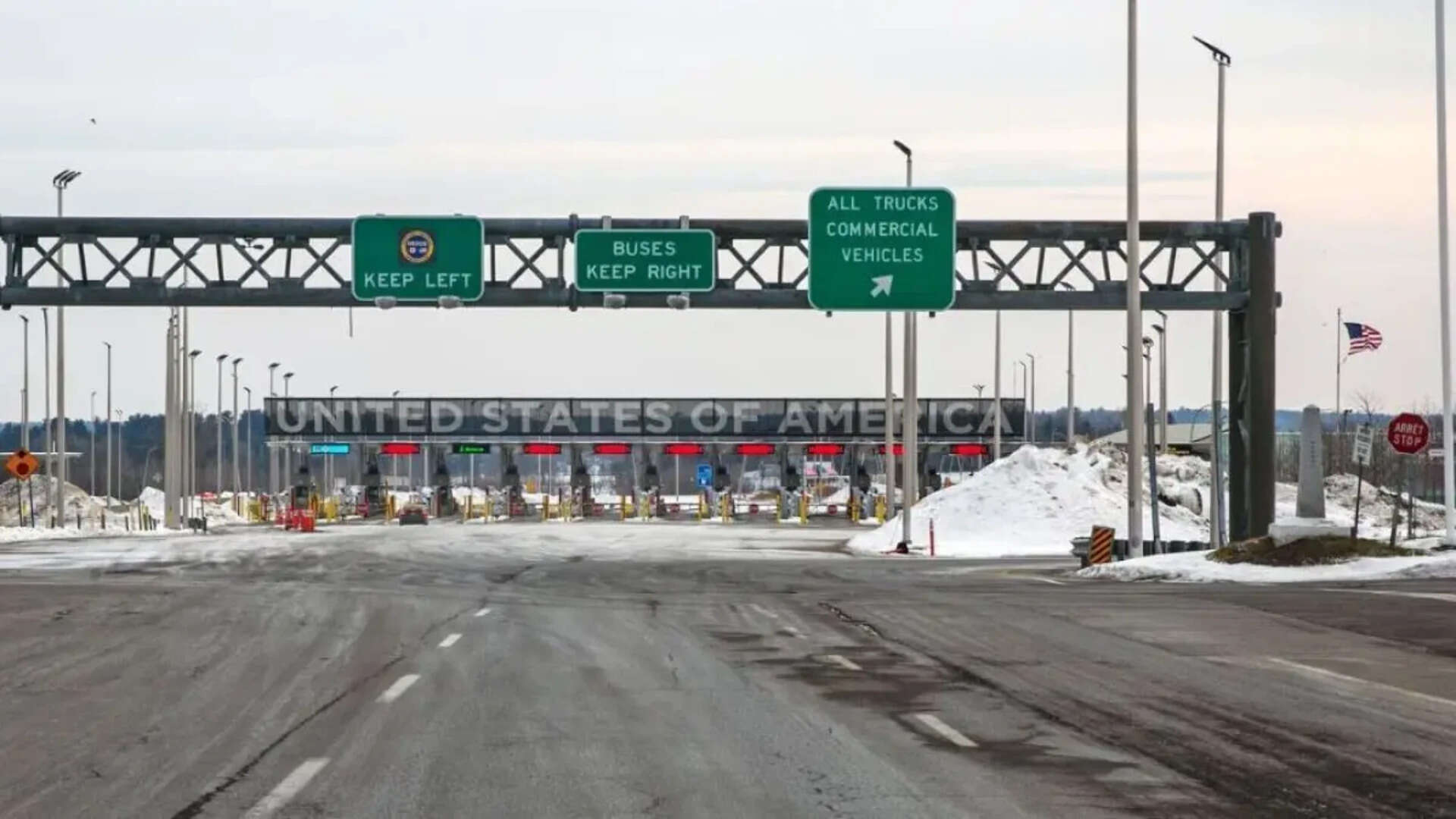
The northern border of the United States presents a different set of tactical challenges compared to the southern border. The geography—characterized by dense forests, shared waterways, and vast rural stretches—allows for a "distributed entry" strategy.
Structural Vulnerabilities in Northern Transit
The case highlights a specific vulnerability in the St. Lawrence River region and the rural borders of New York and Vermont. These areas provide:
- Topographical Cover: The natural landscape provides visual shielding that urban or desert environments do not.
- Infrastructure Density: Proximity to major highways on both sides of the border allows for rapid "clear-out" times once the border line is crossed.
- Predictable Patrol Patterns: Unlike the saturated surveillance of the southern border, the northern border relies more heavily on sensors and periodic patrols, which can be mapped and timed by organized actors.
The Role of the Indian Diaspora Network
The involvement of a 22-year-old national indicates the utilization of specific social and cultural networks. Smuggling rings often operate within existing migratory corridors where trust is established through shared language, regional origin, or social media groups. These networks act as a decentralized marketing department, lowering the "customer acquisition cost" for the smuggler.
Breaking Down the Legal and Operational Failure Points
The guilty plea in this case was not a result of a single intercepted crossing, but the culmination of a multi-agency investigation that tracked patterns of movement. Analyzing the failure points of the smuggling operation provides insight into the current state of border enforcement.
Digital Footprints and Communication Latency
Modern smuggling relies heavily on encrypted messaging apps and GPS coordinates. However, the operational security (OPSEC) of these low-cost models is often compromised by the volume of communication required to coordinate multiple drivers and migrants. Law enforcement utilizes "signal intelligence" to identify clusters of burner phones moving in coordination with border events.
The "Last Mile" Bottleneck
The most dangerous phase for any smuggling operation is the transition from the border line to a secure "safe house" or transport hub. In the Singh case, the apprehension of drivers in the act of transporting migrants provided the physical evidence necessary to link the logistical head to the crime.
- Driver Incrimination: Low-level recruits are frequently the first to cooperate with authorities when faced with federal charges, creating a direct evidentiary path to the organizer.
- Vehicle Identification: Systematic use of the same vehicles or rental accounts creates a searchable database for border agents, turning a logistical asset into a liability.
The Shift Toward Labor Exploitation
A $100 fee is suspiciously low for a service that carries significant prison time. This suggests that the financial relationship between the smuggler and the migrant may extend beyond the physical crossing.
Post-Entry Debt Bondage
In many cases involving low upfront smuggling fees, the "balance" of the true cost is paid through forced or coerced labor upon arrival in the United States. This creates a secondary revenue stream for the smuggling organization, effectively turning the migrant into a long-term financial asset.
- Stage 1: The migrant pays a nominal fee for the crossing.
- Stage 2: The smuggler or an affiliate secures "employment" for the migrant in industries such as hospitality, agriculture, or construction.
- Stage 3: A significant portion of the migrant's wages is garnished to pay off an inflated "travel debt."
This model explains how a facilitator can remain profitable while charging fees that appear to be below market value. It shifts the profit center from the act of transportation to the act of labor placement.
Enforcement Re-calibration and Future Projections
The prosecution of Simranjit Singh signals an aggressive shift in how the Department of Justice handles northern border infractions. Historically, the northern border received less funding and fewer personnel than the south.
Technological Integration
Border agencies are increasingly deploying autonomous surveillance towers and long-range thermal imaging. These tools neutralize the topographical advantages of the northern border. For a smuggling operation to survive, it must now invest in more sophisticated evasion technology, which will inevitably drive the $100 fee upward, or force the operation deeper into the "dark" logistical web.
Legislative Pressure on Transit Countries
The ease with which migrants reached the Canadian side of the border suggests a need for tighter visa controls and manifest monitoring in transit nations. If Canada is viewed as a "soft entry" point for the United States, bilateral pressure will likely result in stricter enforcement of ETA (Electronic Travel Authorization) requirements for high-risk demographics.
The "low-cost" smuggling model is a temporary market inefficiency. As enforcement agencies close the gaps in northern border security, the overhead for these operations will increase. Facilitators will be forced to either exit the market or move toward more violent and high-stakes methods to maintain their margins. The Singh case is a benchmark for the end of the high-volume, low-security era of northern transits.
The primary strategic move for enforcement now lies in "financial de-platforming"—targeting the digital payment systems and informal hawala networks that allow these $100 transactions to scale across thousands of individuals. By breaking the financial link between the recruiter and the driver, the entire logistical chain collapses, regardless of how porous the physical border remains.