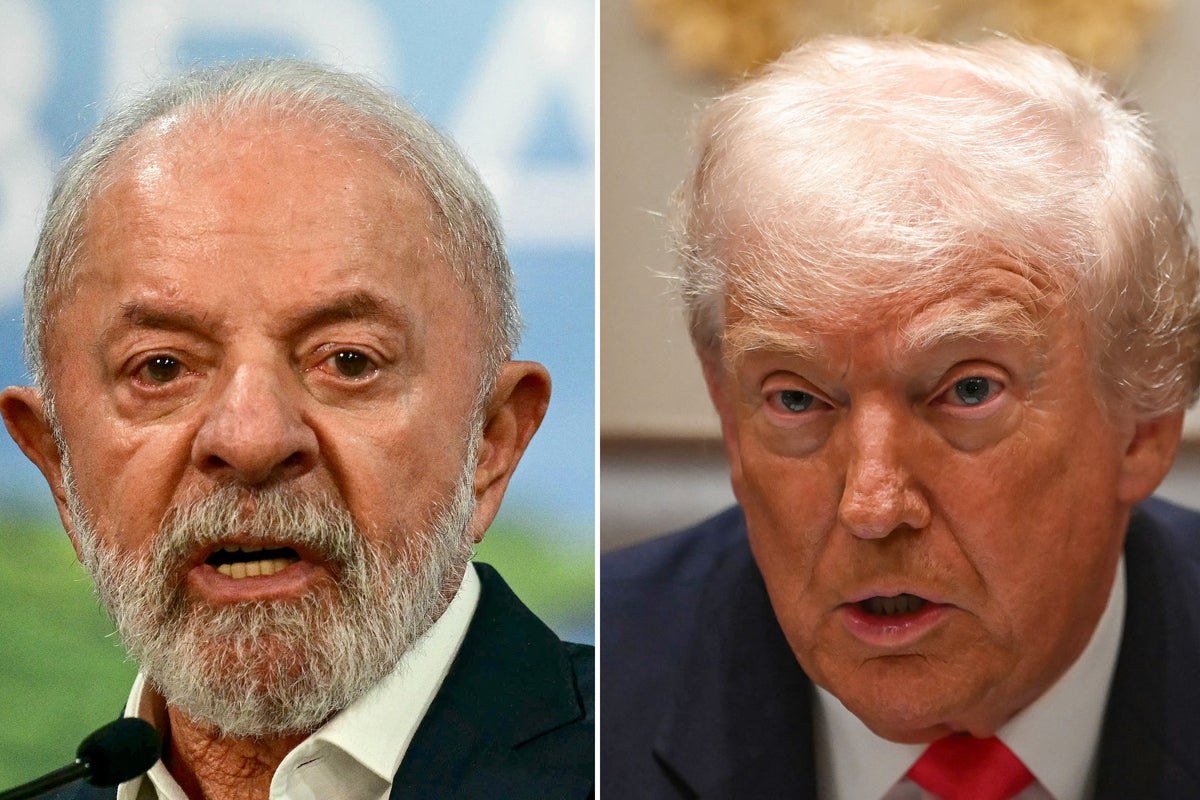
The visit by the Brazilian executive to Washington D.C. functions less as a traditional state visit and more as a high-stakes restructuring of a depreciating political asset. At its core, the bilateral relationship between the Brazilian presidency and the incoming Trump administration is defined by a deep ideological misalignment that creates a persistent diplomatic deficit. To resolve this, Brazil is attempting to pivot from a values-based engagement to a transactional utility model. The success of this maneuver depends entirely on Brazil's ability to offer specific geostrategic or economic concessions that outweigh the domestic political signaling Trump gains by maintaining a frosty distance from a leftist regional peer.
The Friction Coefficients of the Brazil-US Nexus
Standard diplomatic analysis often focuses on "strengthening ties," a phrase that obscures the actual friction coefficients currently stalling the relationship. Three primary variables dictate the current resistance:
- Ideological Divergence: The current Brazilian administration represents a direct antithesis to the populist-nationalist framework of the MAGA movement. This creates a natural incentive for the U.S. executive to use Brazil as a regional foil to energize its own base.
- Multipolar Hedging: Brazil’s participation in BRICS+ and its strengthening trade dependencies with China act as a structural barrier. From a Washington perspective, Brazil is seen as a "hedger" rather than a "partner," which reduces the premium the U.S. is willing to pay for alignment.
- Institutional Memory: The lingering resentment regarding the 2022 Brazilian election—and the subsequent comparisons to the events of January 6th—functions as a psychological hurdle for the Trump camp, which views the current Brazilian leadership through the lens of a globalized "lawfare" narrative.
Quantifying the Cost of Diplomatic Isolation
Brazil’s "desperate attempt" to salvage the relationship is a rational response to the rising cost of isolation. The cost function of a fractured relationship with the United States is calculated across three domains:
The Capital Access Penalty
As the U.S. moves toward a more protectionist trade posture, countries without preferential status face higher barriers to entry. For Brazil, which relies on commodity exports and is attempting to move up the value chain in aerospace and green energy, being outside the "inner circle" of U.S. trade priorities translates to a direct loss in potential GDP growth. This is exacerbated by the threat of universal baseline tariffs.
The Regional Hegemony Deficit
Brazil’s influence in South America is partially derived from its role as the primary interlocutor between the continent and the West. If the U.S. bypasses Brasília in favor of more ideologically aligned neighbors—such as Argentina—Brazil loses its regional leverage. This creates a vacuum that competitors like China or the EU might fill, but often at the cost of Brazil’s sovereign strategic flexibility.
The Security and Tech Bottleneck
Cooperation in defense technology and intelligence sharing is contingent on trust. A breakdown in the executive-level relationship halts progress on critical initiatives like the Artemis Accords for space cooperation or the integration of Brazilian defense firms into U.S. supply chains.
The Transactional Pivot: Trading Neutrality for Access
To bridge the gap, Brazil is shifting its strategy toward a Transactional Utility Framework. This involves identifying specific areas where Brazil can provide value that satisfies the "America First" criteria. The logic follows a three-step progression:
- Step 1: Energy and Mineral Sovereignty. Brazil holds vast reserves of critical minerals required for the energy transition and high-tech manufacturing. By offering secure, non-adversarial supply chains for lithium, graphite, and rare earth elements, Brazil positions itself as an alternative to Chinese dominance in these sectors.
- Step 2: Agricultural Stability. In a world of fluctuating food prices and supply chain disruptions, Brazil’s role as a global breadbasket is a point of leverage. Aligning on food security standards and export quotas can serve as a stabilizer that appeals to the U.S. interest in global market predictability.
- Step 3: Geopolitical Non-Interference. The most significant concession Brazil can offer is a softening of its "Global South" rhetoric regarding U.S. adversaries. While Brazil will not abandon its BRICS commitments, it may offer "quietude" on specific U.S. red lines in exchange for a reduction in diplomatic hostility.
The Argentine Variable: A Zero-Sum Regional Game
The primary external threat to Brazil’s Washington strategy is the emergence of Argentina as a preferred regional partner. The personal affinity between Donald Trump and the Argentine executive creates a "Most Favored Populist" dynamic. This competition is zero-sum because the U.S. has limited bandwidth for South American engagement.
If Argentina successfully positions itself as the primary U.S. ally in the Southern Cone, Brazil risks being categorized as an "obstructionist state." This would lead to a "Decoupling by Default," where U.S. investment and diplomatic attention flow south of Brasília, leaving the Brazilian executive with fewer tools to manage its own economic recovery.
Internal Political Constraints on Diplomatic Flexibility
The Brazilian president’s "desperation" is constrained by his domestic base. He cannot appear too supplicant to a figure his supporters view as a political antagonist. This creates a "Negotiation Ceiling":
- Public Perception Risk: Any concession that looks like a surrender of Brazilian sovereignty (e.g., aligning strictly with U.S. policy on Israel or Ukraine) risks alienating the president’s core leftist constituency.
- The Military-Agribusiness Complex: These two powerful domestic factions in Brazil generally favor stable relations with the U.S. for trade and security reasons. The president must balance their demands with the ideological demands of his party, leading to a fragmented and often contradictory foreign policy.
The Probability of Success: A Calculus of Outcomes
The likelihood of a successful "salvage" operation is low if success is defined as a return to the "special relationship" seen during previous administrations. However, if success is defined as Functional Detente, the probability increases.
A functional detente would look like:
- Regularized ministerial-level meetings that bypass the executive-level friction.
- Quiet exemptions for Brazil from the most punitive aspects of U.S. trade protectionism.
- A "non-aggression" pact in international forums where both sides agree to disagree without escalating to sanctions or public denunciations.
This outcome requires the Brazilian executive to suppress his rhetorical instincts and the U.S. executive to view Brazil through a cold, realistic lens of national interest rather than as a target for populist signaling.
Strategic Recommendation for Brazil
To maximize the ROI of this DC visit, Brazil must abandon the hope for a "relationship" and instead present a "ledger." The focus should not be on "why we should get along," but on "how Brazil reduces the cost of the U.S. agenda."
The Brazilian delegation should lead with a specific proposal for a South Atlantic Critical Minerals Corridor. By framing this as a direct counter to the Belt and Road Initiative, they speak the language of the current U.S. administration. They must also prepare for "The Argentine Pivot" by emphasizing Brazil’s superior infrastructure and scale, making it a more viable industrial partner than its smaller southern neighbor.
Ultimately, the goal is not to be liked, but to be indispensable. The president’s trip will only "help" if it moves the conversation from the realm of personality and ideology into the realm of hardware, energy, and market share. Anything less results in a diplomatic stalemate where the U.S. ignores Brazil, and Brazil loses its seat at the table where the global economic order is being rewritten.