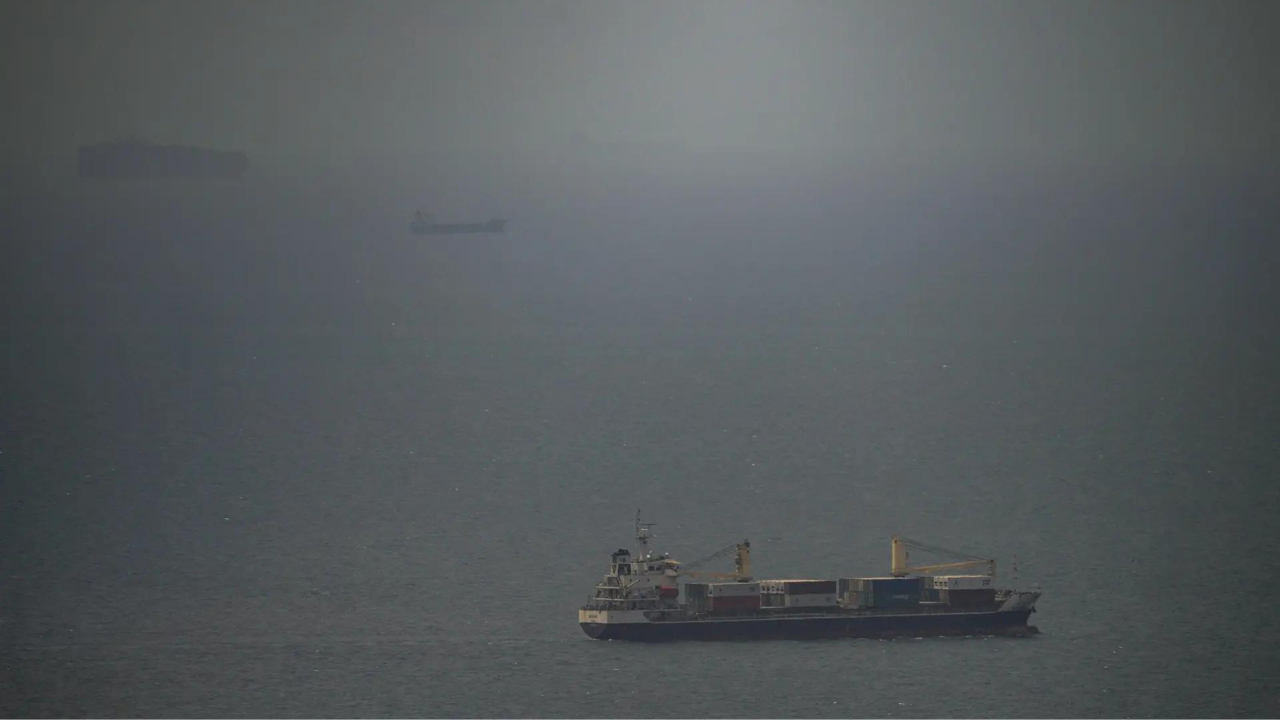
The seizure of three Iranian-linked oil tankers near the strategic chokepoints of India and Malaysia represents a shift from passive surveillance to active kinetic disruption in global energy markets. This maneuver is not a singular event but a calculated stress test of the logistical architecture supporting Iran’s shadow fleet. To understand the impact of these interdictions, one must move past the headlines and analyze the mechanics of the maritime blockade through three specific lenses: jurisdictional engineering, the economics of risk-premium in the Malacca Strait, and the technical failure of AIS-spoofing protocols.
The Architecture of Jurisdictional Engineering
The United States utilizes a legal framework that extends domestic sanctions into international waters via the nexus of financial clearinghouses and flag-state compliance. When vessels are intercepted near Malaysia or India, the enforcement mechanism relies on the Primary Jurisdictional Trigger. This trigger is activated when a vessel, regardless of its physical location, interacts with the U.S. financial system—often through insurance premiums denominated in dollars or through technical equipment manufactured under U.S. patents.
The recent intercepts demonstrate a sophisticated use of Extraterritorial Regulatory Pressure. India and Malaysia serve as critical nodes because of their proximity to the Malacca Strait, a transit point for nearly 25% of the world’s traded oil. By executing interdictions in these waters, the U.S. creates a "friction zone" where the cost of neutrality for the host nation exceeds the benefits of trade with sanctioned entities. The strategy moves beyond simple confiscation; it aims to degrade the Reliability Quotient of the Iranian supply chain. If a buyer in East Asia cannot guarantee the arrival of a cargo due to the high probability of maritime seizure, the "Sanctions Discount" (the lower price Iran must accept to move its oil) must widen to compensate for the risk of total asset loss.
The Technical Deconstruction of AIS Manipulation
The shadow fleet utilizes a tactic known as "spoofing" or "dark activity" to mask movements. This involves manipulating the Automatic Identification System (AIS) to broadcast false coordinates or disabling the transponder entirely. The failure of these tankers to evade detection suggests that the U.S. and its partners are now successfully deploying Multi-INT Fusion Analytics.
- Synthetic Aperture Radar (SAR) Integration: Unlike optical satellites, SAR can penetrate cloud cover and detect the metallic signatures of tankers even when their AIS is silenced.
- Radio Frequency (RF) Geolocation: Even with AIS disabled, vessels emit various electronic signatures from navigation radars and communication arrays. Cross-referencing these emissions allows for precise tracking.
- Draft Analysis: By comparing satellite imagery of a vessel’s waterline at the point of origin (Kharg Island) versus its waterline in the Malacca Strait, analysts can verify cargo weight, rendering "ballast" claims technically void.
The interception of these three vessels indicates that the "dark" status of a ship no longer provides a tactical advantage. This creates a Data Asymmetry where the enforcer possesses higher resolution information than the operator, forcing the operator into predictable, high-risk maneuvers to avoid detection.
The Cost Function of the Shadow Fleet
The Iranian oil trade operates under a specific cost function that differs from legitimate commerce. While a standard VLCC (Very Large Crude Carrier) operates on thin margins optimized for fuel efficiency and port turnaround, a sanctioned vessel operates on a Risk-Adjusted Depletion Model.
- Vessel Obsolescence: Most tankers in the shadow fleet are nearing the end of their operational life (20+ years). The capital expenditure is sunk, meaning any seizure is a loss of the cargo’s value and the vessel’s scrap value, rather than a disruption of a long-term logistics asset.
- The Insurance Gap: These vessels lack P&I (Protection and Indemnity) club coverage. When the U.S. intercepts a vessel, it exposes the lack of environmental liability coverage, providing a legal pretext for local authorities to detain the ship under safety and environmental regulations (MARPOL).
- Transshipment Penalties: Ship-to-ship (STS) transfers, frequently performed off the coast of Malaysia, add significant operational costs. Each transfer increases the "time-at-sea" variable, during which the vessel is a stationary target for satellite surveillance.
The capture of three tankers simultaneously suggests a coordinated strike on the STS Hub Efficiency. By removing these vessels from the circuit, the U.S. effectively bottlenecks the transfer points, forcing other tankers to idle in open water—further increasing their visibility and vulnerability.
Geopolitical Friction and the Malacca Bottleneck
The Malacca Strait is the world’s most significant maritime chokepoint. The decision to intercept tankers in this vicinity is a high-stakes geopolitical play. It forces a choice upon regional powers like India and Malaysia: align with U.S. maritime security objectives or risk being categorized as "permissive environments" for illicit trade.
India’s role is particularly nuanced. As a major energy consumer, India balances its strategic autonomy with its membership in the Quad. The interception near Indian waters implies a level of Tacit Coordination or, at the very least, a refusal by Indian naval forces to interfere with U.S. interdiction operations. This creates a "Security Dilemma" for Iran; its primary "Eastern Pivot" for oil exports is now structurally compromised by the very geography it relies upon.
The Strategic Equilibrium Shift
The maritime blockade is transitioning from a policy of containment to a policy of Active Attrition. The removal of three tankers does not stop the flow of oil, but it increases the Operational Friction to a level where the return on investment for the Iranian state begins to collapse.
The primary vulnerability of the shadow fleet is its reliance on a limited number of "clean" maritime service providers—tugboats, pilots, and bunker suppliers—who are susceptible to secondary sanctions. When the U.S. intercepts a ship, it gains access to the vessel’s logs and digital manifests. This data is then used to map the network of front companies and intermediaries.
The second-order effect of these seizures is the Contagion of Risk. Every successful interdiction makes the remaining fleet more difficult to man and maintain. Crew members face the risk of being blacklisted from the global maritime industry, and smaller port operators become hesitant to provide services, regardless of the premium offered.
Strategic Forecast for Global Energy Security
The blockade’s expansion indicates that the U.S. is prepared to absorb the potential volatility in global oil prices in exchange for long-term degradation of Iranian fiscal capacity. The traditional assumption that oil prices would spike upon news of tanker seizures has been dampened by increased production from non-OPEC+ sources and the strategic use of domestic reserves.
For global energy analysts and traders, the signal is clear: the Maritime Sanctions Barrier is moving further East. The focus will now shift to the "Dark STS" zones in the South China Sea. Operators should expect a tiered increase in enforcement intensity:
- Electronic Warfare Supremacy: Expect more frequent "ghosting" incidents where AIS data is not just ignored but actively spoofed by enforcers to lead vessels into intercept zones.
- Financial De-platforming: The focus will move from the ships to the P&I insurers and classification societies that provide the "veneer of legitimacy" to these vessels.
- Port State Control (PSC) Weaponization: Host nations will increasingly use "safety inspections" as a politically neutral tool to detain sanctioned vessels indefinitely without needing to invoke controversial diplomatic protocols.
The structural integrity of the Iranian maritime export model is failing. The move from Indian waters to the Malaysian coast suggests that there are no longer any "safe harbors" within the primary transit corridors. The terminal phase of this strategy involves the complete isolation of the shadow fleet from the global maritime infrastructure, forcing the trade into increasingly expensive and dangerous overland routes or small-scale, inefficient barge movements.
The operational recommendation for regional players is to harden their maritime domain awareness (MDA) capabilities. As the U.S. increases the frequency of kinetic interdictions, the risk of environmental disasters from aging, uninsured tankers increases. Nations bordering the Malacca Strait must prepare for the eventuality of an "intercept-gone-wrong" resulting in a major spill, which would necessitate a shift from a security-first posture to an environmental-emergency framework. This transition will likely be the next flashpoint in the maritime blockade strategy.