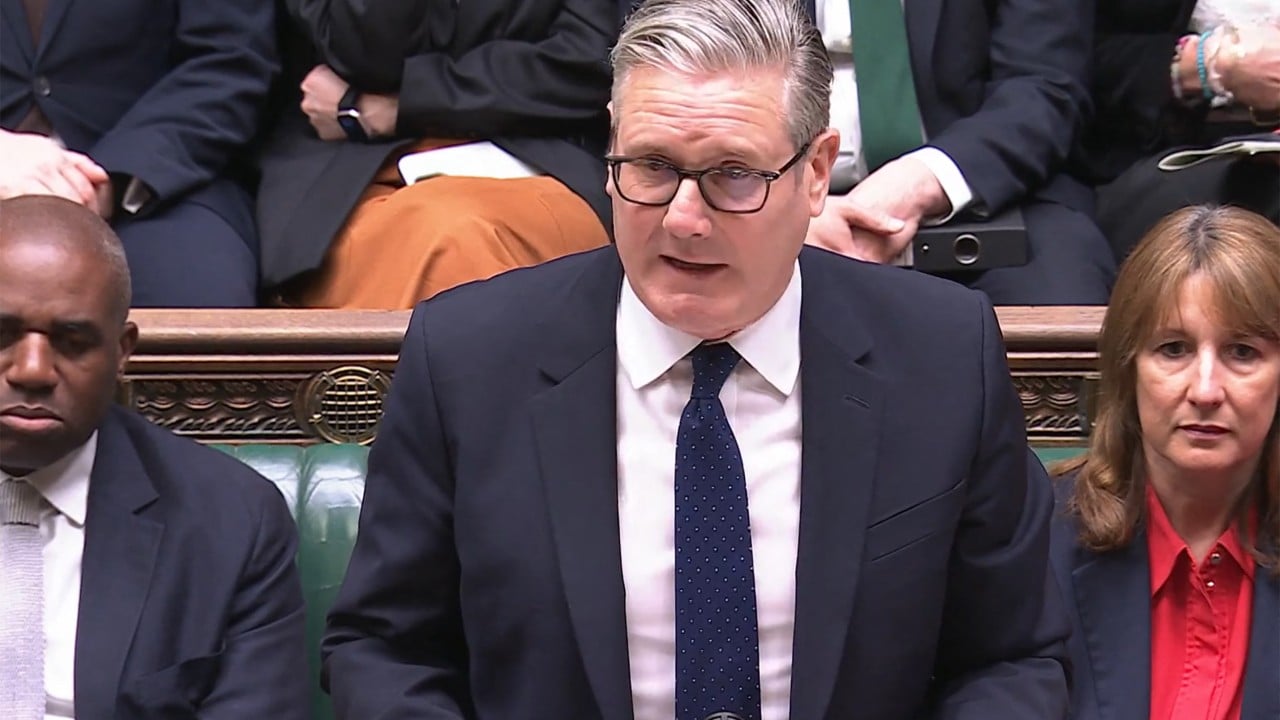
Keir Starmer is discovering that in the high-stakes theater of international diplomacy, a bad casting choice cannot be fixed by a simple rewrite. The Prime Minister’s decision to appoint Peter Mandelson as the UK’s envoy to the United States was meant to be a masterstroke of pragmatism. Instead, it has become a grinding political liability. While Downing Street attempts to frame the move as a momentary lapse in judgment, the reality is far more clinical. This was a calculated risk that ignored the shifting tectonic plates of Washington politics, and the refusal to rescind the appointment suggests a government more concerned with internal loyalty than external reality.
The core of the crisis lies in a fundamental misunderstanding of the current American political climate. Starmer sought a "big beast," someone with the gravitas to navigate the shark-infested waters of a potential second Trump term or a hardened Democratic establishment. Mandelson, the architect of New Labour and a veteran of European trade wars, seemed to fit the bill on paper. But paper doesn't vote, and it certainly doesn't forget. In the eyes of modern Washington, Mandelson represents a bygone era of globalism that both the American Left and Right have spent the last decade dismantling.
A Bridge to Nowhere
Diplomacy is about access. If an envoy cannot get into the room, their intellect is irrelevant. The backlash against Mandelson isn't merely about his controversial past or his ties to various international power brokers. It is about his lack of currency with the people currently holding the levers of power in the U.S. Treasury and the State Department.
For the MAGA-aligned Right, Mandelson is the embodiment of the "Davos Man," a figure synonymous with the very trade deals they blame for the hollowed-out American middle class. For the progressive Left, he is a relic of a centrist consensus they view as responsible for the global financial crisis. Starmer didn’t just pick a polarizing figure; he picked one who is uniquely positioned to alienate both sides of the aisle simultaneously.
The Cost of Political Inertia
Why does Starmer refuse to budge? To understand that, you have to look at the internal architecture of the Labour Party. Resigning an appointment of this magnitude within weeks of making it signals blood in the water. It suggests that the Prime Minister is susceptible to pressure, a narrative Starmer has fought desperately to avoid since taking office.
By holding the line, Downing Street is betting that the news cycle will eventually move on. They are wrong. Every time the UK needs a favor from Washington—whether it’s on steel tariffs, intelligence sharing, or defense procurement—the Mandelson question will resurface. It acts as a friction point in a relationship that is supposed to be frictionless.
The Ghost of New Labour
There is a deeper, more structural issue at play here. Starmer’s reliance on the old guard suggests a vacuum of new ideas within the British foreign policy establishment. By reaching back to the 1990s for a solution to a 2020s problem, the government has telegraphed a lack of confidence in its own bench.
The world has changed. The "Special Relationship" is no longer a given; it is a transaction. The U.S. is increasingly inward-looking, focused on a brewing cold war with China and the domestic pressures of a fractured electorate. In this environment, an envoy needs to be a problem-solver, not a celebrity. They need to be someone who can speak the language of industrial policy and supply chain security, not just someone who knows which fork to use at a state dinner.
The Trade Imbalance
The UK is currently desperate for a comprehensive trade deal with the U.S., a goal that has remained elusive since Brexit. Mandelson’s history as an EU Trade Commissioner makes him a particularly complicated figure for this specific task. The U.S. Trade Representative’s office is notoriously protective of its turf and deeply skeptical of anyone with strong ties to Brussels.
Instead of smoothing the path to a deal, Mandelson’s presence creates a new layer of vetting and suspicion. It invites scrutiny into his past business dealings and his consulting work, all of which provide easy ammunition for any U.S. senator looking to score points by being "tough on foreign influence."
A Failure of Due Diligence
The most damning aspect of this saga is the apparent lack of vetting—not of Mandelson’s character, but of his utility. In a corporate merger, you don't appoint a chairman who is publicly loathed by the target company's board. Yet, that is essentially what Starmer has done.
The British civil service, once the envy of the world for its clinical objectivity, seems to have been sidelined in favor of a political "hunch." This is the real danger of the Starmer administration’s early days. It’s not just about one bad appointment; it’s about a decision-making process that prioritizes the optics of "strength" over the reality of effectiveness.
The Trump Factor
We must also consider the shadow of the upcoming U.S. election. If Donald Trump returns to the White House, he will demand absolute loyalty and a specific kind of populist alignment. Mandelson, with his polished Europhile sensibilities, is the antithesis of everything the Trump camp stands for.
If Starmer stays the course, he risks sending a man to Washington who will be ignored on day one. A sidelined envoy is worse than no envoy at all, as it creates a vacuum where misinformation and back-channeling can thrive. The UK cannot afford to be an afterthought in Washington, yet this appointment ensures that the conversation will be about the messenger rather than the message.
The High Price of Pride
Admitting a mistake is a sign of maturity in leadership, not a sign of weakness. By framing this as a "mistake" but refusing to fix it, Starmer has landed in the worst possible middle ground. He has validated the critics while keeping the problem.
The "Special Relationship" requires constant maintenance and a deep understanding of the American psyche. It requires an envoy who can bridge the gap between London’s ambitions and Washington’s anxieties. Peter Mandelson, for all his undeniable intelligence and experience, is not that bridge. He is a monument to a past that no longer exists, placed in the middle of a road that the Americans have already closed for construction.
British interests are currently being held hostage by a Prime Minister's desire to save face. Every day that Mandelson remains the designated envoy is a day that the UK loses ground in Washington. The world is moving too fast for this kind of nostalgic governance. If Starmer wants to be a modern leader, he needs to stop looking in the rearview mirror and start looking at the road ahead. The cost of this ego-driven deadlock isn't just a few bad headlines; it’s the gradual erosion of British influence in the one place where it matters most.