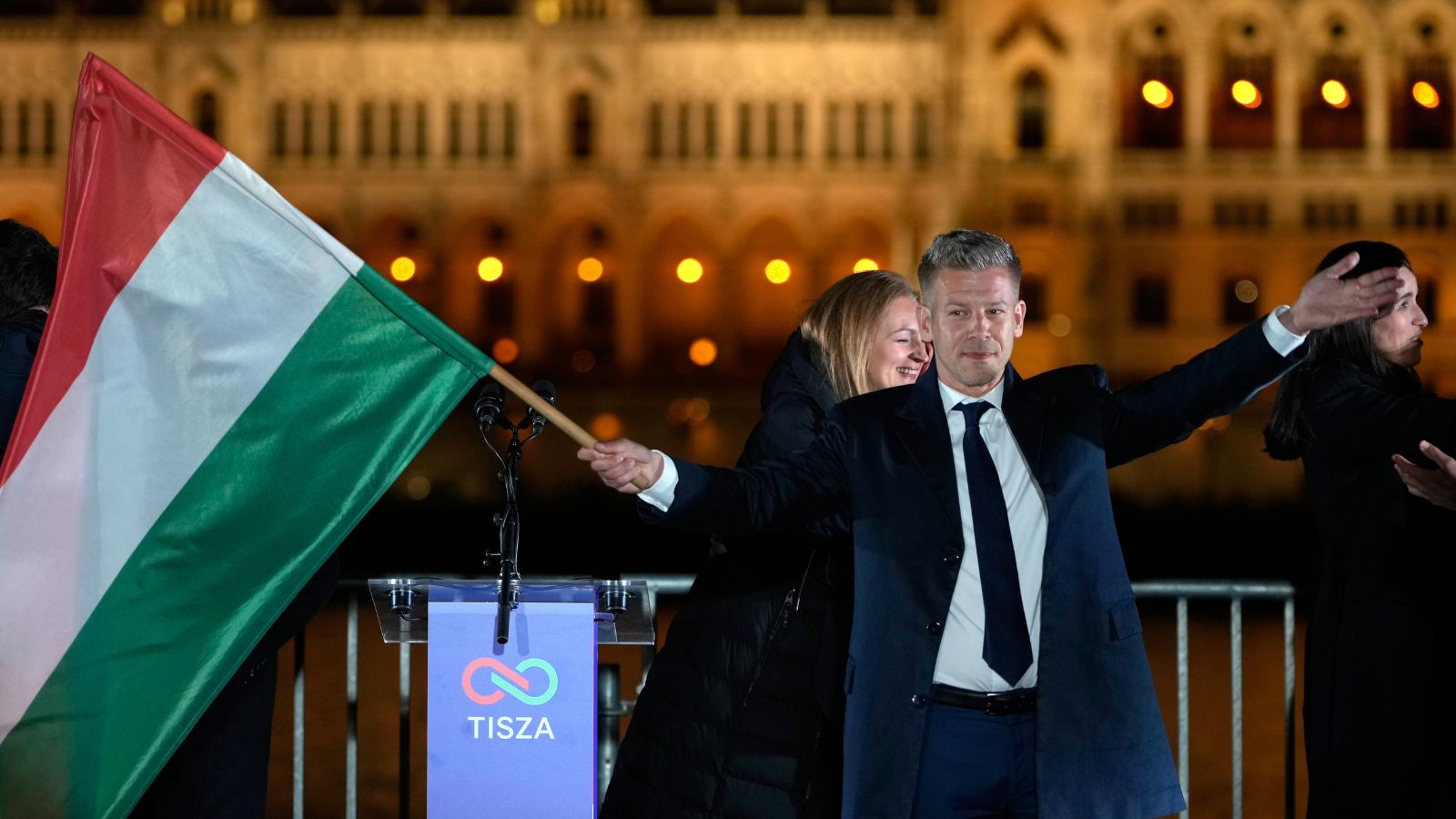
The air in Budapest changed on a Tuesday. It wasn’t a weather event. It was a sound—the collective intake of breath from a million people who had spent fourteen years whispering in darkened kitchens, suddenly realizing they might be able to shout. At the center of this atmospheric shift stood a man who, until recently, was the very definition of the Hungarian status quo.
Péter Magyar did not emerge from the fringes of a radical underground. He didn't spend decades as a starving activist or a dissident poet. Instead, he came from the velvet-lined interior of the machine itself. He was the ultimate insider. He was the husband of the Justice Minister. He sat on the boards of state-owned companies. He knew the taste of the coffee in the highest offices of the Carmelite Monastery, Viktor Orbán’s seat of power.
Then, he walked away.
The Anatomy of an Apostate
Betrayal is a messy business, but in politics, it is often the only thing that feels honest. To understand Magyar, you have to understand the world he inhabited. For over a decade, Hungary has functioned under a system often described as an "illiberal democracy," but for those living it, it felt more like a family business that had swallowed the state. Contracts went to friends. Media outlets were consolidated into a single, droning chorus. The walls felt like they were closing in.
Magyar was part of the architecture of those walls. He was a diplomat, a lawyer, and a high-ranking functionary. He saw how the gears turned. He saw who was being crushed by them.
The breaking point arrived not with a grand policy shift, but with a scandal that touched the most vulnerable parts of the national soul. When a presidential pardon was granted to a man convicted of covering up child abuse in a state-run orphanage, the moral floor dropped out from under the government. The Justice Minister, Judit Varga—Magyar’s now ex-wife—was forced to resign.
Most men in Magyar's position would have hunkered down. They would have protected their remaining assets and waited for the storm to blow over. Magyar did the opposite. He picked up a metaphorical sledgehammer and began swinging at the pillars of the house he helped build.
A Voice in the Wilderness of Screens
He began with a Facebook post. In the digital age, a revolution doesn't always start with a musket; sometimes, it starts with a status update that refuses to follow the script. He didn't just criticize the government; he named names. He detailed the inner workings of the "Propaganda Machine." He spoke about Antal Rogán, the shadowy minister who manages the state’s narrative, with the casual familiarity of a man who had shared lunch with the devil and remembered every word of the conversation.
The response was immediate and visceral.
The government’s media apparatus, a behemoth funded by billions of forints, turned its full weight toward him. They called him a disgruntled ex-husband. They called him a traitor. They tried to paint him as a puppet of foreign powers. Usually, this works. The machine is designed to grind individuals into dust until they are nothing but a cautionary tale.
But Magyar didn't crumble. He leaned in.
He released a secret recording of his ex-wife discussing corruption at the highest levels of the prosecutor's office. It was a domestic scene turned into a national crisis—the sound of a kitchen-table conversation peeling back the layers of a conspiracy. It was raw. It was uncomfortable. It was undeniably real.
The Long Walk to Kossuth Square
Imagine a retired teacher in a small town three hours from the capital. For years, she has watched the local school crumble while the village stadium gets a brand-new roof. She knows something is wrong, but the television tells her the enemy is Brussels, or George Soros, or "the West." She feels isolated in her frustration.
Then she sees Magyar. He isn't a "liberal elite" from the city. He speaks like the people in power. He looks like them. He uses their vocabulary.
When Magyar called for a protest in Budapest, he wasn't just asking for a crowd. He was asking for a census of the disillusioned. On April 6, 2024, tens of thousands of people flooded into the streets. It was the largest demonstration in a generation. They weren't there for a specific ideology. They were there because Magyar had given them permission to believe that the current reality wasn't permanent.
He stood on a stage backdropped by the Parliament building—a gothic masterpiece that often feels more like a fortress than a house of the people—and he told them that the fear was over.
"Step by step, brick by brick, we are taking back our country," he said.
Short. Sharp. Final.
The Invisible Stakes of the Center-Right
The danger Magyar poses to the Orbán administration is unique. Unlike the traditional opposition, which has been fractured and marginalized for years, Magyar occupies the "sovereigntist" space. He doesn't want to dismantle Hungary; he wants to rescue it from what he views as a kleptocratic elite.
This is a battle for the heart of the Hungarian conservative. It is a fight over what it means to be a patriot. Is patriotism blind loyalty to a leader, or is it the courage to demand that the leader be worthy of the flag?
Magyar’s party, TISZA (Respect and Freedom), began as a shell and transformed into a vessel for millions of hopes. In the European Parliament elections, he secured nearly 30 percent of the vote. In any other country, that’s a strong showing. In Hungary, where the ruling party has held a constitutional supermajority for fourteen years, it was an earthquake.
He has tapped into a exhaustion that transcends the usual left-right divide. People are tired of the constant "war" rhetoric. They are tired of being told who to hate. They are tired of seeing their doctors and teachers leave for Vienna or Berlin because the system at home rewards loyalty over competence.
The Man in the Mirror
There is, of course, a lingering question that haunts the fringes of this movement: Who is Péter Magyar, really?
Is he a true believer who finally saw the light? Or is he a master tactician who saw the ship sinking and decided to build his own boat?
Critics from the traditional opposition are wary. They remember his years of silence. They wonder if he is merely "Orbán-lite"—a version of the current system without the overt corruption but with many of the same nationalist instincts. They fear that the man who lived in the shadow might still carry the shadow within him.
Magyar doesn't shy away from these doubts. He acknowledges his past. He uses it as his primary credential. "I know how it works," he tells the crowds. "That's why I'm the one who can break it."
It is a high-stakes gamble. He is playing a game where the house always wins, and he is betting with the collective energy of a nation that has forgotten how to hope.
The Weight of the Crown
To watch Magyar on the campaign trail is to watch a man who knows he is being hunted. He moves with a calculated intensity. He is constantly on his phone, constantly broadcasting, constantly staying one step ahead of the state-controlled news cycle.
He has traded the comfort of the inner circle for the uncertainty of the town square. He has traded his reputation for a chance at a legacy.
The path to the Prime Minister’s office is long and littered with the political corpses of those who tried to challenge the incumbent. The government still controls the courts, the media, and the money. They are patient. They are waiting for him to make a mistake. They are waiting for the fervor to die down, for the winter to come, for the people to get tired again.
But for now, the momentum is a physical thing. You can feel it in the way people stop him on the street to shake his hand—not with the reverence given to a celebrity, but with the desperate grip of a drowning person reaching for a life raft.
He is no longer just a man. He has become a mirror. When Hungarians look at him, they see their own complicity, their own silence, and, perhaps for the first time in a decade and a half, their own power.
The car is waiting. The next rally is three towns away. The sun is setting over the Danube, casting long, jagged shadows across the stone faces of the kings and martyrs who line the bridges. Péter Magyar adjusts his jacket, takes a breath, and steps back into the light.
The silence has been broken. Once a bell is rung, you cannot un-ring it. You can only wait to see what the sound wakes up.