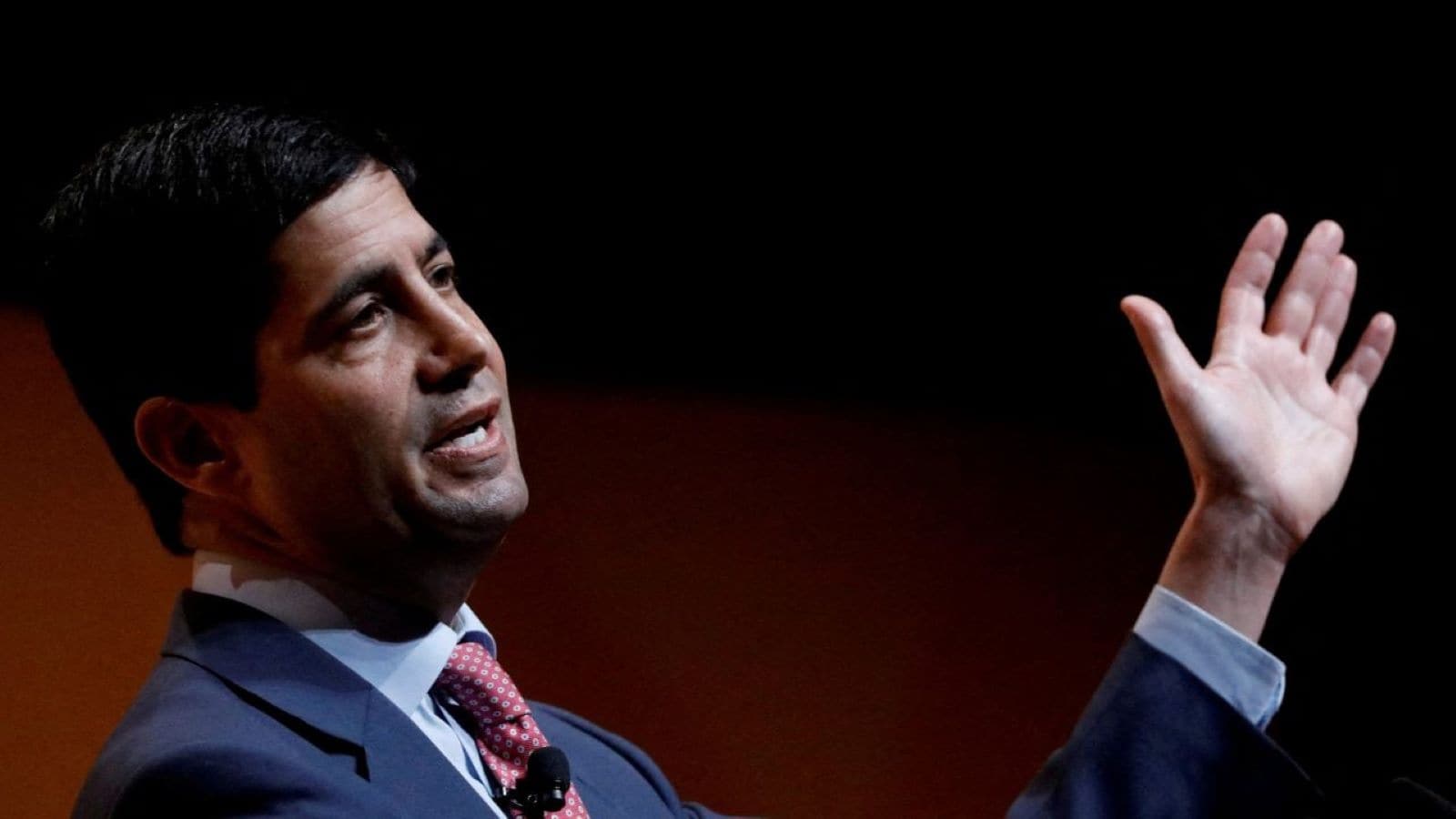
The room in the Hart Senate Office Building feels smaller than it looks on television. It is a space defined by marble, wood grain, and the heavy, invisible weight of global markets. At the center of the storm sits Kevin Warsh. He isn't just a nominee; he is a walking Rorschach test for the American economy. To some, he is the handpicked messenger of a populist president. To others, he is the last line of defense for the dollar.
But as the cameras clicked and the senators leaned into their microphones, Warsh had a different role to play. He had to prove he wasn't a ghost in someone else’s machine.
The Strings and the Stage
Every Federal Reserve Chair faces the same fundamental tension. On one side, you have the political machinery of the White House, which naturally craves low interest rates and high-octane growth to fuel election cycles. On the other, you have the cold, mathematical reality of inflation. It is a job that requires a certain kind of stubbornness—a willingness to be the most unpopular person at the cocktail party.
When Donald Trump tapped Warsh to lead the central bank, the whispers began immediately. The narrative was simple: Warsh was a loyalist, a man who would dance to the rhythm of the Resolute Desk. The term "sock puppet" started floating through the corridors of power. It’s a degrading image. It suggests a person without a spine, a vessel for another man’s voice.
Warsh knew this. He didn't avoid the term; he walked straight into it.
"I will not be a sock puppet for anyone," he told the Senate Banking Committee.
It was a sharp, monosyllabic rejection. The air in the room shifted. In that moment, the hearing stopped being a bureaucratic formality and became a study in human agency. Warsh wasn't just defending his resume; he was defending the idea of the Federal Reserve itself.
The Ghost of 1972
To understand why this matters, we have to look back at a man named Arthur Burns. In the early 1970s, Burns sat in the same seat Warsh wants. He was a brilliant economist, but he had a fatal flaw: he couldn't say no to Richard Nixon. Nixon wanted the economy humming for his 1972 re-election, and he leaned on Burns to keep the money flowing.
Burns folded. He kept rates low when he should have hiked them.
The result was a decade of economic misery. Inflation didn't just rise; it mutated into a monster that ate the savings of the American middle class. We call it "Great Inflation" now, but at the time, it felt like the end of the American Dream. People watched their grocery bills double while their paychecks stayed frozen in time. That is the ghost that haunts every Fed hearing. When a nominee says they are independent, they aren't just reciting a line from a textbook. They are promising they won't be another Arthur Burns.
Warsh’s career has been a long preparation for this specific tension. He served on the Fed board during the 2008 financial crisis, a time when the world seemed to be melting. He saw firsthand how quickly "certainty" can evaporate. He knows that the markets don't care about campaign promises. The markets only care about credibility. If the world believes the Fed Chair is taking orders from the Oval Office, the dollar loses its soul.
The Arithmetic of Independence
The Fed operates on a simple, brutal logic. If the economy gets too hot, the Fed raises interest rates to cool it down. It’s like being the designated driver at a party that is getting out of hand. You are the person who has to take away the punch bowl just when the music gets loud.
President Trump has never liked the designated driver. He has been vocal about his desire for a "weak" dollar and lower rates. For Warsh, the challenge isn't just surviving the Senate; it’s surviving the expectations of the man who nominated him.
During the hearing, Senator Sherrod Brown and others pushed Warsh on this exact point. They wanted to know how he would react if the President called him at 2:00 AM to complain about a rate hike. Warsh didn't flinch. He spoke about the "institutional integrity" of the Fed. He used the language of a man who understands that his power doesn't come from the President, but from the law.
But words are cheap in Washington. The real test is the "why" behind the policy. Warsh argued that his primary allegiance is to the mandate: maximum employment and stable prices. He framed independence not as a luxury, but as a prerequisite for a functioning society. Without it, the economy becomes a toy for politicians, and toys eventually break.
The Human Cost of a Weak Fed
We often talk about "basis points" and "quantitative easing" as if they are abstract concepts found only in spreadsheets. They aren't. They are the difference between a family being able to afford a home or being stuck in a rental cycle forever. They are the difference between a small business expanding or laying off half its staff.
If the Fed Chair is a "sock puppet," the policy becomes erratic. It becomes short-term. It focuses on the next six months instead of the next six years.
Warsh’s testimony was a masterclass in navigating this minefield. He managed to signal respect for the administration’s goals—deregulation and growth—while simultaneously drawing a thick, red line around the Fed’s autonomy. He was, in effect, telling the President: "I agree with your destination, but I am the one driving the bus."
It is a delicate balance. If he is too defiant, he loses the support of the White House. If he is too compliant, he loses the confidence of the global financial system. Warsh chose a path of intellectual rigor. He leaned into his experience at Morgan Stanley and his years in the trenches of the 2008 crash. He presented himself as a technocrat with a pulse.
The Invisible Stakes
There is a specific kind of silence that falls over a room when a speaker hits a nerve. Warsh hit that nerve when he discussed the "humility" required for the job. He admitted that the Fed doesn't have all the answers. He acknowledged that the models often fail.
This vulnerability is rare in high-stakes hearings. Most nominees try to appear invincible. Warsh did the opposite. By admitting the limitations of the office, he actually made his argument for independence stronger. If the job is this hard and the margin for error is this slim, you cannot afford to have a political thumb on the scale.
The hearing wasn't just about Kevin Warsh. It was a proxy war over the future of American institutions. In an era where every branch of government feels increasingly polarized, the Federal Reserve remains one of the last bastions of non-partisan decision-making. Or at least, that is the ideal.
The skepticism from the Senate was healthy. It was necessary. They asked about his past views on inflation, his ties to Wall Street, and his relationship with the Trump family. They poked for soft spots.
Warsh remained composed. He didn't offer the easy, soaring rhetoric of a politician. He spoke with the clipped, precise cadence of a man who spends his days looking at yield curves. But beneath the technical jargon, there was a clear, human message: I know who I am.
The Weight of the Gavel
As the hearing wound down, the "sock puppet" narrative seemed to have lost its teeth. Whether you agree with Warsh’s economic philosophy or not, it became difficult to argue that he is a man without a mind of his own. He walked into a room where his autonomy was being questioned and walked out having staked a claim to his own identity.
But the story doesn't end with a Senate vote. The true narrative of Kevin Warsh will be written in the months and years to follow. It will be written in the minutes of the Federal Open Market Committee meetings. It will be written in the quiet moments when the President sends a tweet criticizing a rate hike and Warsh has to decide whether to look at his phone or look at the data.
Being the Fed Chair is a lonely job. You sit in a massive office, surrounded by some of the smartest people in the world, and you make decisions that will affect the lives of hundreds of millions of people who will never know your name. You are the architect of a structure most people only notice when it starts to lean.
Warsh has asked for the gavel. He has promised to use it with an independent hand.
In a world that loves to pull strings, there is something profoundly compelling about a man standing in the spotlight, insisting that he is not a puppet. He has set the stage. Now, the world waits to see if he can keep his word when the music starts to play and the pressure from the wings becomes unbearable. The marble walls of the Hart building have heard many promises before, but rarely has so much depended on a single man's refusal to be a shadow.
The dollar is more than just paper and ink; it is a contract of trust. Kevin Warsh just signed his name to that contract. The ink is still wet.