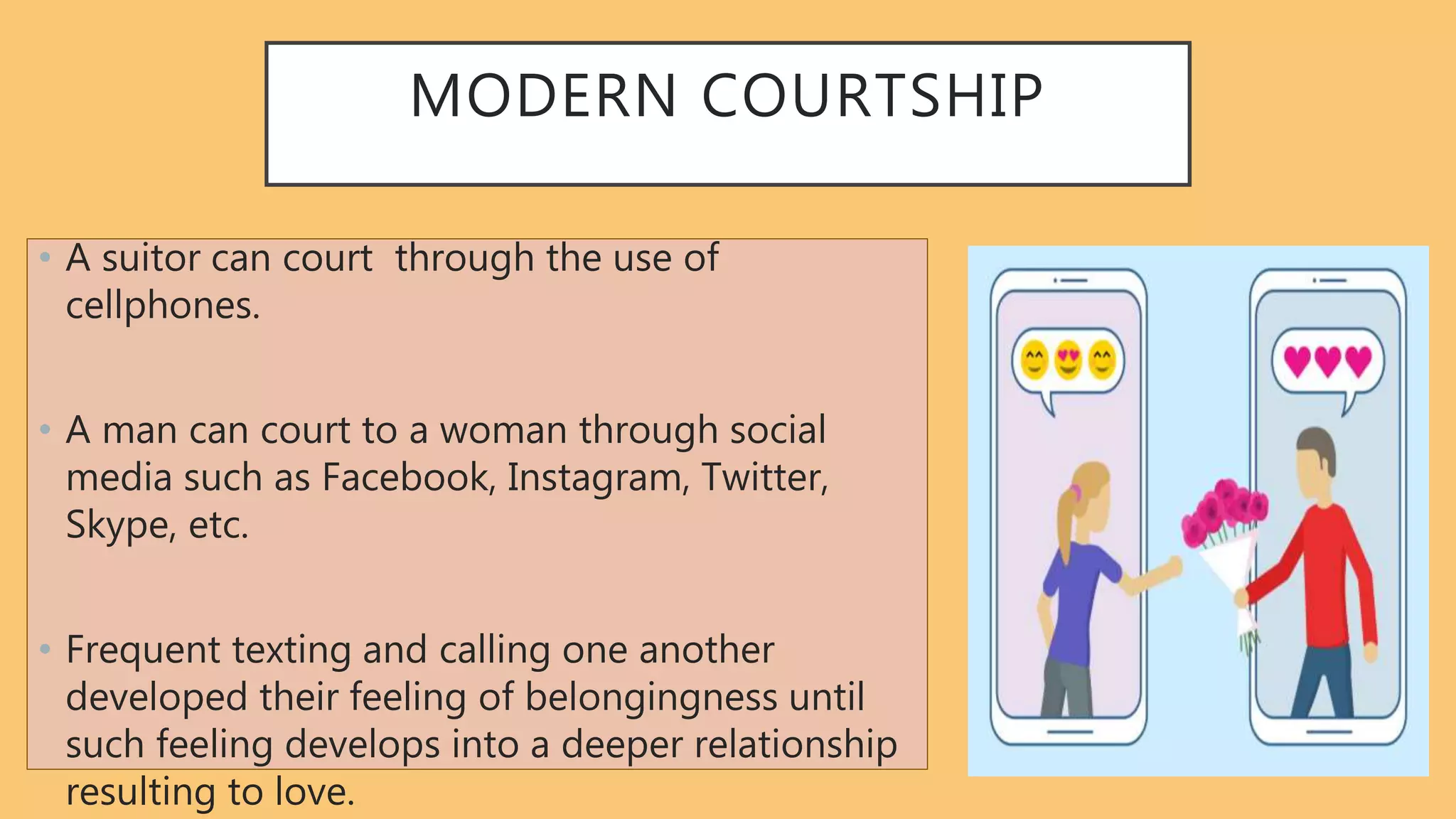
Gen Z is experiencing a systemic contraction in dating activity driven by the intersection of diminishing purchasing power and the failure of digital matching algorithms to deliver a return on invested time. While surface-level surveys attribute this shift to "dating fatigue," a rigorous analysis reveals a more complex structural bottleneck: the rising marginal cost of romantic pursuit is currently outpacing the expected utility of the outcome. This creates a market where young adults are not simply "taking a break," but are rationally de-leveraging from a high-risk, low-yield social asset class.
The Cost Function of the Modern Date
The financial barrier to entry for a standard dating cycle—defined as the progression from initial digital match to a third in-person encounter—has shifted from a discretionary expense to a significant budgetary line item. To understand why young Americans are scaling back, we must quantify the Total Cost of Pursuit (TCP). Also making news lately: Stop Planting Trees if You Actually Care About the Planet.
TCP is not merely the price of a cocktail or a meal. It is a composite variable:
$TCP = C_{direct} + C_{opportunity} + C_{digital}$
- Direct Costs ($C_{direct}$): Inflation in the hospitality sector has disproportionately affected "entry-level" dating activities. Between 2021 and 2025, the Consumer Price Index for "food away from home" and urban transport (rideshare/fuel) consistently outpaced general wage growth for workers aged 18–26. A standard "first date" in a Tier 1 metropolitan area now frequently exceeds $80 when factoring in two rounds of drinks and transportation.
- Opportunity Costs ($C_{opportunity}$): Gen Z faces an increasingly competitive labor market and a gig economy that demands high availability. The four to six hours required for grooming, travel, and the date itself represent lost time that could be allocated to skill acquisition or supplemental income.
- Digital Subscription Costs ($C_{digital}$): The gamification of dating apps has led to a "pay-to-play" ecosystem. Features that were once standard—such as seeing who liked your profile or location flexibility—are now gated behind tiered monthly subscriptions (Gold, Platinum, Select) that can range from $25 to $500 per month.
When the probability of a successful match (defined as a long-term partner or even a repeatable social connection) remains low, the Expected Value (EV) of a date often turns negative. Rational actors, particularly those with limited disposable income, respond by withdrawing from the market to preserve capital. Further details into this topic are detailed by Refinery29.
The Efficiency Paradox of Algorithmic Matching
The transition from organic social discovery to algorithmically mediated matching was intended to reduce search friction. Instead, it has introduced a "Paradox of Choice" that creates a secondary layer of friction: Decision Paralysis and Signal Noise.
The Three Pillars of Digital Friction
- The Saturation Effect: Algorithms prioritize engagement over outcomes. By presenting an infinite scroll of potential partners, apps induce a "shopping" mindset rather than a "connecting" mindset. This devalues the individual, as the user assumes a "better" match is exactly one swipe away.
- Asymmetric Information: Profiles are curated marketing assets, not accurate data sets. The time spent filtering for "truth" in a profile—cross-referencing social media, verifying career claims, and gauging physical chemistry—adds a cognitive load that organic meeting places (work, school, hobbies) naturally mitigate through long-term observation.
- The Feedback Loop Failure: In a traditional social circle, a bad date carries social consequences or provides clear feedback through mutual friends. In the anonymous digital market, "ghosting" has become the standard mechanism for exit. This lack of closure prevents users from refining their approach, leading to a repetitive cycle of failed interactions that compounds psychological burnout.
The Rise of Selective Isolationism
The reduction in dating frequency is not a sign of decreased desire for intimacy, but a shift toward Selective Isolationism. This is a defensive social strategy where individuals prioritize high-certainty internal networks (close friends, family, or online communities) over the high-uncertainty external market of strangers.
This shift is reinforced by the "Safety Tax." For many young women, the cost of dating includes a non-monetary safety assessment—sharing locations with friends, vetting backgrounds, and staying in public spaces. As the perceived threat or annoyance of meeting "bad actors" increases, the threshold for a stranger to be "worth the risk" rises. We are seeing the emergence of a Vetting Bar that most casual app users simply cannot clear.
Institutional Failures and the Third Place Crisis
The decline in dating is fundamentally linked to the erosion of "Third Places"—physical locations that are neither home nor work where people can congregate without the requirement of a high-ticket purchase.
- Commercialization of Space: Public parks, community centers, and affordable cafes are being replaced by high-rent retail or "experience-based" venues (e.g., boutique bowling, luxury cinemas). This eliminates the "low-stakes encounter" zone.
- Remote Work Dynamics: The shift to hybrid and remote work has removed the most common historical driver of romantic pairing: the workplace or the commute. Without the "proximity effect," all romantic efforts must be intentional, which increases the pressure on each individual interaction to succeed.
When every social interaction requires a reservation, a cover charge, and a pre-planned itinerary, the "spontaneous" romance that fueled previous generations becomes a logistical impossibility.
Quantifying the Burnout: The Law of Diminishing Social Returns
Social burnout is often treated as a mental health issue, but in the context of dating, it is a metabolic reality. The human brain is not evolved to process hundreds of potential "mates" in a single afternoon.
The Dopamine Depletion Cycle occurs when the "reward" of a match notification is disconnected from the "effort" of a real-world connection. Users receive a spike of dopamine from the app's interface, but the subsequent real-world interaction often fails to meet that high, leading to a "crash." Over months or years, this desensitizes the user to the prospect of meeting someone new.
The result is a demographic that is "connected" but functionally lonely. The survey data showing young Americans are dating less is simply the lagging indicator of a decade-long depletion of social resilience.
Strategic Recalibration: The Pivot to Intentionality
To navigate this environment, the emerging trend is a move away from "Volume Dating" toward "High-Intent Micro-Markets." This involves:
- Niche Aggregation: Moving away from mass-market apps (Tinder, Bumble) toward interest-based communities (run clubs, specialized hobby groups, professional associations). These environments offer pre-vetted compatibility and lower $C_{direct}$.
- The "Slow-Burn" Protocol: Re-introducing time as a vetting tool. Rather than immediate one-on-one dates, individuals are opting for group-based social settings where they can observe potential partners over multiple low-pressure interactions.
- Financial Boundary Setting: A rejection of the "dinner date" standard in favor of "low-cost, high-activity" meetings. This normalizes the protection of personal capital while focusing on chemistry rather than consumption.
The contraction of the dating market is a necessary correction. The previous decade's "hookup culture" and "infinite swipe" models were built on the assumption of cheap capital and endless time—neither of which Gen Z currently possesses. The future of dating will likely be characterized by a return to localized, high-trust networks where the "cost of entry" is shared interest and consistent presence, rather than a monthly subscription fee.
The strategic play for the individual is to stop competing in the mass-market digital arena where the house (the app) always wins. Success in the current landscape requires a total withdrawal from high-friction digital platforms in favor of reinvesting that time and capital into tangible social capital—building a lifestyle that attracts partners through proximity and shared utility rather than curated digital advertisements.