The hum of a Boeing 777 is usually a lullaby. It is a steady, mechanical reassurance that the laws of physics are holding firm and that, in fifteen hours, the fog of San Francisco will replace the shimmering heat of Dubai. But somewhere over the dark expanse of the Persian Gulf, that hum changed. It didn’t get louder. It didn’t sputter. Instead, it became the only sound in a cabin where three hundred people had suddenly stopped breathing in unison.
Phones didn't ring—there was no signal—but news has a way of leaking through the fuselage like pressurized air. A whisper from a flight attendant. A frantic refresh of an expensive, patchy Wi-Fi connection. A map on a seatback screen showing a flight path slicing directly through a sky that was currently being lit by the arc of ballistic missiles.
This wasn't just a flight. It was a metal tube carrying grandmothers, tech consultants, and toddlers, suspended in the crossfire of a brewing war.
The Geography of Anxiety
When you look at a flight map, the lines are elegant and curved. They represent the shortest distance between two points on a rotating sphere. They do not show the invisible borders of surface-to-air missile batteries or the political tensions that turn a routine commute into a gamble.
For the passengers on Emirates Flight EK225, the reality of the Middle East conflict wasn't a headline or a pundit’s talking point. It was the view out the window. As Iran launched its retaliatory strikes against Israel, the airspace became a chaotic puzzle. Pilots were forced to make split-second decisions: do we turn back, divert to a third country, or push through the narrow corridors of "safe" air remaining?
Imagine sitting in 34B. You are traveling to see your daughter graduate. You have a book in your lap that you haven't turned a page of in three hours. Every time the plane banks, your stomach drops. Is the pilot turning away from a threat? Or is this just turbulence?
The fear on a plane during a geopolitical crisis is unique because it is claustrophobic. On the ground, you can run. You can find a basement. At 35,000 feet, you are a captive audience to history.
The Silence of the Crew
The hallmark of a crisis in the air is often found in what isn't said. Flight crews are trained to be the personification of calm. They move through the aisles with a practiced, rhythmic grace, offering tea and lukewarm pasta while the world below tears itself apart.
On this flight, the masks of professional detachment began to slip. Passengers reported seeing flight attendants huddled in the galleys, eyes fixed on their own mobile devices, their faces pale in the glow of the screens. When the announcement finally came from the cockpit, it was sparse. It mentioned "operational adjustments" and "regional activity."
It did not mention that the sky behind them was filled with fire.
Human beings are experts at reading between the lines. We are wired to detect the slight tremor in a captain's voice or the way a purser grips the back of a seat. For those on board, the "war scare" wasn't a singular event. It was a thousand small realizations layered on top of each other. It was the sight of a diverted flight path on the monitor, a jagged detour that added hours to a journey that already felt eternal.
The Invisible Stakes of Global Travel
We live in an era where we expect the world to be seamless. We book a flight on an app, walk through a jet bridge, and expect the geopolitical climate to pause for our convenience. We treat the sky as a neutral territory, a high-altitude highway that belongs to no one.
Events like the Iran-Israel escalation shatter that illusion. They remind us that the infrastructure of our lives—the cables under the ocean, the satellites in orbit, and the planes in the sky—is incredibly fragile.
Consider the logistical nightmare of a closed airspace. When a major hub like Dubai or a transit corridor like Iran becomes "hot," the ripple effect is global. Thousands of tons of jet fuel are burned in holding patterns. Crews reach their legal limit of flying hours, forcing planes to land in cities they were never meant to visit. But those are the cold facts. The human cost is the wedding missed in San Jose, the final goodbye at a bedside in Oakland, and the psychological toll of wondering if your flight will become the next tragic headline.
The Landing
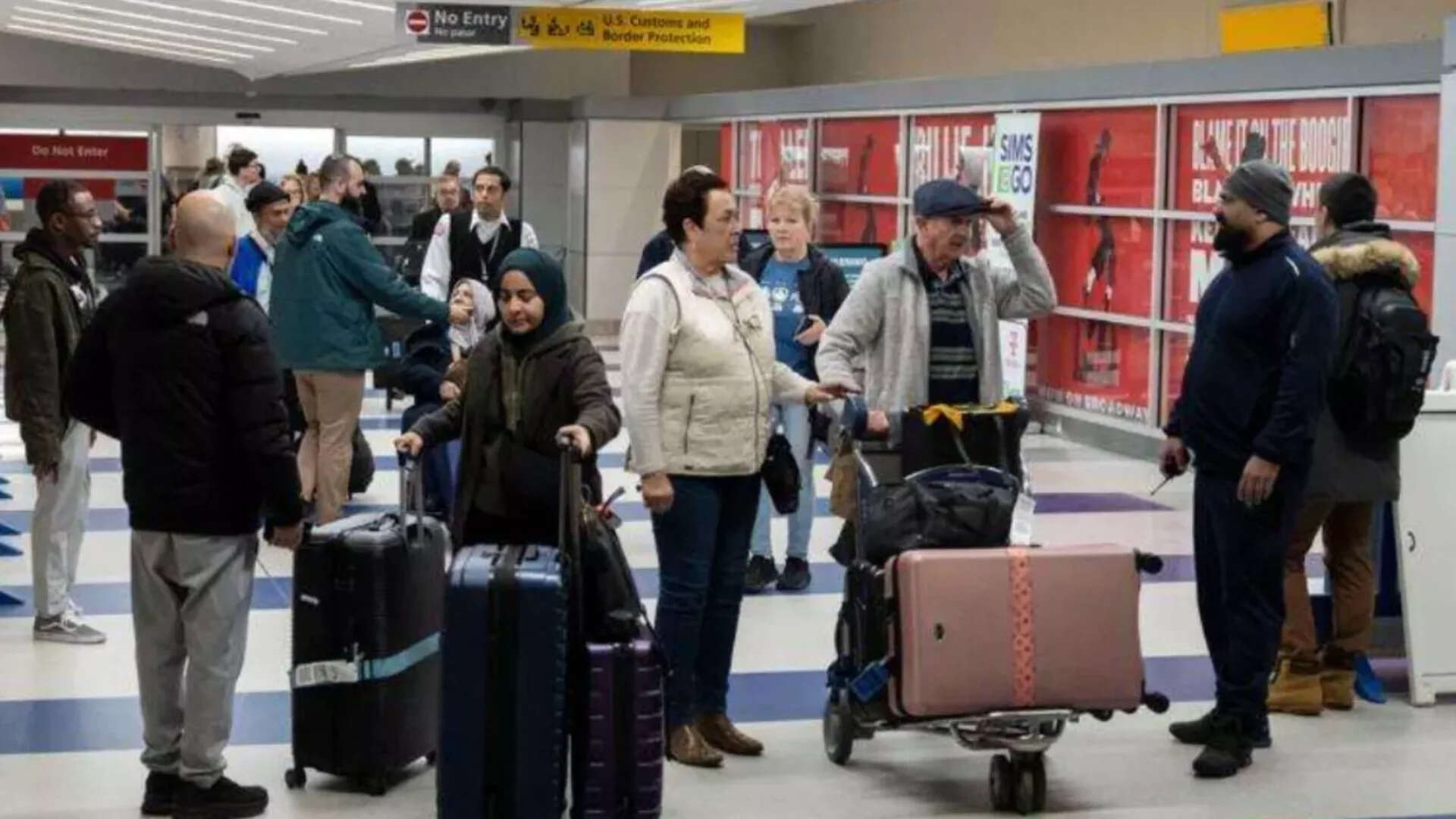
When the wheels finally touched the tarmac at San Francisco International Airport, there was no cheering. Most passengers described a heavy, leaden sense of relief. They walked through the terminal like ghosts, still carrying the weight of the night they spent over the Gulf.
One passenger, clutching a carry-on bag with trembling hands, spoke of the "explosions" they feared were happening just beneath their feet. They weren't being hyperbolic. When you are flying through a war zone, the imagination fills the silence with the worst possible outcomes.
Logic tells us that commercial or civilian aircraft are rarely targeted intentionally. History, however, whispers names like MH17 or PS752. That is the ghost that sits in the empty middle seat during a war scare. It is the knowledge that "unlikely" is not the same as "impossible."
The flight from Dubai to San Francisco is one of the longest in the world. It bridges two different realities—the high-stakes tension of the Middle East and the tech-heavy optimism of Northern California. On this day, that bridge felt thinner than a sheet of aluminum.
The Aftermath of a Scare
We often talk about war in terms of territory gained or lost. We count the missiles and measure the debris. We rarely talk about the terror that doesn't leave a mark.
The people who stepped off that flight will go back to their lives. They will drive home, sleep in their own beds, and eventually, the adrenaline will fade. But the next time they hear a plane overhead, or the next time they see a "Breaking News" alert about a distant desert, they won't think of it as a remote event. They will remember the way the cabin felt when the Wi-Fi died and the pilot stopped talking.
They will remember that for six hours, they weren't just passengers. They were pawns in a game played by people who would never know their names.
The sky is no longer a vacuum. It is a theater. And sometimes, the most harrowing stories are the ones where nothing actually happens—except the realization of how close we are to the edge.
The terminal at SFO is bright, sterile, and safe. Outside, the morning sun hits the bay, turning the water into a sheet of hammered silver. It is a beautiful, ordinary day. But for three hundred people, the world looks different than it did yesterday. The hum of the engines has finally stopped, but the silence that replaced it is much louder than they expected.
The long night is over, but the sky has lost its innocence.