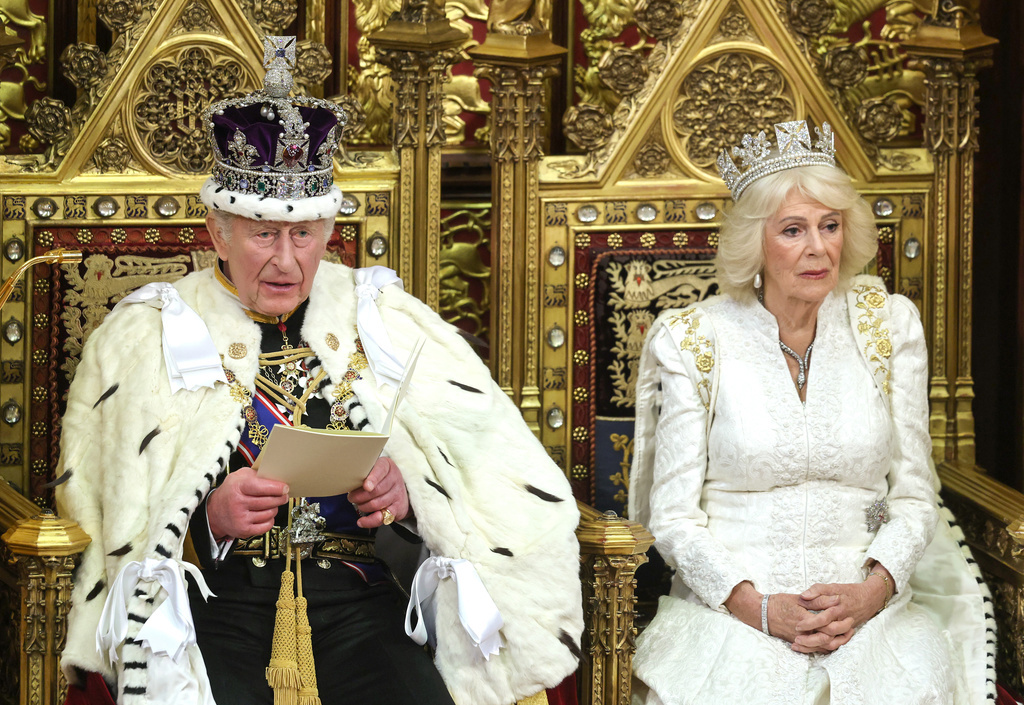
The British monarchy is supposed to stay above the fray of party politics. That's the theory, anyway. In practice, the King Charles Speech often feels like a hostage situation where a monarch is forced to read out a script they didn't write for a government they might not even like. When the Prime Minister is facing a revolt from their own backbenchers and tanking in the polls, that royal spectacle shifts from traditional to flat-out uncomfortable.
We saw this play out recently in a display that many observers called preposterous. Imagine the King, a man who has spent decades championing environmental causes and organic farming, standing in the House of Lords to announce policies that seem to run counter to his life's work. He's not just a figurehead in these moments. He's a mouthpiece for a political survival strategy. The PM isn't just asking for the King’s blessing; they’re using the crown as a shield against a restless public and a fractured party. Building on this topic, you can find more in: The Senate Standoff Is Not About Justice It Is A Masterclass In Political Survival.
Why the King Speech feels so wrong right now
The core of the issue isn't the tradition itself. It’s the timing. When a Prime Minister is under siege, every word the King speaks becomes a political weapon. If the government proposes controversial new oil and gas licenses or changes to welfare, the King has to say "My Government will..." as if he's the one behind the wheel. He isn't. Everyone knows it, and that's what makes the ceremony feel increasingly like a bizarre piece of theater.
Constitutional experts have long debated the "dignified" versus the "efficient" parts of the British constitution. The King is the dignified bit. The PM is the efficient bit. But when the efficient bit stops working—when the government is paralyzed by infighting—the dignified bit gets dragged into the mud. It creates a friction that's hard to ignore. You've got a King who wants to be a modernizing force, yet he's tethered to a legislative agenda designed primarily to save a PM’s skin before the next election. Experts at NBC News have provided expertise on this situation.
The PM strategy of using the Crown as a distraction
Let's look at what's actually happening behind the scenes. A Prime Minister under pressure needs a "reset." They need a moment to grab the headlines and shift the narrative away from scandals or economic failures. The King Speech provides exactly that. It's a gold-plated distraction. By filling the speech with "wedge issues"—policies designed to annoy the opposition rather than actually improve the country—the PM forces the King to participate in a partisan dogfight.
I've watched these ceremonies for years. Usually, there's a sense of gravity. Lately, it feels more like a desperate PR exercise. The government knows that the visuals of the King in his robes, surrounded by the pageantry of Westminster, command respect. They're hoping some of that respect rubs off on their legislative agenda. It's a cynical move. It puts the monarch in a position where he can't win. If he looks bored, he’s criticized. If he looks engaged, he’s accused of meddling.
The environmental contradiction
One of the biggest sticking points is the climate. King Charles has a documented history of environmental activism. He was talking about plastic pollution and global warming back when it was considered "eccentric." Now, he’s often put in the position of announcing rollbacks on green targets. It’s a glaring contradiction.
You can see the tension on his face. While he maintains a professional "royal poker face," the gap between his personal convictions and the government’s requirements has never been wider. This isn't just about optics. It's about the credibility of the monarchy in a world where people expect leaders—even symbolic ones—to have some form of moral consistency.
What this means for the future of the monarchy
If the King Speech continues to be used as a political tool for embattled leaders, the institution risks losing its perceived neutrality. That’s a dangerous game. The monarchy’s survival depends on being "of the people," not "of the party." When the public sees the King being used to spruik (as the Australians say) a failing PM’s plan, it fuels republican sentiment.
Younger generations aren't as enamored with the "pomp and circumstance" if they feel it’s being used to mask a lack of real progress. They see the gold coach and the diamonds and then they look at the cost-of-living crisis. They see the King reading out plans that won't help them pay their rent. The contrast is jarring. It makes the whole affair look out of touch, or worse, complicit.
The legal reality vs the public perception
Legally, the King has no choice. The Royal Prerogative is a bit of a misnomer in the 21st century. He acts on the advice of his ministers. If he refused to read the speech, it would trigger a constitutional crisis the likes of which Britain hasn't seen in centuries. So, he reads it.
But public perception doesn't care about constitutional law. People see a man with a crown on his head telling them that "his" government is going to do X, Y, and Z. They hold him accountable for those words, even if he didn't write them. The PM knows this. They’re happy to let the King take the heat for unpopular policies while they hide behind the curtain of "royal tradition."
Breaking the cycle of political theater
How do we fix this? Some suggest moving toward a more "Scandinavian" model of monarchy—less gold, more bicycles. Others think the speech should be delivered by the PM directly, leaving the King out of the legislative process entirely. That would certainly remove the "preposterous" element.
Until then, we’re stuck with this awkward dance. The King will continue to read the scripts handed to him, and the PM will continue to use those scripts to try and save their career. It’s a cycle that serves the politicians, but it doesn't necessarily serve the country or the crown.
The next time you watch the opening of Parliament, don't just look at the crown jewels. Look at the man wearing them. Listen to the words he’s saying and ask yourself if they sound like something he’d actually believe. If they don't, you’re witnessing the latest chapter in the ongoing struggle between a centuries-old institution and the messy, desperate world of modern politics.
Keep an eye on the specific bills mentioned in the next cycle. If they focus heavily on divisive social issues rather than infrastructure or the economy, you know the PM is in survival mode. Watch the body language of the royals during these events. It tells a much bigger story than the official transcript ever could. Pay attention to the fringe protests outside too. They're often a better barometer of the national mood than the invited guests in the Lords.