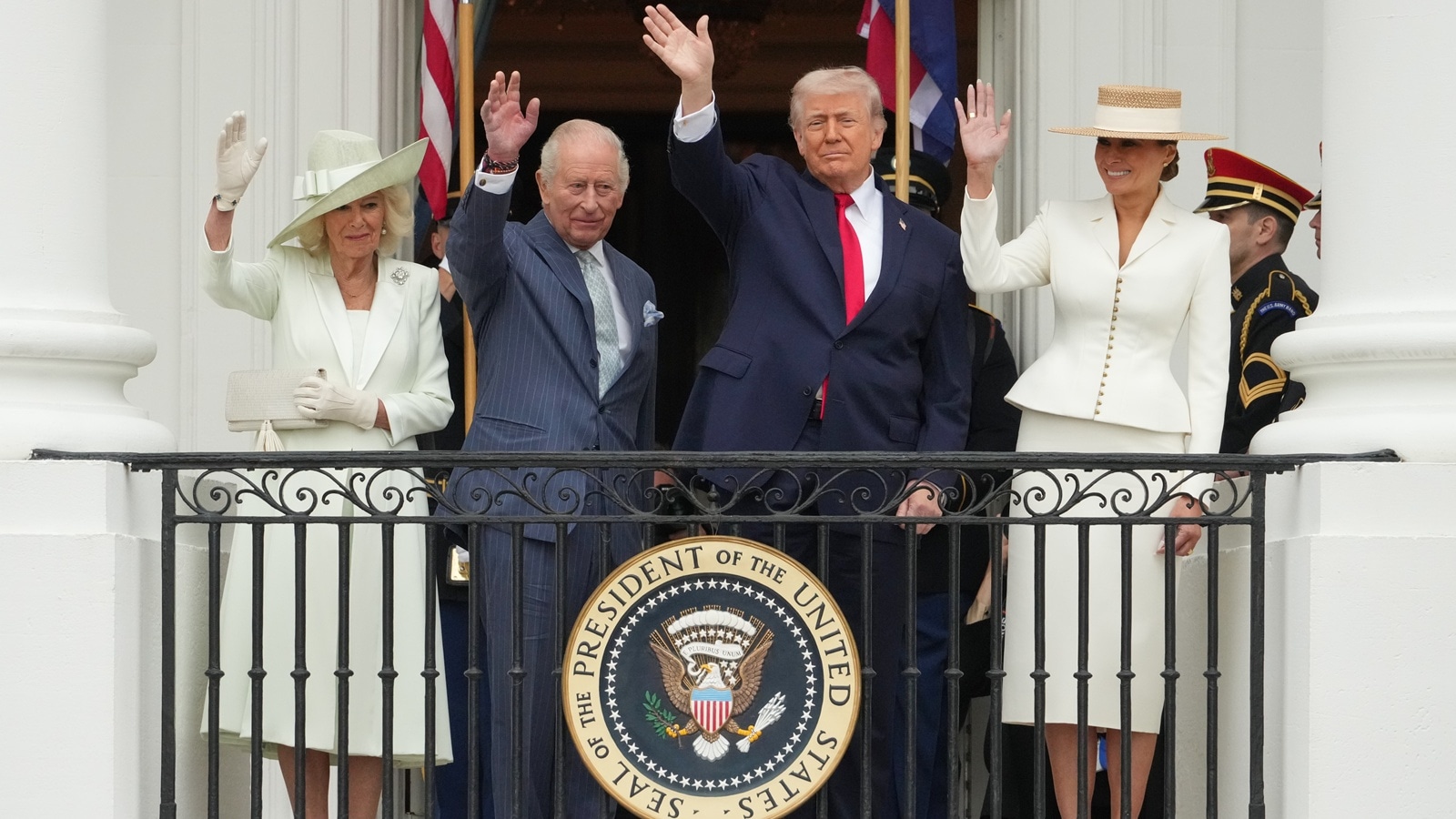
Don’t let the gold-trimmed tea sets and practiced smiles fool you. When King Charles III walked into the White House this week to greet Donald Trump, the stakes were a lot higher than just a polite photo op. It’s been nearly twenty years since a British monarch set foot in D.C. for a state visit. Doing it now, while the world feels like it's on a knife-edge, is a massive gamble.
The King isn't just here for the 250th anniversary of America’s independence—an anniversary that’s a bit ironic considering his ancestor was the one the colonists kicked out. He’s here to perform a specific kind of soft-power surgery on a "Special Relationship" that has been looking pretty bruised lately.
The optics of the handshake
When Charles and Queen Camilla pulled up to the South Portico on Monday, the mood seemed unexpectedly warm. Trump, who has never hidden his respect for the monarchy or his own Scottish roots, looked genuinely thrilled. They did the usual rounds: tea in the Green Room, a look at the newly expanded White House beehive, and plenty of handshakes.
But look closer at the backdrop. Behind them sat a painting of the now-famous raised-fist image from Trump’s 2024 campaign. It was a sharp reminder that this isn't just a royal visit; it's a meeting between two very different types of power in a very polarized city. Washington is still on edge after a security scare just days ago, yet the ceremony went on. That’s the point of these visits. They provide a sense of stability when everything else feels chaotic.
Diplomacy behind closed doors
Honestly, the real work happens when the cameras aren't rolling. British officials were reportedly terrified that a public meeting might turn into a repeat of the awkward, televised lectures Trump has given other world leaders in the past. They pushed hard for the bilateral talks to stay private.
It's a smart play. Charles can’t talk policy—he’s a constitutional monarch, after all—but he can bridge gaps. With the UK government currently at odds with the White House over everything from the war in Iran to trade tariffs, the King acts as the ultimate "good cop."
The strategy is simple.
- Use the pomp to soften the edges.
- Lean into shared history.
- Keep the conversation focused on long-term bonds rather than short-term political fights.
You might think 3,000 sandwiches at an embassy garden party is just fluff. But when those sandwiches include British roast beef—a product recently freed from US trade tariffs—the symbolism is loud. Every bite is a diplomatic nudge.
A historic moment at the Capitol
Tuesday afternoon was the real test. Charles stood before a joint session of Congress, only the second British monarch to ever do so. His mother, Queen Elizabeth II, did it in 1991. Since then, the world has become, in the King’s own words, "more volatile and more dangerous."
He didn't shy away from the hard stuff. He received a standing ovation when he mentioned that executive power is subject to "checks and balances." It was a subtle, expert move. It acknowledged the American system of government without sounding like he was wagging a finger. That’s the kind of high-wire act you only get from someone who’s been training for this role for seven decades.
What people get wrong about royal visits
Most people think these trips are just expensive vacations paid for by taxpayers. They aren't. They’re high-level marketing. In a world where trade deals depend as much on "vibes" as they do on line items, having the King charm the President is a strategic asset.
It’s also about the "long game." Presidents come and go every four or eight years. The monarchy stays. By showing up in Washington, Charles is reminding the US that the UK is a permanent partner, regardless of who is sitting in the Oval Office or 10 Downing Street.
What happens next
The Washington leg is basically the "heavy lifting" part of the trip. Now, the royals are heading to New York to visit the 9/11 Memorial. It’s a shift from political power to shared grief and resilience.
If you’re following this, don't just watch the speeches. Watch the body language. Look at the guests at the state banquet. The real indicators of success won't be in a press release; they’ll be in whether the tension between the Trump administration and the UK government starts to thaw in the coming months.
Pay attention to:
- Any shift in trade rhetoric following the King's visit.
- How the White House describes the "Special Relationship" in the next few weeks.
- Whether the "checks and balances" comment from the King’s speech gets used by either side in DC's ongoing internal battles.
This wasn't just a trip down memory lane for a 250-year-old birthday. It was a reset button.