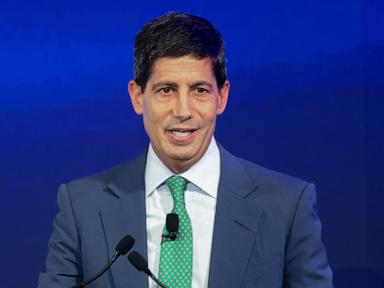
Kevin Warsh is walking into a Lion’s Den on Capitol Hill, and the stakes involve far more than a simple job promotion. As Donald Trump’s nominee to lead the Federal Reserve prepares to testify before Congress, he isn’t just auditioning for a seat at the head of the mahogany table. He is stepping into a political crossfire fueled by an unprecedented investigation into Jerome Powell’s tenure. This isn't a routine hearing. It is a fundamental referendum on whether the central bank remains a technocratic fortress or becomes an extension of the Executive Branch.
For decades, the Federal Reserve has operated under the shield of independence, a concept that markets treat with religious-like devotion. Warsh, a former Fed Governor and Morgan Stanley banker, knows this dance better than anyone. However, his nomination arrives at a moment of extreme friction. The Trump administration has made no secret of its dissatisfaction with the current Fed leadership, and the ongoing "Powell probe" is the blunt instrument being used to clear the way for a new era of monetary policy.
The Ghost in the Hearing Room
While Warsh will be the one at the witness table, the shadow of Jerome Powell will dominate the questioning. The congressional probe into the current Fed Chair is examining everything from the timing of interest rate cuts to internal communications regarding inflation targets. Critics call it a politically motivated witch hunt; proponents call it overdue accountability for the "transitory" inflation debacle of 2021.
Warsh must navigate this without appearing like a hatchet man. If he leans too hard into the criticism of Powell, he risks spooking the bond markets, which view institutional stability as the bedrock of the U.S. Dollar. If he defends the status quo, he risks alienating the very administration that handpicked him to shake up the system. It is a razor-thin tightrope.
The investigation itself serves as a convenient backdrop for the White House. By framing Powell’s leadership as flawed or even negligent, the administration creates the "moral" mandate for Warsh to implement a more aggressive, pro-growth agenda. This isn't just about personalities. It is about a structural shift in how the $28 trillion U.S. Treasury market is managed.
The Warsh Doctrine on Inflation and Growth
Warsh has long been a critic of the Fed’s reliance on complex econometric models. He prefers a "common sense" approach that looks at real-time market signals rather than lagging data points like the Consumer Price Index (CPI). To Warsh, the Fed often moves too late because it is staring in the rearview mirror.
His testimony will likely focus on three core pillars that have defined his career:
- Market-Led Signals: Warsh believes the yield curve and gold prices often tell a truer story than government-produced statistics.
- Regulatory Reform: He views the post-2008 banking regulations as a drag on liquidity and wants to see a significant "slimming down" of the Fed’s oversight role.
- Fiscal Coordination: This is the controversial part. Warsh has hinted that the Fed and the Treasury should be more aligned, a move that critics say sounds dangerously like the end of central bank independence.
Expect senators to grill him on the third point. If the Fed becomes a tool to help the Treasury finance massive deficits at low interest rates, the long-term risk to the dollar’s status as a reserve currency becomes a localized reality rather than a theoretical threat.
Why This Time Is Different
In previous confirmation hearings, the drama was usually reserved for social issues or minor personal scandals. Not here. This is a battle over the soul of the American economy. We are currently seeing a divergence between fiscal policy—which is running hot with deficit spending—and monetary policy, which has been trying to cool things down with higher rates.
Warsh is being brought in to bridge that gap. The "Trump trade" that has dominated markets relies on the assumption that Warsh will provide a "softer landing" for the administration's tariff and tax policies. If he signals a hawkish stance to prove his independence during the hearing, the market reaction could be violent.
The Shadow Federal Reserve
There is a growing theory in Washington circles that the administration isn't just looking for a new Chair, but a complete overhaul of the Fed's operating manual. The probe into Powell is likely the first step in a process to declassify internal Fed deliberations and bring them under greater congressional or executive scrutiny.
Warsh, with his deep ties to both Wall Street and the political establishment, is uniquely positioned to lead this transition. He understands the mechanics of the "plumbing"—the repo markets and the overnight lending facilities—that keep the global economy from seizing up. But he also understands the political theater.
The Hidden Risks of a Politicized Fed
We have to look at the historical precedents. When President Richard Nixon pressured Arthur Burns to keep interest rates low ahead of the 1972 election, it set the stage for the stagflation of the 1970s. The ghost of Nixonian economics haunts the halls of the Eccles Building.
If Warsh is perceived as a "political" Chair, the "inflation premium" on long-term bonds will rise. Investors will demand higher yields to compensate for the risk that the Fed will let inflation run hot to satisfy the White House’s growth targets. This would create the paradoxical situation where a "pro-growth" nominee actually leads to higher mortgage rates and more expensive corporate debt.
The hearing will be a masterclass in coded language. When a senator asks about "mandate flexibility," they are asking if Warsh will ignore inflation to keep employment high. When Warsh talks about "institutional humility," he is signaling a retreat from the interventionist policies of the Bernanke and Yellen years.
The Strategy of the Powell Probe
The investigation into Powell isn't just about finding "smoking guns." It is about creating a narrative of failure. By focusing on the 2021-2022 period, when the Fed was slow to realize that inflation wasn't transitory, the probe builds a case that the current leadership is incompetent.
This gives Warsh the "reformer" mantle. He can point to the probe’s findings as justification for clearing out the Fed’s powerful staff of Ph.D. economists, many of whom have been there for decades and represent the "institutional memory" that the current administration views as an obstacle.
What to Watch in the Testimony
The real action won't be in the opening statements. It will be in the second and third rounds of questioning.
- The "Dual Mandate" Shuffle: Does Warsh prioritize price stability over maximum employment? The answer will tell us how much pain he is willing to tolerate to kill inflation.
- The Balance Sheet: The Fed’s $7 trillion balance sheet is a massive footprint in the economy. Warsh has historically been a skeptic of "Quantitative Easing." Watch for his plan to shrink the Fed's holdings.
- Digital Currency: Warsh has expressed interest in a private-sector-led digital dollar. This would be a massive shift away from the Fed-controlled CBDC (Central Bank Digital Currency) models being explored globally.
The Global Ripple Effect
The world is watching this hearing with bated breath. Central banks in London, Frankfurt, and Tokyo follow the Fed’s lead. If the U.S. Fed shifts toward a more politically aligned model, it gives cover for every other populist government on earth to seize control of their own central banks.
This isn't just a domestic policy shift; it's the potential dismantling of the global financial order established at Bretton Woods. Warsh knows this. He is a sophisticated internationalist who has spent years at the World Economic Forum and in high-level diplomatic circles. The question is whether he will be the man who defends that order or the man who helps dismantle it from the inside.
The hearing will likely be contentious, theatrical, and deeply technical. It will feature grandstanding from both sides of the aisle, with Democrats painting Warsh as a tool of the billionaire class and Republicans framing him as the savior of the middle class.
But behind the noise, the reality is simple. The era of the "independent" Fed is under the most direct assault in its 110-year history. Kevin Warsh is the man chosen to lead the charge, and his testimony will be the blueprint for the most significant economic experiment of the 21st century.
There is no room for error. The global economy operates on faith—faith that the people in charge of the money supply won't debase it for political gain. When that faith is tested, the markets respond with volatility. Warsh’s job is to prove that he can be a loyalist to the administration while remaining a steward of the currency. It is an impossible job, and the world will see exactly how he intends to try during his first hour at the microphone.