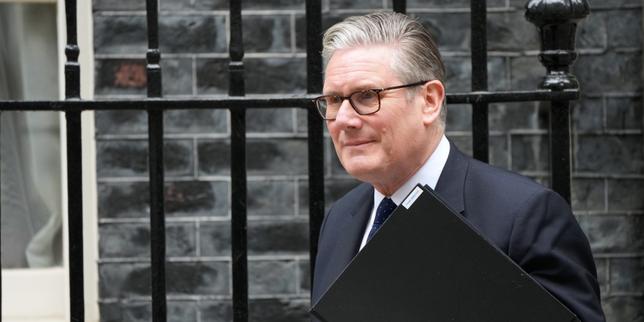
Keir Starmer’s recent admission that it was an error of judgment to let Peter Mandelson back into the Labour inner circle isn't just a minor political hiccup. It's a massive moment of clarity for anyone following the fallout of the Jeffrey Epstein scandal. For years, the ghost of Epstein has haunted British politics, usually hovering around the edges of the royal family or the high-society elite. But now, it’s landed squarely on the doorstep of 10 Downing Street.
The Prime Minister is finally distancing himself from Lord Mandelson, a man whose long-standing ties to the convicted sex offender have become an impossible weight to carry. It’s a messy situation. Starmer spent years trying to project an image of "changed Labour," a party of integrity and law and order. By keeping Mandelson close, he risked burning that brand to the ground. Honestly, it’s about time he said it out loud. The link between power, influence, and the Epstein network is a web that’s still being untangled, and Starmer just realized he was standing too close to the center of it.
Why the Mandelson Epstein Link Still Matters
People often ask why we’re still talking about this. Epstein is dead. The court cases are largely over. Yet, the influence he bought remains a toxic asset. Peter Mandelson didn't just meet Epstein once at a party. Their relationship was documented, frequent, and remarkably durable. Mandelson stayed at Epstein’s New York townhouse. He was seen with him after Epstein’s first conviction. That’s the detail that sticks in the throat of the public.
When you’re the Prime Minister, your associations are your policy. If you keep a man like Mandelson as a key advisor or a shadow figure in your administration, you’re telling the world that those past "errors of judgment" don't really matter. Starmer’s recent U-turn suggests he finally understands that the public doesn't agree. They want a clean break from the era of unaccountable elites who think they can brush off associations with predators as mere social networking.
The Political Cost of Late Admissions
Starmer didn't wake up one day and decide to be transparent. This admission was forced by a relentless media focus and internal pressure. It’s a classic political move: acknowledge the mistake once the cost of ignoring it becomes higher than the cost of admitting it. By calling the reliance on Mandelson an error of judgment, Starmer is trying to cauterize a wound.
But there’s a catch. If it was an error of judgment to involve him, why did it take this long to notice? Mandelson’s history with Epstein wasn't a secret. It was written in every major newspaper for a decade. This late-stage confession makes Starmer look reactive rather than proactive. It suggests a leader who waits for the polling to tell him where his moral compass should point.
Examining the Mandelson Influence in 10 Downing Street
Lord Mandelson wasn't just a casual friend of the party. He was a primary architect of the strategy that brought Starmer to power. He represented the "New Labour" nostalgia that Starmer leaned on to prove the party was business-friendly again. That’s why this break is so significant. Cutting ties with Mandelson means cutting ties with a specific style of backroom politics.
The influence was deep. Mandelson was reportedly involved in high-level discussions about trade, international relations, and party discipline. Every time he walked through the doors of government, he brought the Epstein baggage with him. For a Prime Minister who is a former Director of Public Prosecutions, that’s a terrible look. You can’t be the man of the law while taking advice from a man who socialized with a sex trafficker after his crimes were public knowledge.
Breaking Down the Timeline of Associations
To understand the severity, you have to look at the dates. We aren't talking about a brief meeting in the 1990s.
- Mandelson was a guest at Epstein's home after Epstein had already served time.
- Documents showed frequent communication between the two.
- Mandelson’s defense was always that he didn't know the extent of Epstein’s crimes, but that defense holds zero water when the man was already a registered sex offender at the time of their meetings.
This isn't about guilt by association in a vague sense. It’s about the standard of conduct we expect from those who run the country. If a junior staffer had these links, they’d be fired in ten minutes. When it’s a Lord, it takes a national scandal and a Prime Ministerial admission.
What This Means for Labour’s Future
Starmer’s distancing from Mandelson is a signal that the party is entering a new phase. They've won the election. They don't need the old guard to legitimize them anymore. This is Starmer attempting to build his own legacy, one that isn't dependent on the power brokers of the Blair and Brown years.
It’s also a warning shot to others in the party. The Epstein shadow is long, and anyone caught in it is now a liability. We’re likely to see a shift in who gets invited to the table. Expect more "clean" faces and fewer figures from the era of deregulation and elite social circles that defined the early 2000s.
The Public Perception Trap
The danger for Starmer is that this admission feels like too little, too late. The British public is tired of "errors of judgment" being used as a get-out-of-jail-free card for politicians. When a normal person makes an error of judgment at work, they lose their job. When a politician does it, they get a headline and carry on.
Starmer needs to do more than just use the phrase. He needs to show that the influence has actually stopped. If Mandelson is still seen entering the Cabinet Office or whispering in the ears of senior ministers, this admission will be seen as a lie. Authenticity is the only currency that matters right now. Starmer is currently bankrupt in that department regarding this specific issue, and he needs to work hard to earn it back.
Accountability Beyond Words
Real accountability looks like a formal policy on vetting advisors for past associations with criminal networks. It looks like transparency about who is funding the party and who is advising the leaders. Without these structural changes, "error of judgment" is just a script written by a PR team.
Starmer has a chance here to set a new standard. He can be the leader who finally closes the book on the Epstein era in British politics. But to do that, he has to be willing to lose the support of the very people who helped him get to the top. It’s a tough choice. It’s the kind of choice that defines a Prime Minister.
Stop waiting for the next headline to drop. Demand a clear list of who is advising the government and what their backgrounds are. Look closely at the "informal" advisors who don't show up on official payrolls but hold massive sway over policy. That’s where the real power lives. If Starmer is serious about this being an error, he’ll clear the room. If he’s not, he’s just waiting for us to forget. Don't forget.