Geography is a cruel mistress that no amount of Raytheon hardware can fix.
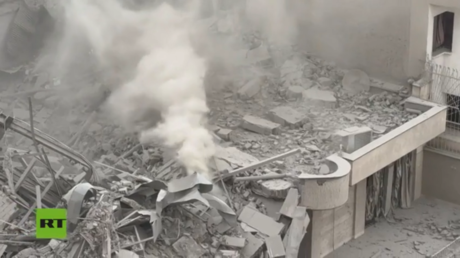
The mainstream media is currently obsessed with a body count in Iran and a skyline of tracers over the Gulf. They call it a "regional escalation." They treat every intercepted drone as a win for "stability." They are wrong. What we are witnessing isn't a war of attrition or a shift in the balance of power; it is the final, sputtering gasp of the 20th-century defense doctrine.
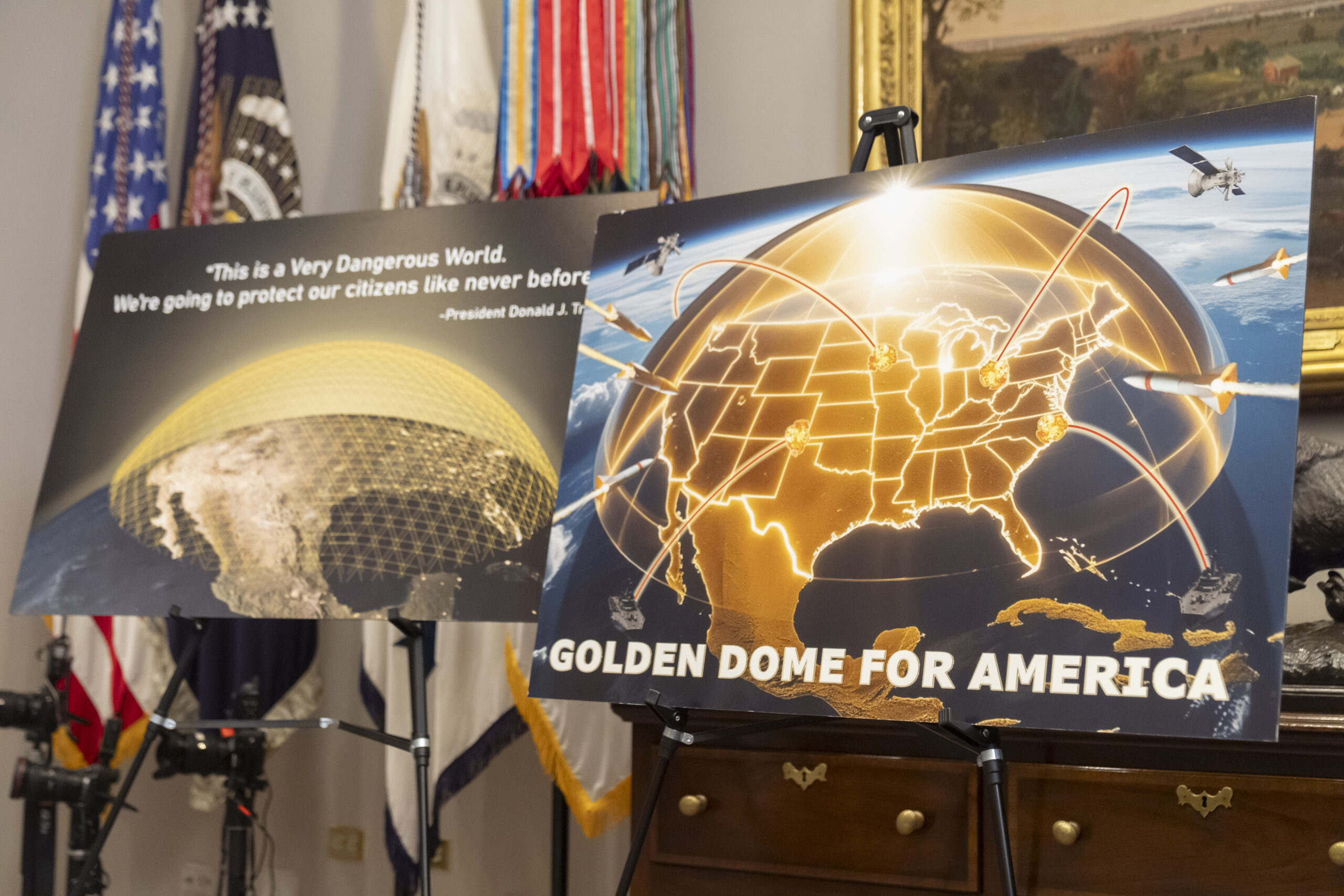
If you think a $2 million interceptor taking down a $20,000 fiberglass drone is "defense," you aren't paying attention to the math. You’re watching a bankruptcy in slow motion.
The Asymmetry Trap
Most analysts look at the recent strikes in the Gulf and see a need for better radar. I see a fundamental failure of physics. In the defense world, we talk about the cost-exchange ratio. It is the only metric that actually matters in a prolonged conflict.
When a drone swarm launches from a flatbed truck, the attacker spends less than a mid-sized sedan. When the defender responds with a Patriot missile or a Sea Viper, they are firing a piece of equipment that costs more than the pilot’s education. This isn't just unsustainable; it’s an invitation to be bled dry.
The "lazy consensus" says that more batteries and better AI-driven tracking will close the gap. It won't. You cannot "tech" your way out of a problem where the offense scales linearly and the defense scales exponentially.
- Offense: Mass-produced, low-tech, expendable.
- Defense: Bespoke, high-tech, irreplaceable.
I have sat in rooms with procurement officers who genuinely believe that buying another ten batteries will "secure the airspace." They are ignoring the reality that saturation is a mathematical certainty, not a tactical possibility. If I send 100 drones and you have 90 interceptors, I win. If I send 1,000 drones and you have 1,100 interceptors, I still win because you just spent $2 billion to save a $500 million refinery.
Iran and the Myth of Internal Collapse
The headlines are screaming about "Hundreds Killed in Iran" as if internal unrest is a precursor to a pro-Western pivot. This is wishful thinking disguised as journalism.
In my years tracking regional movements, I’ve seen this movie before. Civil unrest in a highly militarized, ideologically driven state doesn't lead to a "Democratic Spring." It leads to a "Hardline Winter." When the Iranian state feels cornered by internal dissent, it doesn't back down; it exports the chaos.
The drones hitting Riyadh, Abu Dhabi, or shipping lanes in the Red Sea aren't signs of Iranian strength—they are symptoms of a regime that has realized external aggression is the most effective way to unify a fractured domestic base. By framing this as a "regional war," the West plays directly into the hands of the IRGC.
We are asking the wrong question. People ask, "How do we stop the missiles?" They should be asking, "Why are we providing the target?"
The Infrastructure Blind Spot
The Gulf countries have built some of the most impressive "smart cities" and energy hubs on the planet. They have also inadvertently built the world’s most vulnerable targets.
Think about the $DESALINATION$ plants. In a desert, water is more valuable than oil. You can lose a refinery and the global market flinches. You lose a desalination plant and the city dies in 72 hours. These facilities are massive, static, and impossible to hide.
Current defense strategies rely on Point Defense. You put a shield over the palace, the airport, and the oil terminal. But in a world of $Loitering$ $Munitions$, the entire country is a target. A drone doesn't need to hit a "military target" to cause a systemic collapse. It just needs to hit a transformer sub-station or a fiber-optic hub.
If you are a logistics manager or a regional CEO, stop looking at the Patriot battery outside your window as a security guarantee. It’s a lightning rod.
Kinetic Energy vs. Silicon
We need to talk about the $Velocity$ of the threat. The media focuses on "Missiles," which implies something big, fast, and detectable. The reality is the "Slow Threat."
- Drones: Flying at low altitudes, hugging terrain, and mimicking the radar cross-section of a large bird.
- Cyber-Kinetic Attacks: Why waste a missile when you can spoof the GPS of a tanker or override the cooling system of a reactor?
- Proxies: The deniability factor makes traditional deterrence—the idea that "if you hit me, I hit you back"—completely obsolete.
If you can't prove who pulled the trigger, you can't retaliate without looking like the aggressor. The Gulf states are currently playing a game of chess where their opponent is invisible and the board is on fire.
The Brutal Truth About "Allies"
The U.S. and Europe love selling hardware to the Gulf. It’s great for the balance of trade. But when the "Hundreds Killed in Iran" leads to a total regional blackout, don't expect a Western carrier group to fix the power grid.
I’ve watched Western contractors promise "total domain awareness." It’s a sales pitch for a product that doesn't exist. You cannot have domain awareness in a region where the wind blows sand into your sensors and the enemy is willing to die to find a gap in your code.
The reliance on foreign defense tech has created a "Security Dependency" that is more dangerous than an oil dependency. These systems are "black boxes." The Gulf states don't own the source code. They don't own the satellite architecture. They are renting a shield that the landlord can turn off at any moment.
How to Actually Survive the Next Decade
If you want to protect a nation-state in 2026, you don't buy more missiles. You decentralize.
- Distributed Energy: Large power plants are targets. Micro-grids are headaches for attackers.
- Active Denial, Not Destruction: We need to move away from kinetic interceptors and toward high-power microwave (HPM) and electronic warfare that fries the "brain" of a drone for pennies per shot.
- Strategic Redundancy: If your entire economy relies on one port or one strait, you have already lost.
The "experts" will tell you that the solution is a "Regional Defense Alliance." They want a Middle Eastern NATO. This is a fantasy. You cannot have a mutual defense pact when your neighbors' interests are diametrically opposed to your own survival.
The current conflict isn't a "rocking" of the Gulf. It is a fundamental resizing of expectations. The era of the "Safe Sanctuary" in the desert is over.
Stop looking at the sky for the next explosion. Look at the balance sheet. Every time a $3 million missile hits a $20k drone, the defender is the one who took the damage.
The most expensive shield in history is being shattered by the cheapest sword ever made. Accept it or go broke trying to deny it.