:max_bytes(150000):strip_icc()/invisible-hand-4194290-89c417c0be794970b086bc8fd8466268.jpg)
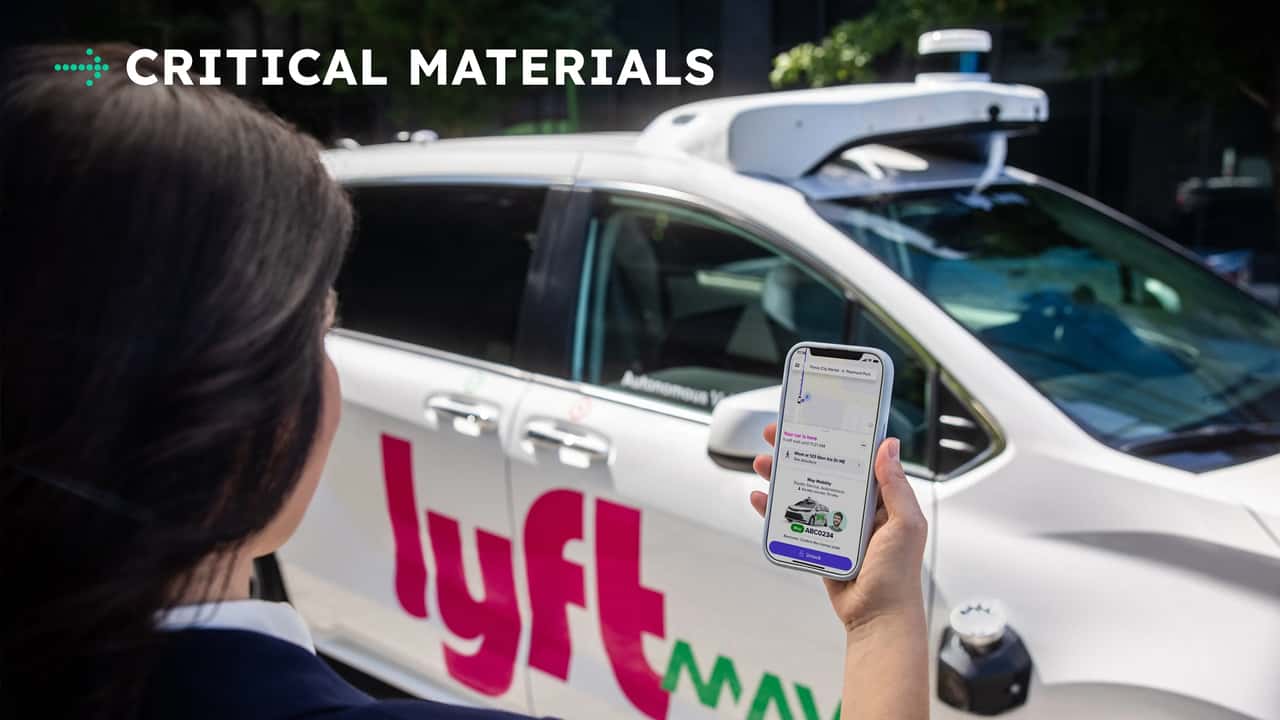
A white SUV pulls to the curb in a quiet Phoenix suburb. It moves with a digital precision that feels almost eerie—no jerky steering, no sudden braking, no human eyes scanning the rearview mirror. This is the future Waymo promised us. It is sleek. It is autonomous. It is the pinnacle of billions of dollars in R&D and millions of miles of machine learning.
The passenger exits. They are distracted, perhaps juggling a phone and a latte, or simply rushing into the office. The door stays open. Just a few inches. A gap wide enough for a desert breeze to enter, but too wide for the car to safely drive away. In similar developments, we also covered: The Hollow Classroom and the Cost of a Digital Savior.
The machine is paralyzed.
Despite the lidar spinning on the roof and the neural networks processing gigabytes of data every second, the car cannot reach out and pull its own handle. It sits there, a multi-ton masterpiece of silicon and steel, defeated by a simple latch. Engadget has provided coverage on this fascinating issue in great detail.
Then comes the human.
He isn't an engineer from Mountain View. He isn't wearing a corporate lanyard. He’s a gig worker—likely a DoorDash driver who was just blocks away dropping off a burrito. He receives a notification on his phone, pulls over, walks to the idling Waymo, and shuts the door.
Click.
The robot wakes up, signals, and merges back into traffic. The gig worker gets a small fee, returns to his car, and waits for the next taco order. The ghost in the machine, it turns out, is a guy named Mike in a 2018 Honda Civic.
The Friction of the Physical World
We have been sold a vision of automation that is clean, frictionless, and entirely digital. We talk about "the cloud" as if it exists in a vacuum, ignoring the massive cooling fans and underwater cables that keep it humming. Waymo’s recent partnership with DoorDash to handle these "sensor-blocked" or "door-ajar" incidents pulls back the curtain on a messy reality: AI still needs a pair of hands.
The technical term for this is "edge cases." In the laboratory, these are data points. In the real world, they are the unpredictable chaos of human behavior. People leave trash in the seats. They spill coffee on the sensors. They leave doors wide open because they assume the "smart car" will handle it.
Waymo’s decision to pay DoorDash "Dashers" to perform these manual resets is a fascinating admission of defeat. It is a bridge between the trillion-dollar autonomous future and the five-dollar-an-hour gig economy present. It highlights a massive, often ignored gap in the tech industry: the physical labor required to maintain the illusion of magic.
Consider the economics of this interaction. A Waymo vehicle is a rolling fortress of expensive hardware. Sending a specialized technician in a branded van to close a door is a logistical nightmare and a financial drain. It takes too long. It costs too much. But there is already an army of underutilized labor roaming the streets. DoorDash has built a network of people who are already "on the clock," guided by an algorithm that tracks their every move.
By tapping into this network, Waymo isn't just solving a mechanical problem; they are outsourcing the awkwardness of the physical world.
The Ghost in the Machine
Let’s look at a hypothetical worker. We’ll call her Sarah.
Sarah has been driving for DoorDash for three years. She knows every shortcut in the city and which McDonald’s has the broken milkshake machine. Her life is governed by "The App." It tells her when to turn, when to wait, and how much her time is worth. Usually, her value is tied to a bag of food.
Now, her value is tied to a door handle.
She gets a "Roadside Task." The app directs her to a stationary Waymo. She doesn’t have to interact with a customer. She doesn’t have to worry about a tip. She just has to provide the one thing the robot lacks: a thumb.
There is something deeply poetic, and perhaps a bit cynical, about this relationship. We are using the most precarious class of workers to prop up the technology that may eventually replace them. Today, Sarah closes the door for the Waymo. Tomorrow, the Waymo might be the one delivering the groceries, rendering Sarah’s primary source of income obsolete.
The stakes are invisible but massive. This isn't just about a door; it’s about the "Human-in-the-Loop" model of AI development. It’s the realization that as we automate the high-level cognitive tasks—driving, navigating, calculating—we are creating a surge in demand for "micro-labor."
We see this everywhere. We see it in the thousands of workers in overseas click-farms who label images of stop signs so an AI can "learn" what they look like. We see it in the content moderators who sift through the worst of humanity so our social feeds stay clean. And now, we see it on the curbs of Phoenix and San Francisco, where gig workers act as the mechanical servants to our digital masters.
The Fragility of Autonomy
If a robotaxi cannot handle a door being left open, how does it handle a flat tire? How does it handle a sensor covered in wet leaves or a passenger who has a medical emergency inside the cabin?
The Waymo-DoorDash partnership suggests that the answer isn't "better software." The answer is "more people."
This contradicts the narrative that Silicon Valley has been pushing for a decade. The promise was that labor costs would plummet once we removed the driver. But the driver was doing more than just steering. The driver was a janitor, a security guard, a mechanic, and a diplomat. The driver was the interface between the machine and the messy, entropic world of humans.
By stripping away the driver, Waymo realized they stripped away the vehicle’s ability to exist in a physical space.
When a DoorDash worker closes that door, they are performing a task that is, for now, "AI-complete." It requires a level of situational awareness and physical dexterity that remains prohibitively expensive to build into a robot. It is cheaper to rent a human for three minutes than it is to build a robotic arm into a car door.
This creates a strange, hybridized ecosystem. We are living in a transition period where the tech is advanced enough to be impressive, but too fragile to be truly independent. We have created "High-Tech, Low-Life" scenarios that feel like they were ripped from the pages of a cyberpunk novel.
The New Blue Collar
We often talk about AI "taking jobs," but we rarely talk about the new, strange jobs AI creates.
Closing a robot’s door is a new kind of blue-collar work. It’s repetitive. It’s manual. It’s essential. But it’s also disconnected. The worker has no relationship with the machine, no stake in the company, and no path to advancement. They are a human API—a piece of code made of flesh and bone that the system calls upon when it hits an error message it can't resolve.
This labor is intentionally hidden. Waymo doesn't want you to think about the DoorDash driver when you summon a ride. They want you to think about the seamless, "driverless" experience. The presence of the human assistant breaks the spell. It reminds the passenger that the car isn't actually "smart"—it’s just a very fast calculator that doesn't know how to use a latch.
But there is a deeper vulnerability here that we must acknowledge.
By relying on the gig economy to fix its physical failures, Waymo is building its multi-billion dollar empire on top of a very shaky foundation. The gig economy is under constant legal and social fire. If the status of "independent contractors" changes, or if DoorDash’s labor pool shrinks, Waymo’s "automated" fleet could be paralyzed by something as simple as a windy day and a few unlatched doors.
The Latch and the Legacy
We like to think of progress as a straight line, but it’s more like a series of loops.
In the early days of the automobile, "red flag laws" required a human to walk in front of a car with a flag to warn pedestrians of the coming mechanical beast. We laughed at that. We thought we had moved past the need for a human escort for our machines.
Yet, here we are in 2026.
The flag has been replaced by a smartphone app. The red flag has been replaced by a door handle. But the requirement remains the same: the machine cannot navigate our world alone. It needs us to hold its hand, to clear its path, and to shut its door.
The next time you see a self-driving car gliding through your neighborhood, look closer. Don't look at the spinning sensors or the glowing screens inside. Look at the curb. Look for the person in the older sedan, idling a half-block away, watching the robotaxi.
They are the real engine of the autonomous revolution.
They are the ones who make sure the future stays on track, one click at a time. We are not being replaced by robots; we are being demoted to their assistants. The machine is in the driver’s seat, but the human is still the one who has to get out and check the tires.
The door is open.
Someone has to close it.
The question isn't whether the robots are coming. The question is how much we are willing to pay the humans who have to follow behind them, cleaning up the mess that "autonomy" leaves in its wake.