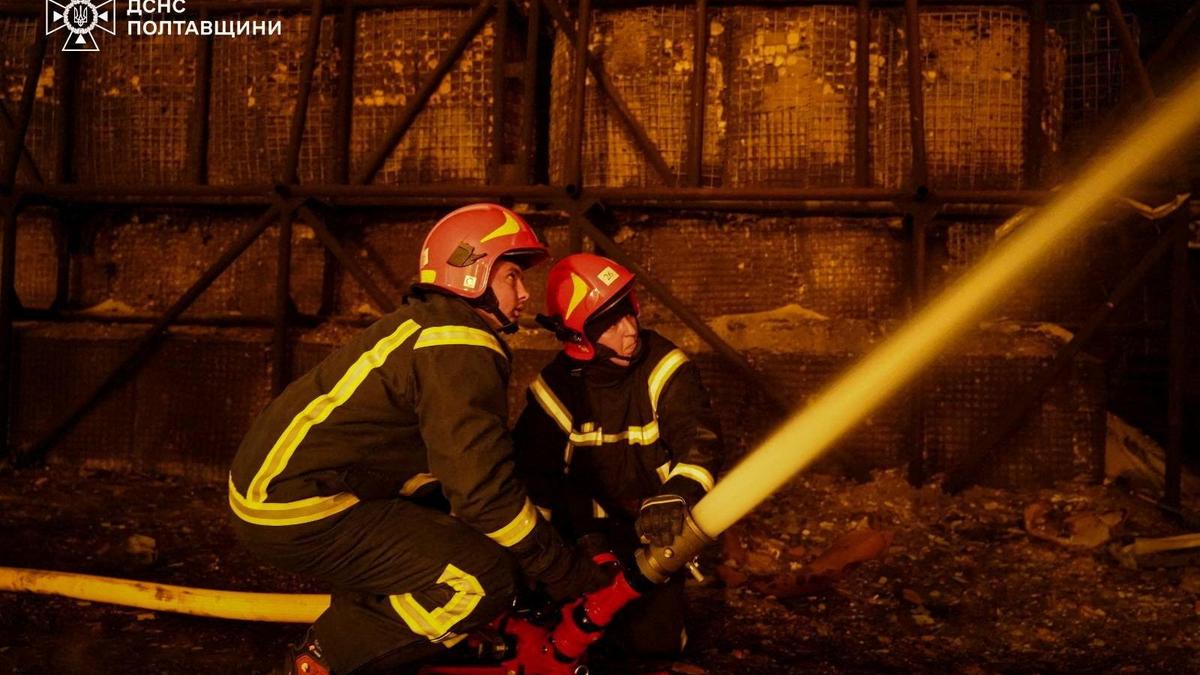
The detonation at a pyrotechnic manufacturing facility in China, resulting in 26 fatalities and 61 injuries, represents a catastrophic breakdown in the containment of chemical energy. Beyond the immediate human cost, this event serves as a data point for analyzing the systemic fragility inherent in high-hazard industrial environments. The failure is rarely the result of a single localized spark; rather, it is the culmination of a "Swiss Cheese" model of failure where multiple layers of safety—regulatory oversight, chemical stabilization, and kinetic containment—align their gaps simultaneously.
The Chemical Energy Gradient
To understand the scale of a 26-fatality explosion, one must quantify the energy density of the materials involved. Fireworks manufacturing relies on the rapid oxidation of fuels, typically involving black powder or more sensitive flash powders. Black powder contains an oxidizer (potassium nitrate), a fuel (charcoal), and a stabilizer (sulfur). The reaction follows a specific thermochemical path:
$$10KNO_3 + 3S + 8C \rightarrow 2K_2CO_3 + 3K_2SO_4 + 6CO_2 + 5N_2$$
The danger lies in the transition from deflagration—a subsonic combustion spreading through thermal conductivity—to detonation, where the reaction front moves at supersonic speeds. In a factory setting, "confinement" is the critical variable. When loose powder is ignited in an open space, it burns rapidly. When that same powder is stored in heavy containers or within a structural footprint that restricts gas expansion, the pressure rise $dP/dt$ accelerates the burn rate exponentially. This feedback loop creates a blast wave capable of leveling reinforced concrete structures.
Structural Vulnerability and Site Design
The 87 total casualties suggest a high density of personnel within the immediate "kill zone" or "blast overpressure radius." Industrial safety standards for explosives generally dictate a layout based on Inhabited Building Distance (IBD). This distance is calculated based on the Net Explosive Weight (NEW) present at any single workstation.
The high injury-to-death ratio (roughly 2.3:1) points to a significant fragmentation and glass-hazard environment. In explosive incidents, primary injuries are caused by the blast overpressure wave affecting air-filled organs (lungs, ears). Secondary injuries result from energized debris. A factory layout that fails to utilize blast berms or "blow-out walls"—designed to direct the force of an explosion upward rather than outward—guarantees a higher casualty count in the event of a primary ignition.
The Three Pillars of Pyrotechnic Risk Management
- Thermal Stability: The environmental control of the raw chemical precursors. High humidity can degrade certain metal powders (like aluminum or magnesium used for sparks), leading to hydrogen gas evolution and spontaneous heating.
- Electrostatic Discharge (ESD) Mitigation: Human bodies can accumulate static charges exceeding 10 millijoules. Many flash powders require less than 0.1 millijoules for ignition. If a facility lacks conductive flooring and grounded workstations, the workers themselves become the ignition source.
- Process Isolation: Limiting the "Maximum Credible Event" by ensuring that an explosion in Room A cannot propagate to Room B. This is achieved through physical separation and fire-suppression systems that activate in milliseconds.
The Economic Pressure of Regulatory Arbitrage
The location of the incident—a manufacturing hub in China—highlights the friction between global demand for low-cost pyrotechnics and the high cost of rigorous safety infrastructure. Regulatory arbitrage occurs when production shifts to regions with lower compliance costs.
Safety is a capital-intensive endeavor. Implementing automated mixing processes (to remove humans from the blast radius), climate-controlled storage, and rigorous batch testing increases the per-unit cost. When a factory operates on thin margins, the first elements sacrificed are often the "invisible" ones: sensor calibration, worker training frequency, and the rigorous cleaning of explosive dust accumulations. This last factor is particularly lethal; a small primary explosion can kick up layers of dust from rafters and floors, leading to a massive secondary dust explosion that consumes the entire facility.
Quantifying the Human and Operational Impact
The 61 injuries likely include a spectrum of trauma. A clinical breakdown of blast-related injuries reveals why these incidents paralyze local healthcare infrastructure:
- Primary Trauma: Barotrauma from the pressure wave. This requires specialized thoracic and otolaryngological care.
- Secondary Trauma: Penetrating injuries from flying debris. This demands high-volume surgical capacity.
- Tertiary Trauma: Blunt force trauma from victims being physically thrown by the wind of the blast.
- Quaternary Trauma: Chemical burns and inhalation of toxic combustion byproducts (including heavy metals like strontium or barium used for colors).
From a strategy perspective, the loss of 26 skilled or semi-skilled laborers and the destruction of the physical plant represents a total capital loss. For the parent organization, the liability often exceeds the value of the insurance policy, assuming one was held.
The Mechanism of Regulatory Failure
Investigation into such disasters frequently uncovers a history of "near-misses" that were ignored. In the hierarchy of safety, a fatality is the tip of a pyramid built on thousands of unsafe acts and hundreds of minor accidents.
The failure of oversight usually manifests in two ways. First, "Paper Compliance," where safety manuals exist but are not practiced on the floor. Second, the "Normalization of Deviance," where workers and managers become accustomed to small safety violations because they haven't yet resulted in a catastrophe. Over time, the margin of safety shrinks until it is non-existent.
Strategic Realignment of Hazardous Manufacturing
To prevent the recurrence of 26-death events, the industry must move toward Decentralized Production Cells. Rather than housing all stages of manufacturing—mixing, charging, pressing, and packaging—in a single large building, operations should be distributed across small, hardened bunkers separated by distances that prevent sympathetic detonation.
Furthermore, the integration of IoT-enabled environmental monitoring is no longer optional. Real-time tracking of temperature, humidity, and atmospheric dust concentration provides a digital early-warning system. If a mixing room exceeds 30°C or 60% humidity, the system should automatically lock the room and initiate a nitrogen purge to inert the atmosphere.
The transition from manual labor to robotic assembly remains the ultimate solution for reducing the casualty count. While the initial capital expenditure is high, the elimination of the human element from the "blast-probable" zones of the factory shifts the risk from life-safety to asset-protection—a far more manageable business variable.
Future operations must prioritize the auditability of the supply chain. Global distributors must demand not just a "safety certificate," but a live data feed of the manufacturing conditions. Transparency is the only mechanism that can counteract the economic incentive to cut corners on the factory floor. The cost of a firework must reflect the cost of the safety required to build it; any lower price is subsidized by the lives of the workers in the blast radius.
Establish a mandatory "Stop Work Authority" for all floor personnel, backed by a whistleblower protection fund that is independent of local management. If the powder is too dry or the floors are too dusty, the line stops. Any system that prioritizes throughput over chemical stability is a system designed to eventually detonate.