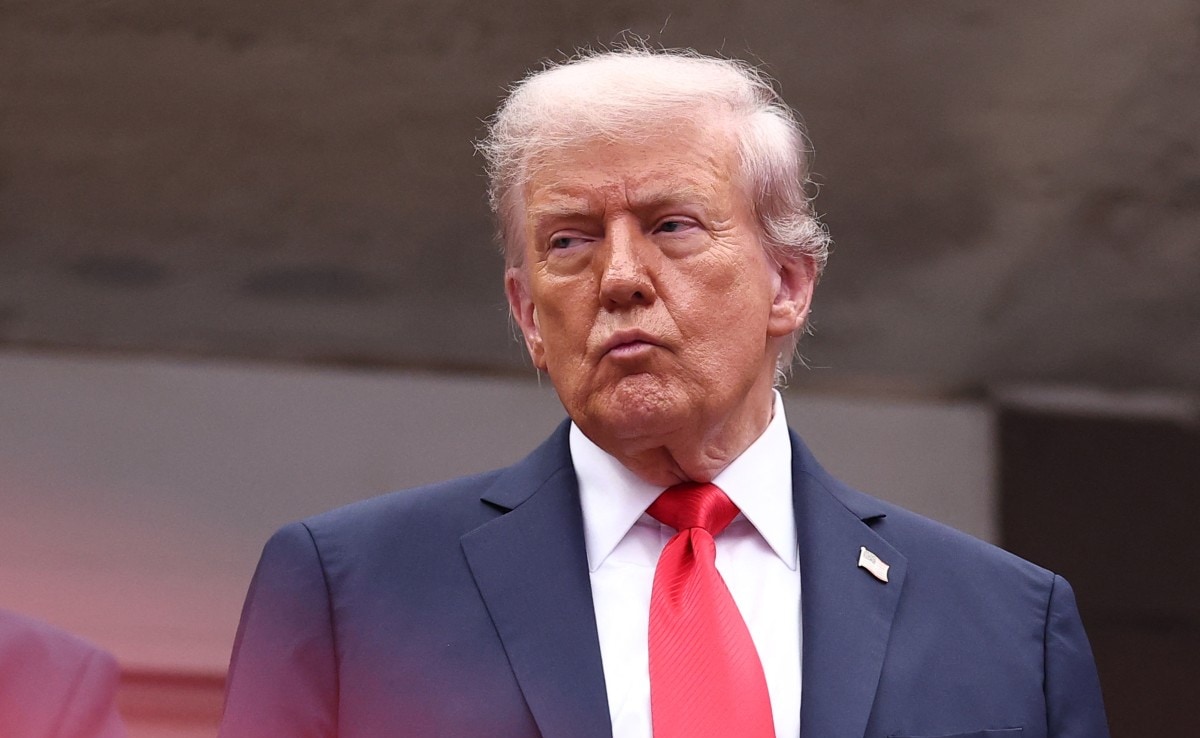
The headlines scream about "shoot and kill" orders as if we are back in 1944. They paint a picture of a decisive Commander-in-Chief drawing a line in the sand—or rather, the water. It makes for great television. It makes for even better campaign rallies. But for anyone who has actually tracked asymmetric naval warfare over the last twenty years, it is a display of profound strategic illiteracy.
When the United States Navy is ordered to "destroy" small Iranian fast-attack craft or mine-laying vessels, the media treats it as a muscle flex. In reality, it is a trap. We are bringing a billion-dollar sledgehammer to a fight against a swarm of hundred-dollar flies, and we are bragging about how hard we can swing. For a different view, read: this related article.
The consensus view is that "overwhelming force" prevents escalation. The reality is that in the Strait of Hormuz, overwhelming force is the very thing that triggers a catastrophic supply chain collapse. We are playing a game of checkers against an opponent that has already turned the board into an IED.
The Mathematical Insanity of the Aegis Defense
To understand why the "shoot to kill" directive is a tactical failure, you have to look at the math. A single RIM-162 Evolved SeaSparrow Missile (ESSM) costs roughly $1.5 million. A single Iranian fast-attack craft, often little more than a reinforced speedboat with a rack for mines or a rudimentary rocket launcher, costs less than a used mid-sized SUV. Further coverage on the subject has been provided by Al Jazeera.
When you order the Navy to engage these targets, you aren't just "defending the lanes." You are participating in an intentional economic drain. If Iran sends fifty boats, we spend $75 million in interceptors to save... what? The ego of the Fifth Fleet?
I have watched defense contractors salivate over these escalations because it justifies the next generation of kinetic interceptors. But in a narrow corridor like the Strait of Hormuz—roughly 21 miles wide at its narrowest point—the "shoot first" policy ignores the physics of the environment.
The Mine Is the Perfect Weapon of the Weak
The competitor articles love to talk about "mines" as if they are static objects we can just pick out of the water like litter in a park. They aren't. Modern naval mining is a masterpiece of low-cost, high-impact denial.
You don't need a sophisticated vessel to lay a mine. You can drop a bottom-moored influence mine from a civilian dhow or a modified fishing boat. By the time the Navy "shoots and kills" the perpetrator, the weapon is already on the seabed.
- The Detection Gap: Our sonar is world-class for finding massive titanium hulls (submarines). It is notoriously finicky when trying to distinguish a plastic-cased mine buried in the silt of a high-traffic, high-noise shipping lane.
- The Insurance Spiral: You don't even need to hit a ship to win. You just need to create the perception of a minefield. The moment one Iranian boat is "blown out of the water" for alleged mine-laying, Lloyd’s of London spikes the war risk premiums. Tankers stop moving. The global economy chokes.
By announcing a "shoot to kill" policy, the administration isn't clearing the mines; it is providing the "kinetic event" that justifies a total maritime shutdown. We are doing the enemy's PR work for them.
The Escalation Ladder Is Missing Rungs
Conventional wisdom says: "If they harass us, we kill them, and then they stop." This assumes the Iranian Revolutionary Guard Corps (IRGC) operates on a Western risk-reward calculus. They don't.
In asymmetric warfare, the goal isn't to win the battle; it's to make the cost of the battle unbearable for the superior power.
Imagine a scenario where a US Destroyer sinks three Iranian boats. Iran doesn't respond with a formal naval engagement. They respond by "accidentally" drifting a dozen contact mines into the path of a Japanese-owned LNG carrier. Now the US is responsible for a multi-billion dollar environmental disaster and a global energy shortage.
The "shoot to kill" order is a binary solution to a multivariate problem. It treats the Strait of Hormuz like a shooting gallery when it’s actually a high-stakes hostage situation where the hostages are the global oil markets.
The Technological Delusion of Total Awareness
We are told that our surveillance—drones, satellites, SIGINT—makes it impossible for Iran to move without us knowing. This is the "God’s Eye" fallacy.
The Strait of Hormuz is one of the most cluttered maritime environments on Earth. Thousands of small vessels cross those waters daily. Distinguishing a legitimate "threat" from a smuggler or a fisherman in real-time, under the pressure of a "shoot to kill" order, is a recipe for a catastrophic mistake.
We’ve been here before. In 1988, the USS Vincennes shot down Iran Air Flight 655 because the crew, under extreme tension in a "hostile" environment, misidentified a civilian airliner for an attacking F-14. When you tell sailors to "shoot and kill" anything that looks like it's putting a mine in the water, you are inviting the next 1988. You are asking for a trigger-happy mistake that turns the world against the US presence in the Gulf.
Stop Trying to "Win" the Strait (Secure the Outcome Instead)
The wrong question is: "How do we stop Iran from putting mines in the water?"
The right question is: "How do we make their mines irrelevant?"
A "shoot to kill" order is reactive. It's theatrical. If we actually wanted to neutralize the threat, we would stop focusing on the boats and start focusing on the infrastructure of energy independence and decentralized maritime security.
- Autonomous Sweeping: Instead of risking a $2 billion Destroyer, we should be flooding the Strait with low-cost, disposable autonomous underwater vehicles (AUVs) designed specifically for mine identification and neutralisation.
- Hardened Logistics: We need to stop treating every single tanker as a defenseless victim. If the US Navy is going to be there, it shouldn't be as an executioner, but as a literal shield—using directed energy weapons and electronic warfare to fry the remote-detonation capabilities of sophisticated mines.
- Diplomatic Decoupling: Every time a President makes a "tough" statement about Hormuz, they hand Iran a lever to move the price of oil. The smartest move is silence. Acknowledge nothing. Let the Navy do its job quietly, without the "shoot and kill" fanfare that serves as a dinner bell for speculators.
The Cost of Professionalism vs. The Cost of Posturing
There is a massive difference between Rules of Engagement (ROE) and Strategic Posturing.
The Navy already has the right to defend itself. It already has the authority to stop hostile acts. By "ordering" them to do what they already can do, the administration is merely turning a tactical reality into a political theater.
The downside to my contrarian view? It’s boring. It doesn’t make for a good "Breaking News" banner. It requires patience, technical investment in mine counter-measures (MCM), and the willingness to let small provocations go unanswered to avoid the larger trap.
But the alternative—the path we are currently on—is far worse. We are letting a middle-ranking regional power dictate our naval strategy by baiting us into a "tough guy" stance that we cannot economically sustain.
We are currently spending millions to kill pennies, while the real threat—the quiet, submerged, plastic-cased mine—waits for us to make a mistake.
The "shoot to kill" order isn't a sign of strength. It's a confession that we have no idea how to handle a 21st-century asymmetric threat. We are trying to punch a ghost, and we are going to break our hand in the process.
The US Navy is the most powerful force in the history of the world, but it is being used as a prop in a play written by its enemies. If you want to secure the Strait of Hormuz, stop talking about "killing boats" and start talking about making the boats irrelevant. Anything else is just expensive noise.
Military power that cannot be used with precision and restraint isn't power at all; it’s a liability. We’ve spent forty years learning that in the deserts of the Middle East. It’s time we stopped trying to learn it again at sea.
You don't win a minefield by shooting the guy who planted it after the fact. You win by being the one who makes the minefield look like a pile of expensive junk. Until we shift our focus from "killing" to "neutralizing," we are just waiting for the inevitable explosion.