When you pick up a pack of green beans or a bag of spring onions from a British supermarket shelf in February, you are looking at a logistical miracle that most consumers never question. The label likely reads "Produce of Senegal." This small West African nation has quietly become the garden of the United Kingdom, filling the seasonal void when European fields are frozen and British greenhouses are too expensive to heat. While the industry portrays this as a win-win for international development and consumer choice, the reality is a high-stakes extraction model that relies on two massive corporate estates to keep the UK's supply chain from snapping.
The trade isn't just about vegetables. It is about the industrialization of the Sahel.
Most of the produce comes from a handful of hyper-efficient sites, most notably the Grand Domaine du Sénégal (GDS) and SCL (Société de Cultures Légumières). These are not traditional farms in the sense of local smallholders tending plots. They are sprawling, high-tech agricultural fortresses. They operate with a level of precision that rivals an Amazon fulfillment center, turning the dry, dusty plains of the Saint-Louis region into a lush, green export engine.
The Logistics of Freshness
The British appetite for year-round availability has forced a shift in how we view geography. Senegal is roughly 3,000 miles from London, yet the supply chain is so tightly wound that a bean picked in the morning can be on a shelf in Surrey within 72 hours. This speed is non-negotiable.
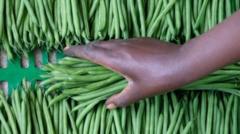
The process begins with "just-in-time" harvesting. These farms don't just grow food; they manufacture it to strict UK specifications. A supermarket buyer in Leeds dictates the exact length, girth, and color of a green bean months before it is planted. If the bean is too curly, it is rejected. If the onion is too small, it stays in the dirt or gets diverted to local markets at a fraction of the price.
To maintain this standard, the farms employ thousands of seasonal workers. For many in the Senegal River valley, these estates are the only source of formal employment. However, the power dynamic is skewed. The UK retail market is notoriously brutal on pricing. When British supermarkets engage in "price wars" to lure shoppers, the pressure travels down the line. It crosses the Mediterranean, bypasses the Sahara, and lands directly on the shoulders of the Senegalese farm managers who must find ways to cut costs to keep their contracts.
The Water Question
Agriculture in Senegal is a battle against the desert. The success of these export hubs depends entirely on access to the Senegal River. While the region is fertile, the sheer volume of water required to sustain European-grade vegetable production is staggering.
Critics of the industrial model point to the long-term impact on the local water table. In a region where climate patterns are becoming increasingly erratic, the diversion of water to grow thirsty crops like sweetcorn and radishes for export is a gamble. We are effectively importing "virtual water" from a water-stressed region to satisfy a luxury demand in a water-rich one.
There is also the matter of land use. As these corporate estates expand, they often brush up against traditional grazing lands used by pastoralist communities. The tension between nomadic herders and stationary, fenced-off industrial farms is a recurring theme in West African development. The government in Dakar welcomes the foreign investment and the hard currency it brings, but the local reality is often one of displacement and restricted access to resources that were once communal.
The Carbon Contradiction
The environmental narrative surrounding Senegalese imports is messy. Common sense suggests that flying or shipping vegetables from Africa is an ecological disaster. The data, however, offers a more nuanced perspective.
During the winter months, the carbon footprint of a tomato grown in a heated, lit greenhouse in the UK or the Netherlands can actually be higher than that of a tomato grown under the natural Senegalese sun and flown to Heathrow. The sun provides free energy that European farmers have to buy from the grid.
But this "solar advantage" is a precarious defense. As the UK pushes toward "Net Zero" targets, the optics of air-freighted produce become harder to justify. The industry is responding by shifting more volume to sea freight, using refrigerated containers that take longer but emit significantly less CO2 per ton. This shift requires even more chemical intervention—preservatives and sophisticated atmosphere-controlled packaging—to ensure the vegetables don't rot before they reach the English Channel.
The Corporate Stranglehold
The two primary players in this space are not merely farmers; they are sophisticated international entities. SCL, for instance, has grown into a powerhouse that manages everything from seed trials to the final cold-chain logistics. This level of vertical integration is the only way to satisfy the demands of the UK’s "Big Four" supermarkets.
For a small-scale Senegalese farmer, breaking into the UK market is nearly impossible. The barriers to entry—GlobalG.A.P. certifications, cold storage requirements, and the sheer scale of the orders—act as a gatekeeper. This creates a dual economy: a high-tech, high-profit export sector controlled by a few, and a struggling traditional sector that cannot compete for the same land, water, or investment.
This dependency creates a fragile ecosystem. If a UK supermarket decides to source its spring onions from Morocco or Egypt because of a 5% price difference, the impact on the Saint-Louis region is catastrophic. These farms are not diversified; they are built for a specific customer with specific tastes.
A Systemic Vulnerability
The UK’s reliance on these two farms highlights a broader vulnerability in the British food system. Post-Brexit trade arrangements and the move away from traditional European suppliers have made these West African links vital. We have traded proximity for cost-efficiency.
The workforce in Senegal is the backbone of this efficiency. While wages on these farms are often higher than the local average, they remain low by global standards. It is this "labor arbitrage" that keeps the price of a bag of beans at £1.50. If Senegalese workers demanded UK-equivalent wages, the entire business model would collapse overnight. We are essentially outsourcing the manual labor of our food system to a workforce that most British consumers will never see and whose names they will never know.
The Ethics of the Aisle
When we talk about food security in Britain, we usually talk about grain stores and egg shortages. We rarely talk about the ethical debt we owe to the Senegal River valley. The "Value" ranges in our supermarkets are subsidized by the geography and the low-cost labor of the Global South.
The next time you reach for those beans, consider the infrastructure behind them. Consider the pumps drawing water from the river, the planes idling on the tarmac in Dakar, and the thousands of hands that sorted those vegetables so they would look perfect in a plastic tray. The system works, but it is a system built on a knife-edge of thin margins and environmental extraction.
Demand more transparency from retailers about the specific land-water agreements in the regions they source from. If we are going to treat the world as our garden, we have a responsibility to ensure we aren't leaving it a desert.