As Washington prepares for a high-stakes diplomatic pivot toward Beijing, the domestic consensus on trade and foreign policy is not just shifting—it is disintegrating. For decades, the American public largely accepted the premise that global integration was a net positive, a rising tide that would eventually lift all boats. That era is over. Today, a volatile mix of economic anxiety and geopolitical skepticism has replaced the old optimism, leaving policymakers to navigate a landscape where the traditional tools of statecraft, such as tariffs and sanctions, carry as much risk at home as they do abroad.
The average American voter no longer views a trade war as a theoretical exercise in macroeconomics. They see it in the price of a pickup truck or the interest rate on a small business loan. While the rhetoric from the capital often focuses on national security and long-term strategic competition, the reality on the ground is dictated by the immediate pressure of inflation and the erosion of purchasing power. This disconnect between the strategic goals of the elite and the material reality of the electorate is the defining tension of modern American politics.
The Tariff Trap and the Myth of the Easy Win
Tariffs were once a niche tool, used sparingly to protect specific industries like steel or timber. Now, they are the primary weapon in a global economic conflict. The logic is simple enough: tax foreign goods to encourage domestic production. However, the execution is messy and the consequences are often regressive.
When a 25% tariff is slapped on imported components, the manufacturer in Ohio doesn't just absorb that cost. They pass it on. This creates a hidden tax on the American consumer, one that hits lower-income families the hardest. Investigative data into supply chain shifts suggests that while some manufacturing has indeed moved out of China, it hasn't necessarily come back to the United States. Instead, it has migrated to Vietnam, Mexico, or Malaysia. The "re-shoring" narrative is frequently a shell game where the only thing that actually changes is the country of origin on the shipping manifest, not the location of the factory floor.
The public’s tolerance for this economic friction is wearing thin. Recent polling indicates a sharp divide: while many Americans support "getting tough" on trade partners in the abstract, that support vanishes the moment it translates to a $500 increase in the price of home appliances. This is the paradox of modern protectionism. You cannot protect the worker if you are simultaneously bankrupting the consumer.
The Iran Dilemma and the Limits of Maximum Pressure
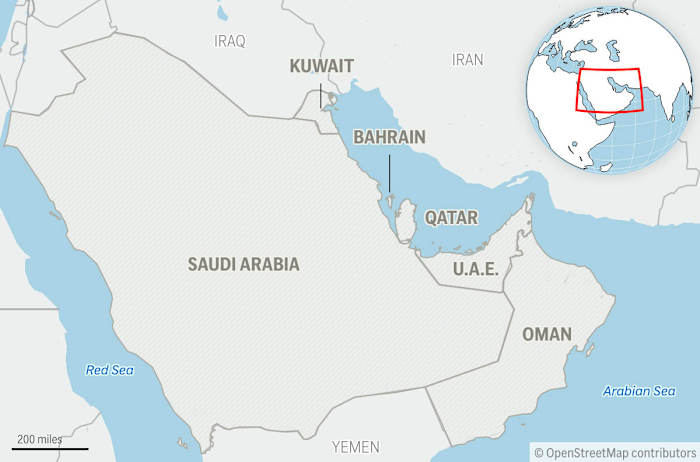
The situation with Tehran provides a different, but equally complex, look at how American influence is perceived. The "maximum pressure" campaign was designed to choke the Iranian economy and force a new nuclear deal. It succeeded in the former but has largely failed in the latter. For the American public, the concern isn't just about regional stability; it’s about the "forever war" fatigue that has permeated the national psyche for twenty years.
Americans are increasingly wary of any foreign policy move that smells like a prelude to kinetic conflict. There is a profound skepticism toward intelligence briefings and the justifications for intervention. This isn't isolationism in the traditional sense. It is a demand for a return on investment. If the U.S. is going to spend billions on sanctions enforcement and naval deployments in the Persian Gulf, the public wants to know how that makes their neighborhood safer or their gas cheaper.
The reality is that sanctions are a blunt instrument. They often entrench the regimes they are meant to topple while immiserating the civilian population. In the eyes of much of the world, and an increasing segment of the American public, the persistent use of the dollar as a weapon is incentivizing other nations to find alternatives. This "de-dollarization" is no longer a fringe theory; it is a strategic priority for the BRICS nations. If the U.S. loses the ability to dictate global finance through the greenback, it loses its most potent non-military lever.
A Superpower in Search of a Story
The most significant casualty of the last decade isn't a specific trade deal or a treaty. It is the American "brand." For the better part of a century, the United States sold the world—and its own citizens—on a vision of a liberal international order. That vision is currently under renovation, and the neighbors are worried about the noise.
When American leaders travel abroad, they are no longer just representing a military or economic powerhouse. They are representing a country that is deeply divided over its own role in the world. This internal friction is visible to everyone. Beijing and Moscow don't need to undermine American credibility; they simply need to wait for the next election cycle to see if the previous four years of policy will be discarded.
The Erosion of Multilateralism
- Trade Agreements: The move away from large-scale pacts like the TPP has left a vacuum that China is more than happy to fill with its own Regional Comprehensive Economic Partnership (RCEP).
- Climate and Health: Withdrawing and then re-entering international agreements creates an image of an unreliable partner.
- Security Alliances: Questions about the value of NATO or bilateral defense treaties with Japan and Korea have forced those nations to hedge their bets.
This inconsistency is not just a diplomatic headache. It has real-world consequences for American businesses trying to plan ten years into the future. You cannot build a global supply chain on a foundation of "maybe."
The Disconnect Between Wall Street and Main Street
If you look at the stock market, you might think the era of tariffs and geopolitical tension is a gold mine. Defense contractors are seeing record backlogs, and certain tech sectors are thriving under government subsidies. But look at the median household income adjusted for inflation, and a different story emerges.
The "CHIPS Act" and similar industrial policies are touted as the savior of American tech. While they are a necessary step to secure semiconductor supplies, they are not a silver bullet for the labor market. A billion-dollar fabrication plant creates high-paying jobs for Ph.D.s and specialized engineers, but it does little for the thousands of workers displaced by the automation of traditional manufacturing.
We are seeing the birth of a two-tiered economy: one that thrives on the volatility of global conflict and one that is crushed by it. The journalist's task is to point out that the "national interest" is rarely a singular thing. What is good for a multinational aerospace firm is often diametrically opposed to what is good for a family trying to afford a mortgage in a de-industrialized town.
The Ghost of 1970s Stagflation
History doesn't repeat, but it often rhymes. The current combination of high debt, geopolitical instability, and supply-side shocks feels uncomfortably like the 1970s. Back then, oil shocks and the cost of the Vietnam War broke the back of the post-WWII economic boom. Today, the triggers are different—a global pandemic, a war in Ukraine, and a trade cold war with China—but the symptoms are the same.
The public sense of "world standing" is tied directly to domestic stability. A country that cannot control its own borders, its own inflation, or its own political discourse struggles to project strength abroad. When Americans say they are worried about our standing in the world, they aren't usually talking about a specific UN vote. They are talking about the feeling that the wheels are coming off the wagon.
The Credibility Gap in Modern Diplomacy
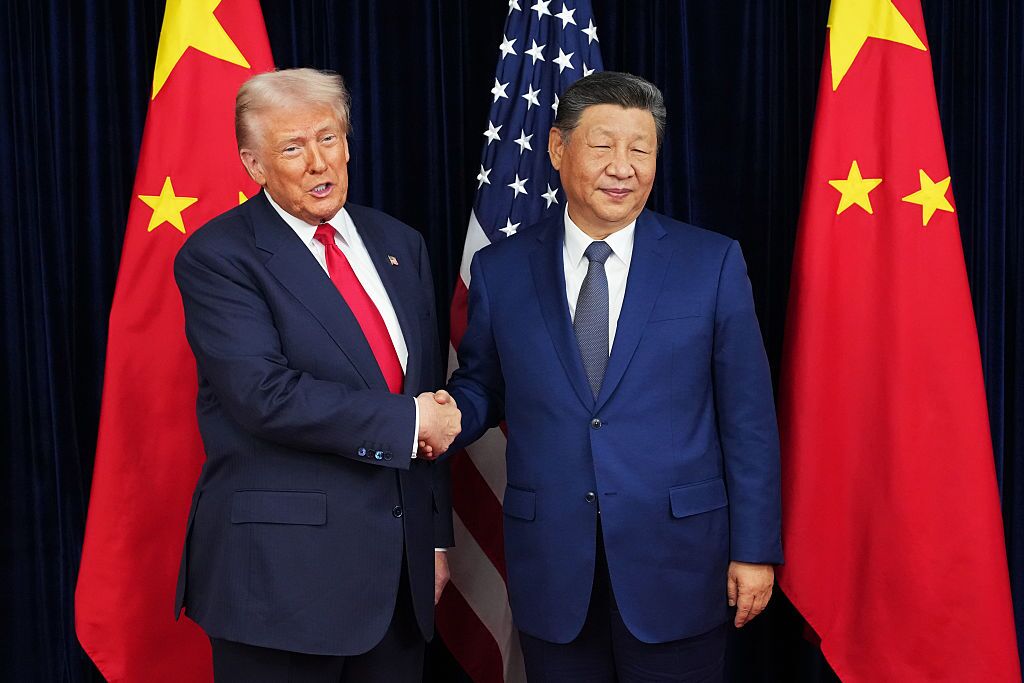
When a President goes to China, the choreographed handshakes and the carefully worded joint statements are meant to project a sense of control. Behind the scenes, however, the leverage is shifting. The U.S. is no longer the only game in town, and the rest of the world knows it.
China's "Belt and Road Initiative" has created a network of dependencies across Africa, Central Asia, and even parts of Europe. While the U.S. offers "values-based" partnerships, China offers bridges, ports, and 5G networks. For many developing nations, the choice is easy. They will take the bridge over the lecture every time.
This puts American diplomats in a bind. To compete, the U.S. must offer more than just military protection; it must offer a viable economic alternative. But with a domestic public that is increasingly hostile to foreign aid and trade deals, the cupboard is often bare. You cannot lead a global coalition if you are unwilling to open your markets or spend your capital.
The Real Bottom Line
The true story of American foreign policy in 2026 is not found in the briefings at the State Department. It is found in the frustration of the American middle class. They are tired of being told that the "global order" requires their sacrifice while the benefits of that order seem to accrue only to a thin sliver of the population.
The tariffs are a symptom of a deeper malaise—a realization that the old rules no longer work. The hard-hitting truth is that there is no easy path back to the status quo. Whether the issue is Iran’s nuclear ambitions or China’s dominance in green technology, the solutions all require a level of domestic sacrifice that the current political environment cannot sustain.
We are witnessing the slow, painful recalibration of an empire. The American people are not necessarily turning their backs on the world; they are simply asking for a world that works for them. Until the policy in Washington reflects the reality in the grocery store aisles, the "world standing" of the United States will remain on shaky ground. The era of the blank check for global leadership is officially over, and the bill has finally come due.