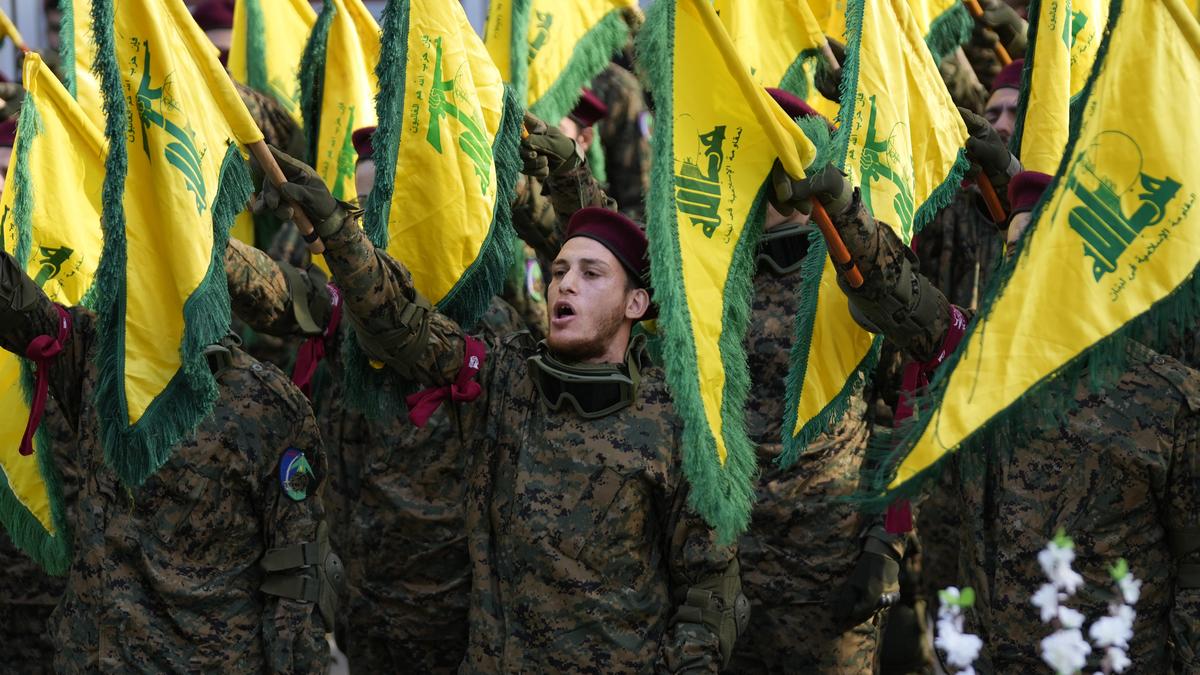
The western intelligence apparatus has spent forty years chasing a ghost they call a "proxy." This is the first and most expensive mistake in modern geopolitics. By labeling Hezbollah as merely a subsidiary of Tehran, analysts have successfully blinded themselves to the reality of the most sophisticated non-state actor in human history. Hezbollah is not a militia. It is not a wing of the Iranian Revolutionary Guard. It is a sovereign entity that happens to lack a recognized seat at the UN, and treating it like a puppet is exactly why every attempt to "contain" it has failed.
Most articles on this topic read like a 1980s Tom Clancy novel. They focus on the "Axis of Resistance" and treat the group as a line item in Iran’s budget. I have spent decades watching these "experts" predict the group's collapse every time a shipment of missiles is intercepted. They are looking at the plumbing while the house is being remodeled around them.
The Proxy Myth is a Comforting Lie
The term "proxy" implies a master-slave relationship. It suggests that if you cut the head off the snake in Tehran, the body in Beirut dies. This logic is a relic of the Cold War. In reality, the relationship is a peer-to-peer network. Iran provides capital and hardware, yes, but Hezbollah provides the doctrinal innovation, the urban warfare blueprints, and the social engineering models that Iran now exports to the Houthis and Iraqi militias.
If Hezbollah were a proxy, it would be a liability. Instead, it is an R&D lab for asymmetric dominance. They have built a parallel state that provides healthcare, education, and banking to a population that the official Lebanese government abandoned decades ago. When you provide the bread, the schools, and the security, you aren't a "militia." You are the government. The official Lebanese state is the ghost; Hezbollah is the reality.
The Silicon Valley of Insurgency
While Western defense contractors were busy over-engineering $100 million fighter jets, Hezbollah was perfecting the "democratization of lethality." They understood long before the Pentagon that a $500 drone and a decentralized command structure could neutralize a multi-billion dollar mechanized division.
They don't think like soldiers; they think like software engineers. They use iterative testing. They deploy a tactic, analyze the failure in real-time, and patch the "software" of their ground troops within weeks. Their tunnel networks aren't just holes in the ground; they are hardened, fiber-optic linked subterranean cities that render satellite intelligence useless.
- Decentralized Command: Units operate with autonomous authority. If communication with "Central" is lost, the mission continues.
- Signal Discipline: They abandoned smartphones and digital footprints years before the West realized how much data they were leaking.
- Infrastructure Integration: They use the civilian landscape not just as a shield, but as a literal component of their weapon systems.
The Bankruptcy of "Sanctions Logic"
The "lazy consensus" among policymakers is that we can starve Hezbollah out. It’s a fantasy. You cannot sanction a group that has built its own internal economy. Hezbollah operates a global logistics and finance network that makes DHL look amateur. From the Tri-Border Area in South America to the diamond mines of West Africa, they have created a diversified revenue stream that is decoupled from the traditional banking system.
Sanctions only hurt the middle class in Beirut. They don't touch the guy in a tunnel with a Kornet missile. In fact, sanctions strengthen Hezbollah because they make the population even more dependent on the group’s "shadow" economy. When the Lebanese Lira collapsed, Hezbollah’s employees were being paid in US dollars. Who has the power then?
The Social Contract of the Dispossessed
People ask: "Why doesn't the Lebanese army just disarm them?" This is a fundamentally flawed question. It assumes the Lebanese army has the moral or physical authority to do so.
Hezbollah’s power isn't just in its rocket pods. It is rooted in a psychological contract. For the Shia population of Southern Lebanon, the group represents the first time in centuries they haven't been treated as second-class citizens. You cannot "defeat" a movement that is inextricably linked to a community's sense of survival.
Imagine a scenario where the US government completely stopped providing mail, police, and roads to a specific state, and a private corporation stepped in to do it for fifty years. Who would those citizens shoot at when the feds showed up to "liberate" them?
Precision is the New Nuclear
The conversation usually focuses on the quantity of Hezbollah’s rockets—the 150,000 figure that gets thrown around in every briefing. This is the wrong metric.
The shift from unguided "dumb" rockets to GPS-guided precision missiles is the real disruption. In the 2006 war, they were firing "to whom it may concern" volleys. Today, they have the capability to target specific windows in government buildings in Tel Aviv. This changes the calculus of deterrence from "how many people can we kill" to "which specific piece of critical infrastructure can we delete."
This is the "pacing threat" that the West refuses to acknowledge. We are still playing checkers against a player that has moved the game to a 3D-printed, blockchain-verified chessboard.
The Failure of the "Terrorist" Label
Labeling a group "terrorists" is a political convenience that often leads to tactical stupidity. When you call someone a terrorist, you stop trying to understand their logic. You assume they are irrational actors driven by religious fervor.
Hezbollah is one of the most rational actors on the planet. Every move is a calculated risk-reward assessment. Every escalation is calibrated to stay just below the threshold of an all-out war that would destroy their domestic infrastructure. They aren't looking for martyrdom; they are looking for market share in the Middle Eastern power dynamic.
The Intelligence Blind Spot
We rely too heavily on SIGINT (Signals Intelligence). We think because we can hear them, we know them. But Hezbollah knows we are listening. They have mastered the art of "semantic camouflage"—using the noise of a failing state to hide the signal of a rising empire.
The real intelligence gap isn't about where the missiles are. It's about the internal social dynamics of the group. We don't understand their succession plans. We don't understand the internal debates between their political and military wings—partly because that distinction is a Western invention that doesn't actually exist within the organization.
The Cost of Misunderstanding
If we continue to treat Hezbollah as a "problem to be solved" through traditional military or diplomatic means, we will continue to lose. They are not a problem; they are a permanent feature of the Levant.
The hard truth nobody wants to admit is that Hezbollah has already won the battle for relevance. They have successfully decoupled from the state while maintaining the power to veto any action that state takes. They have created a "state-within-a-state" that is more efficient, more disciplined, and better funded than the host.
Stop looking for the "proxy." Start looking at the sovereign.
Stop waiting for Tehran to give an order. Start watching Beirut.
The biggest threat isn't that Hezbollah is a wing of the Iranian government. The threat is that they no longer need to be.
Leave the 1980s maps at home. The terrain has changed, and the "experts" are still arguing about the old borders.