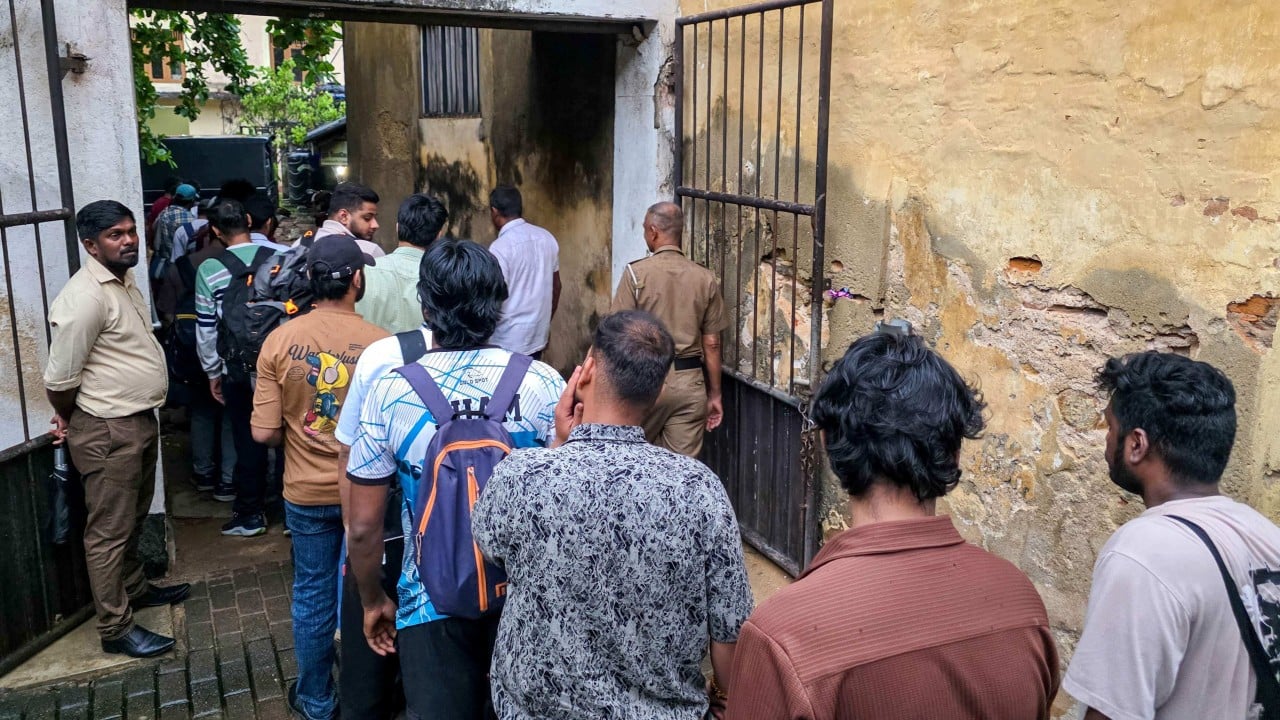
The billion-dollar industrial scam operations that once turned Cambodia and Myanmar into global centers of human trafficking and cyber fraud are moving. Strikingly efficient crackdowns across Southeast Asia have forced these criminal networks to adapt, and they have found an ideal new home in Sri Lanka. Over 1,000 foreign nationals have been arrested on the island since the start of 2026 alone, a massive leap from previous years. Driven by relaxed tourist visa policies, high-speed fiber internet, and a desperate post-crisis economy eager for foreign cash, the syndicates are rapidly embedding themselves into the local infrastructure.
Law enforcement agencies are playing catch-up. The geographic shift proves that regional crackdowns do not destroy criminal cartels; they merely displace them.
The Decentralized Migration
For years, the blueprint for industrial cyber fraud was defined by massive, military-style compounds. In places like Myawaddy in Myanmar or Sihanoukville in Cambodia, thousands of trafficked workers were held behind barbed wire, forced to execute "pig butchering" crypto schemes and romance frauds under the threat of physical torture. Those highly visible compounds became geopolitical liabilities. Pressure from Beijing, combined with aggressive sweeps by Cambodian authorities—who raided over 2,700 suspected locations in early 2026—shattered the centralized model.
The syndicates did not disband. They decentralized.
Sri Lanka offers the perfect environment for this lighter, more agile phase of operation. Instead of building fortified compounds, criminal operators are renting out luxury coastal villas in Galle, Hikkaduwa, and Midigama, or taking over entire floors of hotels in towns like Chilaw and Anuradhapura. In May 2026, a single night of police raids across southern resort areas netted nearly 200 foreign suspects, primarily from India and Nepal.
This distributed architecture makes detection exceptionally difficult. A modern scam center no longer requires a compound; it requires a dozen high-end laptops, hundreds of burner smartphones, and a stable Wi-Fi connection.
The Economic Vulnerability
Sri Lanka is still recovering from its devastating 2022 economic collapse. The state is highly focused on generating foreign revenue, bringing in hard currency, and revitalizing its crucial tourism industry. To achieve its target of three million tourist arrivals, the government simplified its visa entry system, offering accessible 30-day tourist visas and smooth online applications for dozens of nationalities, including China and India.
Criminal syndicates view these economic lifelines as structural vulnerabilities.
Local property owners, hit hard by years of inflation, are rarely inclined to ask questions when foreign tenants offer thousands of dollars in cash upfront to rent a secluded villa or a block of commercial apartments. The cash infusion is immediate, while the criminal activity remains hidden behind closed doors. Sri Lankan authorities have issued stern warnings to landlords, threatening prosecution for aiding criminal outfits, but economic desperation often outweighs legal caution.
The Indian Ocean Tech Haven
The technical infrastructure of Sri Lanka is an irony of its development. The island boasts reliable, widespread, high-speed fiber-optic internet and excellent mobile connectivity. For a legitimate software engineer, it is an idyllic remote work destination. For a criminal syndicate executing latency-sensitive financial fraud, romance scams, or illegal gambling operations, it is a premium utility provider.
The nature of the crime itself has shifted alongside the geography. Originally, Southeast Asian scam factories focused heavily on targeting Mandarin speakers. As Chinese law enforcement cracked down and coordinated with regional police, the syndicates diversified their workforces and their targets.
By recruiting or trafficking operators from India, Nepal, and Vietnam, the networks currently active in Sri Lanka are running multi-lingual operations targeting victims across South Asia and the West.
Scam Compound Evolution:
[Centralized Mega-Compounds (Cambodia/Myanmar)]
       │
       ▼ (Law Enforcement Pressure & Raids)
[Decentralized Boutique Hubs (Sri Lanka Coastal Villas)]
The Regulatory Deficit
Sri Lanka possesses a legal framework that includes a Computer Crimes Act and a recent Personal Data Protection Act. However, these laws were designed to combat conventional hackers, localized identity theft, and corporate data breaches. They are fundamentally unsuited for handling transnational syndicates utilizing forced labor to run global financial fraud operations.
Currently, the primary response of the Sri Lankan state has been mass deportation rather than stringent criminal prosecution.
When police raid a hotel in Chilaw and detain 150 foreign workers, processing them through the local judicial system for complex financial crimes requires vast translation resources, forensic digital analysis, and international coordination. Deportation is faster, cheaper, and clears the immediate backlog. Unfortunately, it also means the masterminds behind the operations face few long-term consequences, treating the loss of workers and hardware as a basic cost of doing business.
A Double-Edged Threat
The presence of these syndicates poses a direct threat to the host nation. While the operations initially focused on external targets in India, the Philippines, and the West, the proximity of criminal infrastructure inevitably bleeds into domestic systems.
Sri Lankan authorities are currently investigating whether foreign syndicates based on the island were involved in a sophisticated cyberattack on the Ministry of Finance, which resulted in an estimated $2.5 million in losses.
The narrative of the captive worker is also shifting. While the United Nations estimates that hundreds of thousands of people have been trafficked into Southeast Asian scam factories, the demographic entering Sri Lanka appears more mixed. While some are undoubtedly victims of human trafficking lured by fake tech-job advertisements, a growing number are willing con artists, moving across borders on tourist visas to clear high wages in a shadow industry.
The Chinese embassy in Colombo has publically acknowledged the migration of these illicit networks from Southeast Asia and the UAE into Sri Lanka, pledging cooperation with local law enforcement. Yet, as long as the underlying factors remain—cheap real estate, easy visa access, superb connectivity, and an overstretched regulatory apparatus—the island will remain a premier destination for displaced cybercrime.
Stopping the migration requires more than occasional midnight raids on coastal villas. It demands a fundamental overhaul of how transnational digital crime is policed in the Indian Ocean.