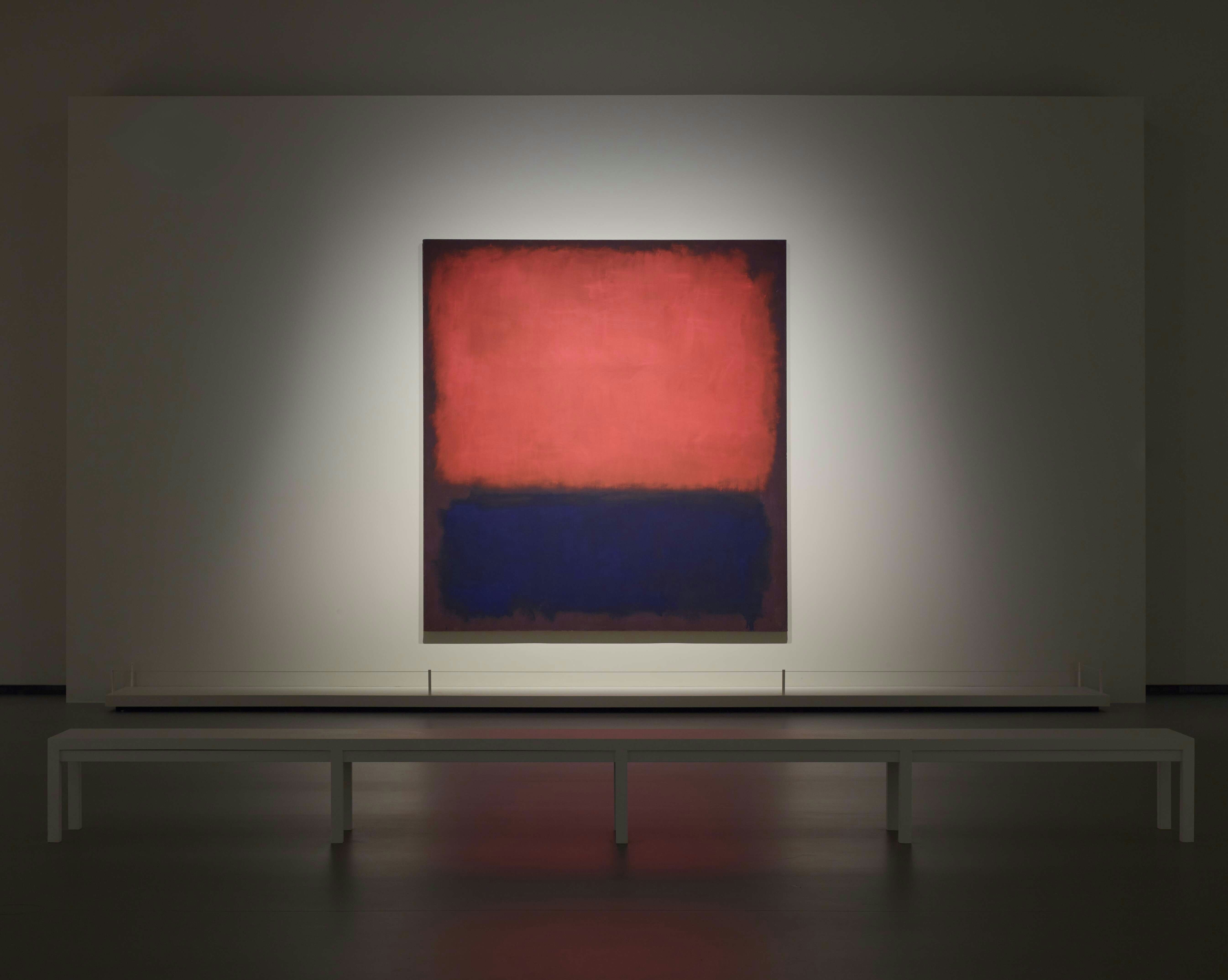
The art world operates on a carefully manufactured scarcity. For decades, the market for Mark Rothko has been defined by a grueling wait, where collectors would spend years on lists or engage in clandestine backroom deals just to catch a glimpse of a premier Color Field canvas. That wall of exclusivity just cracked. Five significant works by the abstract expressionist master have hit the market simultaneously, upending the traditional supply-to-demand ratio that keeps blue-chip prices in the stratosphere.
When a single Rothko appears at auction, it is a global event. When five arrive at once, it is a stress test for the entire high-end art economy. This sudden influx is not a coincidence or a random alignment of estate planning; it represents a calculated gamble by sellers who sense a shift in the financial winds. For the elite buyer, this is no longer about the prestige of the hunt. It is a cold-blooded assessment of whether the Rothko name can sustain its value when the "rare" becomes "available." Also making news in this space: The Tariff Blockage Myth Why New Court Rulings Are Actually Fueling the Next Trade War.
The Mechanics of the Artificial Drought
The primary reason Rothko prices stayed so high for so long was the iron grip of the Rothko estate and a handful of major foundations. By drip-feeding the market, they ensured that demand always outstripped supply. You didn’t just buy a Rothko; you were granted the privilege of owning one. This controlled distribution created a floor price that rarely dipped below the eight-figure mark.
Now, that floor is being tested. The sudden appearance of five works suggests that the gatekeepers are either losing their grip or, more likely, moving to liquidate before a potential cooling of the ultra-high-net-worth sector. In the business of aesthetics, perception is the only currency that matters. If collectors begin to see these canvases as commodities rather than relics, the psychological premium vanishes. Further information on this are covered by CNBC.
Why the Surge is Happening Now
We have to look at the broader economic pressures hitting the world’s top 0.1 percent. Interest rates stayed higher for longer than many anticipated, and the cost of maintaining massive, illiquid portfolios is rising. Art is often touted as a hedge against inflation, but it is also one of the first assets to be offloaded when a family office needs to rebalance its cash flow.
The sellers in this current cycle are likely looking at a few specific factors.
- Estate Liquidity: Significant collectors from the 1970s and 80s are hitting an age where their heirs prefer cash over a ten-foot canvas that requires $50,000 a year in insurance and climate control.
- The Rise of Alternative Abstraction: While Rothko remains the titan, there is a growing movement toward more contemporary, diverse abstract artists who offer better growth potential for younger investors.
- Market Satiation: There are only so many private museums and billionaire living rooms that can house a massive scale oil painting.
This isn't just about art history; it's about inventory management. When five pieces of this caliber hit the block, they compete for the same small pool of capital.
The Risk of the Auction Room Brawl
Auctions are designed to be theater. The goal is to create a "frenzy" that pushes the hammer price far beyond the estimate. However, having five works in play creates a unique problem: the "spoiled for choice" effect. If a bidder loses out on the first Rothko, they don't necessarily panic-buy the second. They might wait, hoping the third or fourth sells for less as the room's energy and bankrolls begin to flag.
If even one of these five fails to meet its reserve or sells at the low end of the estimate, it sends a shiver through the entire market. A "bought-in" Rothko—one that fails to sell—is a radioactive event for the artist's valuation. It signals to every other owner that their $50 million asset might actually be worth $35 million. That $15 million gap is where the panic lives.
The Psychology of Color Field Investing
Rothko’s work is uniquely vulnerable to market shifts because its value is almost entirely subjective. Unlike a Renaissance master whose value is tied to historical rarity and technical complexity that cannot be replicated, a Rothko relies on the viewer’s emotional response to color and scale. This is "vibes-based" investing at its most expensive.
When the market is bullish, these paintings are seen as spiritual portals. When the market is bearish, they are seen as large, expensive-to-ship rectangles of pigment. The current influx of work forces buyers to look at these pieces with a more critical, financial eye. Is the 1954 "Orange and Yellow" truly superior to the 1961 "Deep Red," or are you just paying for a specific year that the market currently deems "canonical"?
How This Redefines the Blue Chip Sector
The impact of this "Rothko Flood" will be felt far beyond the auction houses of New York and London. It serves as a warning to those holding works by other mid-century giants like Pollock, de Kooning, or Mitchell. The era of the "unbreakable" price point is over.
We are seeing a shift toward a more transparent, perhaps more cynical, valuation process. Collectors are no longer content to wait decades for a piece; they want the ability to move in and out of positions with the same fluidity they have in the stock market. But the art market isn't a stock market. It lacks the liquidity and the regulatory oversight to handle sudden spikes in supply without a significant correction in price.
The smart money is currently watching the "under-bidders." In a typical auction, the winner is the person willing to pay the most, but the health of the market is determined by the person who came in second. If there are multiple bidders for all five Rothkos, the market is healthy. If it’s the same three billionaires cycling through the lots, we are looking at a house of cards.
The Problem with Provenance
With five pieces surfacing, the scrutiny on provenance becomes intense. Each painting’s history—who owned it, where it was exhibited, and whether it has ever been "offered" privately and rejected—is being picked apart by consultants. In a crowded market, a "clean" history is the only thing that justifies a premium. Any gap in the record or a history of being "flipped" too frequently will result in a lower hammer price, further dragging down the artist's average.
The Strategy for the Contemporary Collector
If you are holding a Rothko, now is a terrifying time. If you are looking to buy one, it is the most leverage you have had in a generation. The power has shifted from the galleries to the buyers.
The definitive move for a serious investor right now is to ignore the hype of the "event" and look at the underlying data. How many of these works are being offered with "irrevocable bids" or "third-party guarantees"? These are essentially insurance policies that ensure the painting will sell, even if no one in the room bids. If all five have guarantees, the auction house is effectively rigging the outcome to prevent a total market collapse. It’s a sign of weakness, not strength.
A New Reality for Abstract Expressionism
The myth of the "once in a lifetime" opportunity is dying. We are entering a period where even the most prestigious names are subject to the same supply-and-demand gravity as any other asset class. The five Rothkos are not a gift to the art world; they are a warning.
The prestige of owning a Rothko was always tied to the fact that your neighbor couldn't have one. Now, four of your neighbors can. That changes the social contract of the masterpiece. The auction results will do more than just set a new price; they will determine if the abstract expressionist market is still a safe harbor or just another bubble waiting for enough pins to arrive at once.
Wait for the hammer to fall on the final lot. That silence between the penultimate bid and the strike of the gavel is the sound of a market deciding its own future. If the prices hold, the scarcity was real. If they stumble, the illusion is broken, and the "wait for a Rothko" will be over for good, replaced by a desperate scramble to find the next exit.