The recent arrest of four individuals in connection with a multimillion-pound home insulation fraud marks more than just a localized criminal crackdown. It exposes a systemic vulnerability in how governments distribute environmental subsidies. These suspects allegedly operated a sophisticated network that siphoned public funds intended for energy efficiency, leaving homeowners with shoddy workmanship or, in many cases, nothing at all. While the arrests suggest the net is closing on this specific cell, the underlying architecture of the green energy market remains a playground for high-level white-collar crime.
Corruption in this sector is rarely about a single rogue contractor. It is an industry-wide infection. When billions are committed to rapid decarbonization, the oversight mechanisms usually lag behind the cash flow. Criminals don't see a climate crisis; they see a gold rush with poor policing.
The Anatomy of the Insulation Sting
Modern energy fraud is built on the exploitation of trust and bureaucratic complexity. The typical "Boiler Room" setup has migrated from stocks to retrofitting. These organizations begin with lead generation, using aggressive telemarketing or door-to-door canvassing to target the elderly and the vulnerable. They promise "free" upgrades under government-backed schemes like the Energy Company Obligation (ECO) or similar grant frameworks.
The fraud operates on two distinct levels.
First, there is the paperwork manipulation. Scammers submit fraudulent claims for work that was never performed. They use stolen identities or "mule" addresses to verify installations that exist only on a spreadsheet. Because auditors often rely on digital submissions rather than physical inspections, these ghost installations can go undetected for years.
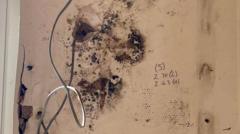
Second, we see the substandard installation trap. In this scenario, some work is actually done, but it is performed by unqualified laborers using inferior materials. This is often more dangerous than the paperwork fraud. Cavity wall insulation installed incorrectly leads to catastrophic damp and structural rot. Internal wall boards that don't meet fire safety standards turn homes into tinderboxes. The criminal gets the full government payout; the homeowner gets a ruined asset.
Why the Oversight Fails
The blame doesn't rest solely with the fraudsters. The regulatory environment is often complicit through negligence. Government departments are frequently under pressure to hit "net zero" targets, which means they prioritize the volume of installations over the quality of the vetting process.
When the primary metric for success is the amount of money "out the door," due diligence becomes an obstacle to progress. This creates a vacuum.
Legitimate firms struggle to compete with the pricing of criminal outfits that ignore safety regulations and tax obligations. Over time, the "bad money" drives out the good. Small, honest contractors are squeezed out of the market because they cannot match the speed or the kickback-heavy models used by the scam networks. The result is a hollowed-out industry where the most aggressive players are the ones least interested in actually saving energy.
The Role of Certification Bodies
Many homeowners believe that a "certified" logo on a van ensures safety. This is a dangerous misconception. The accreditation industry has become a lucrative business in its own right. Some bodies are essentially "pay-to-play" operations that conduct surface-level checks on a company's financial health but rarely step onto a construction site.
Criminals utilize "phoenixing" to bypass these hurdles. They run a scam company until the complaints pile up, shut it down on a Friday, and open a "new" business with a different name but the same directors on a Monday. They buy their way back into the accreditation schemes, using the previous company’s fraudulent history as "experience."
The Financial Fallout for the Taxpayer
When four people are arrested for a scheme like this, the headline figure of the fraud is usually just the tip of the iceberg. The real cost includes the millions required for remedial work. Once a home has been botched by a fraudulent insulation firm, the cost to fix the damage often exceeds the original value of the grant.
Public funds are essentially being spent twice—once to fund the crime and once to clean up the mess.
This creates a massive "trust deficit." If homeowners cannot be certain that an energy audit is legitimate, they stop participating in green initiatives altogether. This stalls national progress on carbon reduction. The fraud is not just a theft of money; it is a theft of time that the planet does not have.
The High Cost of the Middleman
Most government energy schemes rely on a chain of intermediaries. You have the government department, the energy giant funding the obligation, the lead generator, the primary contractor, and the sub-contractor.
By the time the money reaches the person holding the drill, a significant portion has been skimmed off by middlemen who provide no tangible value. This fragmentation is where the criminals hide. They position themselves as "consultants" or "administrative partners," distancing themselves from the actual site of the fraud.
To break this cycle, the flow of capital must be direct and transparent.
Necessary Structural Shifts
The arrests are a start, but the following changes are required to prevent the next wave of exploitation:
- Mandatory Physical Audits: Digital-only verification is an invitation to fraud. A randomized 20% physical inspection rate for all government-funded retrofits would collapse the "ghost installation" model overnight.
- Director Accountability: Laws must be tightened to prevent directors of liquidated insulation firms from holding similar positions for a minimum of five years if fraud is suspected.
- Whistleblower Incentives: Many of the laborers working for these criminal firms know the work is shoddy. Providing a secure, incentivized pathway for them to report their employers would dismantle these networks from the inside.
The Dark Side of Technical Specs
We must also look at the materials. High-performance insulation involves complex chemistry. $U$-values, which measure thermal transmittance, are easily faked on data sheets. If a contractor claims a $U$-value reduction of $0.20 W/m²K$ but uses $10mm$ of cheap polystyrene instead of the specified $50mm$ PIR board, the homeowner has no way of knowing until the heating bill arrives.
The formula for heat loss is $Q = U \times A \times \Delta T$, where $Q$ is the heat transfer rate, $A$ is the area, and $\Delta T$ is the temperature difference. By inflating the $U$-value on paper, scammers steal the difference in material costs. Over a thousand homes, this "material skimming" generates millions in pure, illicit profit.
The sophistication of these calculations makes it easy to baffle a layperson or a distracted civil servant. Fraudsters use the language of science to mask the reality of theft.
Moving Toward a Hardened Market
The pursuit of a greener economy should not be a subsidy-grab for the underworld. The current arrests are a warning shot, but the war is far from over. As long as the government continues to dump capital into disorganized markets without rigorous, boots-on-the-ground oversight, the criminals will continue to adapt.
The solution is not more paperwork; it is more accountability. We need a "blacklist" that actually works, shared across all local and national agencies. We need a focus on "one-and-done" quality rather than "as many as possible" quantity.
If the goal is truly to save the environment, we have to stop funding the people who are busy destroying our homes. The green transition is the most significant economic shift of the century. We cannot afford to let it be defined by the low-level grifters and high-level racketeers who have turned home insulation into a criminal enterprise.
Every pound stolen by a fraudster is a pound not spent on actual carbon reduction. Every house ruined by damp is a family that will never trust a "green" initiative again. It is time to treat energy fraud as the high-stakes economic sabotage that it is, rather than a mere byproduct of a messy market.