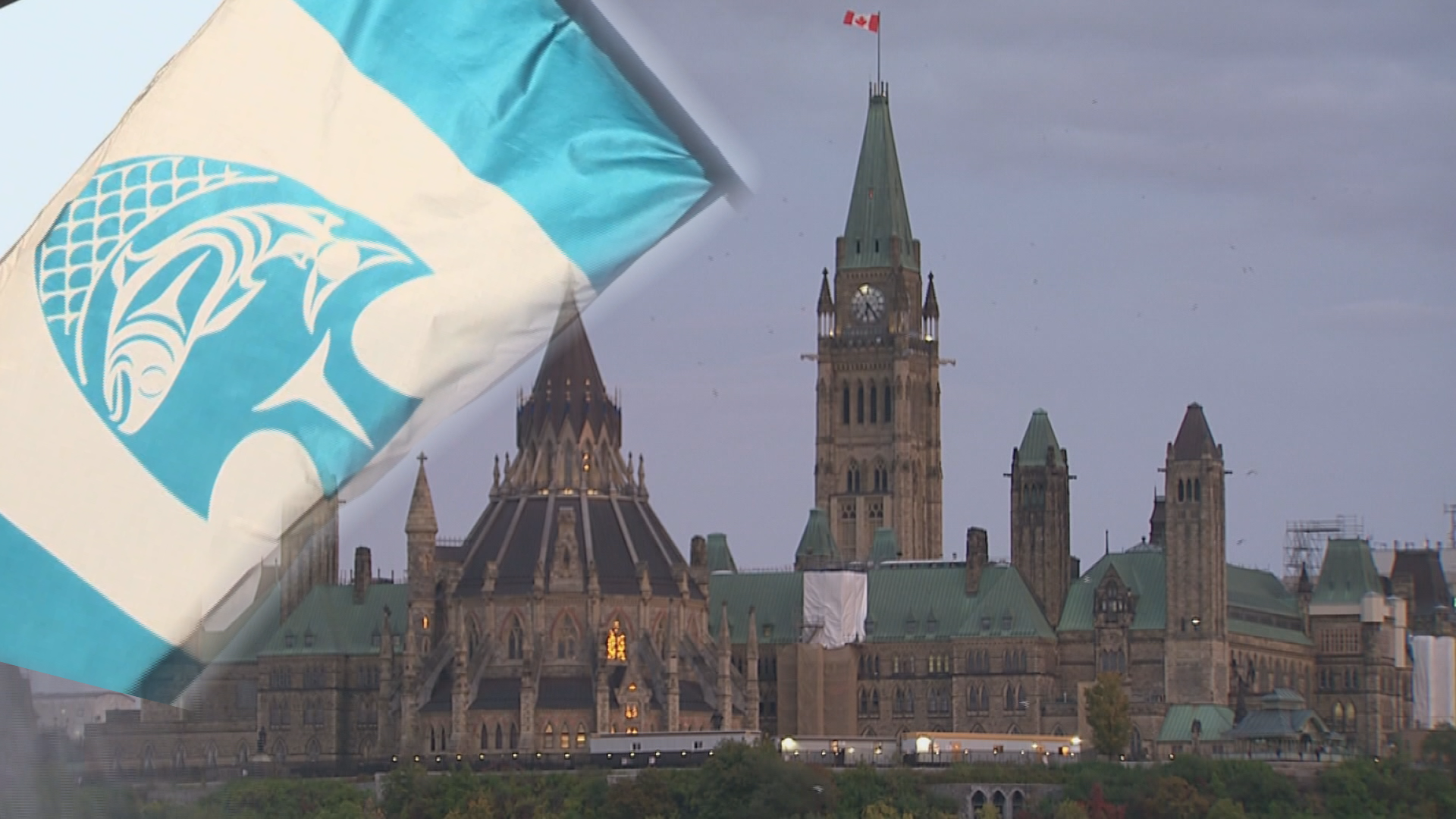
The fog on the Fraser River doesn’t just obscure the water; it swallows the horizon. On mornings like this, the tugboats look like flickering orange embers drifting through a grey void. For the people living in the shadow of the Musqueam traditional territory, that fog has become a metaphor for their daily reality. They know something is happening. They can hear the machinery of progress grinding behind the curtain. But they aren't allowed to see the blueprints.
We are told that reconciliation is a path we walk together. It is a beautiful sentiment, written in the elegant prose of press releases and etched into the letterheads of government offices. Yet, on the ground in British Columbia, the "together" part is starting to feel like an exclusive club with a very high velvet rope.
Recent land agreements between the provincial government and the Musqueam Indian Band have sent ripples through the community—not because people oppose the idea of justice, but because they are terrified of the silence that precedes it. When the public stops buying the narrative, the foundation of every bridge we try to build begins to crack.
The Kitchen Table Crisis
Picture a homeowner in south Vancouver. Let's call her Sarah. Sarah isn't a politician or a lobbyist. She’s a nurse who spent twenty years paying off a mortgage on a modest house that borders land currently under negotiation. For Sarah, the Musqueam agreements aren't "policy frameworks." They are the reason her property value is a question mark. They are the reason she doesn't know if the quiet park behind her house will be a high-density concrete canyon by next summer.
Sarah sits at her kitchen table, scrolling through news clips of officials shaking hands. She sees the smiles. She hears the words "historic" and "transformative."
"But what about us?" she asks the empty room.
That question isn't born of malice. It is born of the basic human need for agency. When the government signs away land rights or changes zoning behind closed doors, they aren't just moving chess pieces on a map. They are altering the lived experience of thousands of people who were never invited to the table.
The Currency of Trust
In any business deal, the most valuable asset isn't the land or the liquid capital. It is trust. Once you spend it, you can’t just print more. The fallout from the Musqueam agreements suggests that the provincial government has been overdrawing its account for a long time.
The technical details are dense. We are talking about vast tracts of land, complex revenue-sharing models, and jurisdictional handoffs that would make a constitutional lawyer’s head spin. But the core tension is simple: Who gets to decide the future of the dirt we stand on?
The Musqueam people have a legitimate, heart-wrenching, and legally undeniable claim to their ancestral lands. Centuries of displacement cannot be ignored. Every person with a sense of history understands that the status quo was built on a foundation of theft. But the remedy shouldn't be another layer of opacity.
When the government negotiates in total secrecy, they create a vacuum. And in a vacuum, fear grows. Rumors take root. People start to believe the worst because they haven't been given the best—or even the truth. The public isn't "buying it" because they feel like they’re being sold a finished product they didn't help design.
A Masterclass in Friction
Consider the logistics of these agreements. Usually, when a city plans a major development, there are town halls. There are poster boards with colorful renderings. There is a chance for the neighbor to complain about the shade or the traffic. It is messy. It is loud. It is democracy.
Under the current Musqueam-BC framework, much of that process is bypassed. The provincial government argues that this is necessary to expedite reconciliation and respect Indigenous sovereignty. They claim that traditional consultation methods are often just a polite way to stall progress.
There is some truth to that. But there is a massive difference between "streamlining" and "sidelining."
When a developer and a First Nation reach an agreement that bypasses municipal oversight, the local residents feel like spectators in their own lives. They see the cranes arrive and realize the deal was inked months ago in a room they weren't allowed to enter.
The Weight of History vs. The Needs of the Present
The ghost of the Fraser isn't just the mist; it’s the memory of what was here before the concrete. To the Musqueam, these agreements are a reclamation of identity. To them, the "public" that is currently complaining is the same public that spent a century looking the other way while their culture was suppressed.
It is a clash of two different types of "right."
- The Musqueam's right to economic self-determination and the return of their stolen heritage.
- The broader community's right to a transparent, predictable process for how their neighborhoods evolve.
These two rights should not be mutually exclusive. Yet, the way the current administration handles these deals makes them feel like a zero-sum game. If one side wins, the other must have been cheated.
The math of reconciliation is harder than the math of real estate. $A + B = C$ works for a balance sheet, but it doesn't work for social cohesion. You cannot simply subtract the grievances of the past by adding new grievances in the present.
The Ripple Effect on the Market
The business community is watching this with a nervous twitch. Stability is the oxygen of investment. When the rules of land use can be rewritten overnight through a "reconciliation agreement" that ignores existing zoning, the "Risk" column on every spreadsheet grows.
Developers who aren't part of these specific partnerships wonder if the ground will shift under their feet next. Lenders look at the uncertainty and hike interest rates. The very people these agreements are meant to help—British Columbians struggling with a housing crisis—might find that the "solution" has actually stalled the market.
If you are an investor, you want to know the rules of the game. If the rules are "whatever the province decides in a private meeting with a single stakeholder," you might take your capital elsewhere. That isn't a threat; it’s a biological response to instability.
The Human Cost of Secrecy
We often talk about these deals in terms of billions of dollars. But the real cost is measured in the loss of community spirit. When neighbors start looking at their First Nations neighbors with suspicion rather than solidarity, we have failed.
The secrecy of the Musqueam agreements has inadvertently turned a quest for justice into a source of division. It has turned potential allies into skeptics.
I remember talking to a shopkeeper near the Marpole area. He had spent his life building a business, and he supported the idea of Indigenous land rights. "I want them to have what’s theirs," he told me, his hands dusted with flour from the morning's bake. "But I also want to know if my lease is going to double because the land ownership changed over a long weekend. Is that too much to ask?"
It isn’t.
Why the Narrative Must Change
The problem isn't the Musqueam. They are doing exactly what any nation would do: fighting for their people, their future, and their rights. They are playing the hand they were dealt by a legal system that finally, belatedly, recognizes their standing.
The problem is a provincial leadership that treats the public like a hurdle to be jumped rather than a partner to be engaged. They have mistaken "compliance" for "support." Just because you have the legal authority to sign a deal doesn't mean you have the social license to make it work.
A truly human-centric approach to reconciliation would acknowledge the fear. It would lean into the discomfort. It would hold the meetings in the high school gyms and the community centers, even if the questions are hard and the anger is raw.
Sunlight is a disinfectant, but it’s also a grower. Without it, nothing healthy can take root.
The Breaking Point
We are approaching a tipping point in British Columbia. The public’s patience is wearing thin, not with the goal of reconciliation, but with the methodology of the elite. We see a pattern emerging where "reconciliation" becomes a convenient shield to deflect criticism of massive, non-transparent urban development.
When people feel like a moral cause is being used to justify a lack of accountability, they don't just reject the deal. They start to resent the cause itself. That is the most dangerous fallout of all.
We need a new way of talking about land. Not as a commodity to be traded in shadows, but as a shared responsibility. The Musqueam have been stewards of this delta for thousands of years. They have much to teach us about longevity and respect for the earth. But those lessons are lost when they are delivered via a leaked memorandum or a sudden legislative change.
The fog on the Fraser eventually lifts. The sun hits the water, the tugboats find their way, and the outlines of the mountains return. We can see where we are. We can see where we're going.
The question remains whether the people in power are willing to let the sun shine on these agreements before the bridge they’re building is too far gone to save.
If you walk down to the river today, you can see the stakes driven into the mud. They are markers of what is to come. For some, they represent hope. For others, they represent a loss of control. Between those two points lies the real work of a society—not just signing papers, but looking each other in the eye and admitting that while we can't change the past, we are terrified of losing our place in the future.
The silence from the negotiating rooms is loud. It drowns out the water. It drowns out the birds. It tells the people of this province that their voices are a secondary concern to the grand designs of the state.
And as long as that silence persists, the public won't be buying a single word of it.


