Energy analysts love a good apocalypse. They dust off the 1973 oil embargo charts, point at the Strait of Hormuz, and whisper about "unprecedented volatility" as if history is a flat circle that only moves in one direction: catastrophe. They are wrong. The obsession with comparing a potential modern Iran-centric disruption to the shocks of the 1970s or even the 2000s isn't just lazy; it’s an intellectual failure to account for the fundamental plumbing of the modern global economy.
The "consensus" view is that a hot war involving Iran would choke the world’s most vital artery, send Brent crude to $150, and collapse the global recovery. This narrative relies on a version of the world that hasn't existed for fifteen years. We aren't in 1973. We aren't even in 2008. The structural reality of energy production and consumption has undergone a violent mutation that makes the "supply shock" bogeyman more of a shadow than a monster.
The Myth of the Hormuz Chokehold
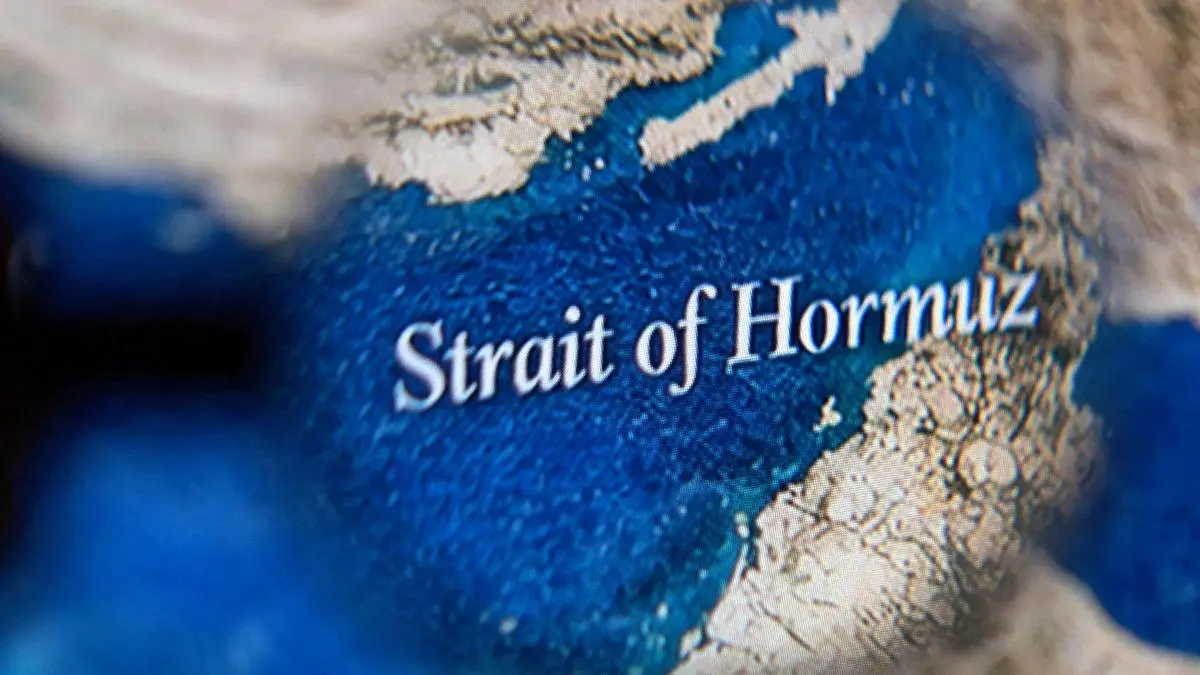
Everyone looks at the map and sees a 21-mile-wide bottleneck. They see 20% of the world’s petroleum liquid consumption passing through the Strait of Hormuz and assume that if you turn the valve, the world stops.
This view ignores the evolution of tactical redundancy. Saudi Arabia and the UAE haven't been sitting on their hands. The East-West Pipeline (Abqaiq-Yanbu) and the ADCOP pipeline are no longer just "contingency plans." They are active, massive bypasses capable of moving millions of barrels per day directly to the Red Sea or the Gulf of Oman. While a total closure of the Strait would be a logistical nightmare, it is no longer the total systemic blackout it was during the Tanker War of the 1980s.
More importantly, the "shock" narrative ignores the most significant shift in energy history: the American shale revolution. In the 1970s, the U.S. was a desperate customer. Today, the U.S. is the world's largest producer of oil and gas. When the Middle East sneezes, the Texas Permian Basin doesn't catch a cold—it catches a profit.
The Spare Capacity Mirage
Conventional wisdom says that if Iranian barrels (roughly 3 million per day) leave the market, the world has no buffer. This is a fundamental misunderstanding of how OPEC+ operates in the 2020s. We are currently living in a world of artificial scarcity, not actual scarcity.
OPEC+ is currently withholding millions of barrels from the market to prop up prices. If a conflict actually breaks out, the "geopolitical premium" spikes the price, which immediately incentivizes the release of that sidelined capacity. The math is simple:
$$P_{oil} = \frac{D}{S_{current} + S_{spare} + S_{spr}}$$
In this equation, $S_{spare}$ (spare capacity) and $S_{spr}$ (Strategic Petroleum Reserves) are at levels that would make the 1973 planners weep with envy. Between the U.S., China, and the IEA members, there are billions of barrels of "paper oil" and physical reserves ready to flood the market the moment a headline hits.
The "shock" is absorbed before it even reaches the pump because the market is no longer a physical exchange of barrels—it’s a sophisticated financial buffer system.
Why Demand is the Real Disruptor
The competitor articles always focus on supply. They never talk about the "Demand Destruction Wall." In the 1970s, you couldn't swap your V8 Buick for a Tesla overnight. You couldn't switch a coal plant to gas with a software update.
Today, energy intensity—the amount of energy required to produce a dollar of GDP—is in freefall. We are more efficient than we have ever been. Furthermore, the global economy is teetering on a knife’s edge of high interest rates. A massive spike in oil prices wouldn't just be an "inflationary pressure"; it would be an immediate, self-correcting recessionary trigger.
If oil hits $120, global demand doesn't just dip—it craters. The high price kills the high price. This feedback loop is faster today than at any point in history because of real-time data and algorithmic trading. By the time you see the "War" headline on your phone, the market has already priced in the recession that will lower the demand for the oil that isn't being shipped. It’s a closed-loop system of volatility that prevents a long-term, 1970s-style stagflation.
The China Factor: The Silent Buyer
If you want to talk about Iran, you have to talk about the "Ghost Fleet." Iran has spent a decade perfecting the art of selling oil under the radar. Most of it goes to small, independent "teapot" refineries in China.
These barrels don't "exist" in official Western data. Therefore, the "threat" of removing them is overstated. China is not going to allow its primary source of discounted energy to be evaporated by a regional conflict. The diplomatic and economic pressure Beijing would exert to keep the "dark" flow moving is the strongest stabilizing force that nobody mentions. China’s thirst for cheap, sanctioned Iranian crude is the ultimate insurance policy against a total global supply collapse.
The LNG Trap
While the focus is on oil, the real "nuance" the amateurs miss is Liquefied Natural Gas (LNG). Qatar shares the North Dome/South Pars field with Iran. This is the largest gas field in the world.
If a conflict disrupts LNG shipments, the impact isn't just "higher gas prices." It is the total de-industrialization of Europe. Unlike oil, which can be moved on trucks, trains, or different tankers, LNG requires hyper-specific infrastructure. If you blow up a liquefaction plant, it doesn't come back in six months. It takes six years.
This is where the competitor's comparison to "past disruptions" fails. Past disruptions didn't involve the integrated global gas market we have today. We have traded oil-dependence for gas-interdependence. A conflict in the Persian Gulf isn't a threat to your gas tank; it's a threat to the German chemical industry and the heating of every home in the Northern Hemisphere.
But even here, the "contrarian" truth is that the risk is the deterrent. The stakes are so high for the global elite—including the Iranian leadership who rely on that same infrastructure for survival—that the "total war" scenario is an economic suicide pact. Rational actors, even those blinded by ideology, rarely choose to jump off a cliff when they are tethered to the person they are fighting.
Stop Preparing for the Last War
Investors and policy makers are still looking for the "1973 moment." They are hedging against a world that no longer exists.
If you want to know where the real shock will come from, stop looking at the Strait of Hormuz and start looking at the copper mines in Chile or the lithium processing plants in China. The "energy shock" of the future won't be about liquids flowing through a pipe; it will be about electrons moving through a grid.
The Iranian "crisis" is a legacy risk. It's a fossil-fuel ghost story designed to keep defense contractors funded and commodity traders excited. The reality is that the world has built enough bypasses, reserves, and efficiency buffers to make an Iranian supply shock a temporary spike rather than a structural shift.
The real danger isn't that the oil stops flowing. The danger is that we are so focused on the old threat that we miss the moment the entire energy architecture shifts beneath our feet. We are prepared for a blockage in a pipe when we should be preparing for a short circuit in the system.
Sell the panic. Buy the redundancy. The shock is a sham.