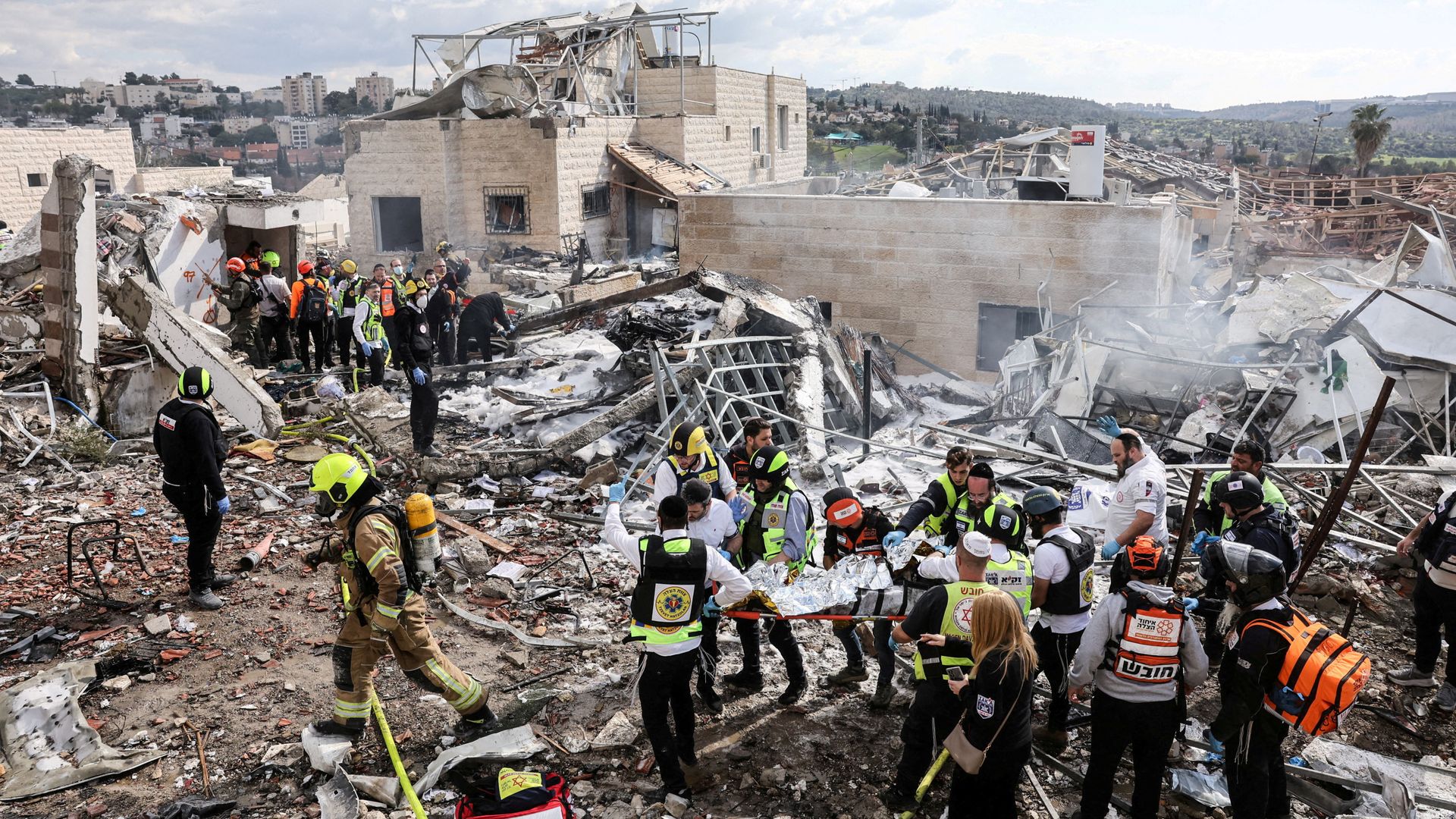
The kinetic escalation between Israel, its regional adversaries, and Iranian-backed entities has fundamentally reconfigured the topology of global aviation. When Iranian and Israeli airspaces are restricted or closed due to missile exchange and electronic warfare, the result is not a temporary delay but a systemic failure of the "Silk Road" air corridor. This corridor, which connects European hubs to Asian markets, relies on the predictable availability of Iranian, Iraqi, and Jordanian flight information regions (FIRs). The current disruption represents a transition from managed risk to structural exclusion, forcing a redistribution of air traffic that tests the physical and economic limits of alternative routes.
The Mechanics of Airspace Sterilization
The "emptying" of Middle Eastern skies is the result of three specific operational pressures that force carriers to abandon preferred flight paths:
- Kinetic Interdiction Risks: The primary threat is not a targeted strike on civilian aircraft but the "fog of war" resulting in misidentification by Integrated Air Defense Systems (IADS). During high-alert phases, the probability of an accidental shoot-down—similar to the 2020 downing of Ukraine International Airlines Flight 752—increases exponentially.
- GPS Spoofing and Meaconing: Electronic warfare (EW) suites deployed across the Levant and the Persian Gulf frequently jam or "spoof" Global Navigation Satellite System (GNSS) signals. Aircraft navigating these sectors experience "positional drift," where the flight management computer (FMC) receives false coordinates, potentially leading to unauthorized airspace incursions or navigational errors in mountainous terrain.
- NOTAM Cascades: Notice to Air Missions (NOTAMs) issued by national civil aviation authorities often occur with less than 30 minutes of lead time during missile launches. For an ultra-long-haul flight already in the air, a sudden closure of the Tehran FIR necessitates an immediate, fuel-heavy diversion.
The Economic Cost Function of Forced Diversion
Airlines do not view airspace closure as a binary (open/closed) state, but as a variable in a complex cost-benefit equation. When the Iranian corridor—a massive 1.6 million square kilometer block—becomes untenable, the traffic must flow through a "funnel" over Egypt and Saudi Arabia or north through the already congested and politically sensitive Russian/Central Asian periphery.
Fuel Burn and Payload Penalties
The detour around Iranian and Iraqi airspace typically adds between 45 and 90 minutes to a flight between London and Singapore. Using a Boeing 777-300ER as a baseline, an additional 60 minutes of flight time equates to approximately 7,000 to 8,000 kilograms of extra fuel.
This creates a secondary "payload penalty." To carry the extra fuel required for the diversion, the aircraft must reduce its "Take-Off Weight" elsewhere—usually by bumping high-yield cargo or limiting passenger capacity. For a long-haul carrier, this shift can turn a profitable flight into a net-loss operation before the wheels leave the tarmac.
The Turkish and Saudi Bottlenecks
The displacement of hundreds of daily flights into the Ankara (Turkey) and Jeddah (Saudi Arabia) FIRs creates a "density bottleneck." Air Traffic Control (ATC) must increase the separation between aircraft to manage the influx, leading to:
- Sub-optimal Altitudes: Aircraft are forced to fly at lower, less fuel-efficient altitudes because the "sweet spot" (FL350–FL390) is occupied.
- Tactical Vectors: ATC-mandated zig-zagging to maintain separation further increases track miles.
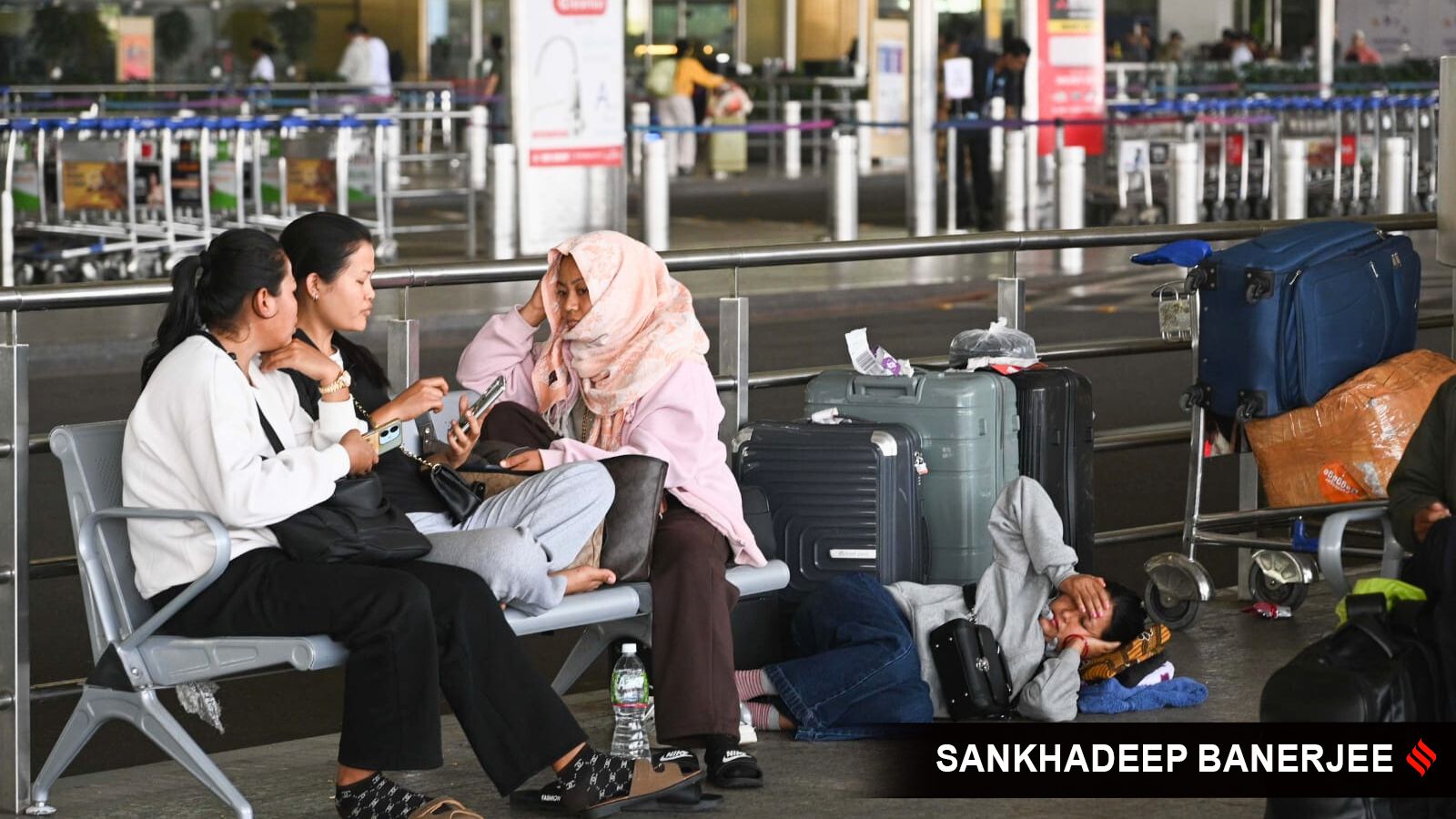
- Ground Delays: Congestion in the air ripples back to the hubs, causing "Gate Holds" in London, Dubai, and Doha.
Logistical Fragility: The "Single Point of Failure" Risk
The modern aviation network is a "scale-free" network, meaning it is resilient to random failures but highly vulnerable to the loss of key hubs or corridors. The Iran-Israel conflict targets exactly these hubs.
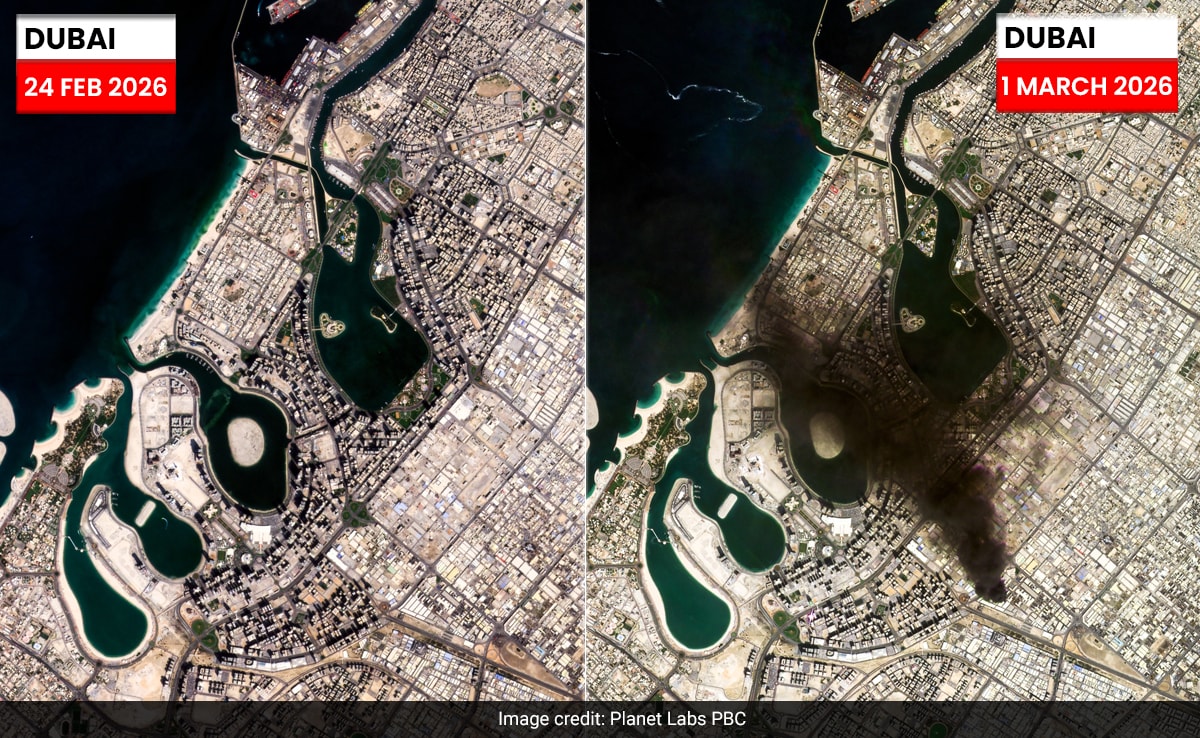
If the conflict expands to include the Persian Gulf’s southern rim, the "mega-hubs" of Dubai (DXB), Doha (DOH), and Abu Dhabi (AUH) face an existential threat. These airports operate on a "hub-and-spoke" model that requires precise timing for thousands of connecting passengers. If the airspace surrounding these hubs becomes a "gray zone" of EW interference and missile activity, the entire global network loses its primary gears.
The shift to the "Northern Route" (over Azerbaijan and Turkmenistan) is a partial solution but lacks the infrastructure to handle the volume of the displaced "Southern Route." Furthermore, the ongoing closure of Russian airspace to Western carriers due to the Ukraine conflict has already exhausted the northern capacity, leaving the industry with no "pressure valve" for Middle Eastern disruptions.
Operational Resilience and Technical Mitigation
Aviation groups are responding with a "layered risk" strategy. This involves:
- Dynamic Rerouting: Using AI-driven flight planning software to analyze real-time NOTAMs and fuel prices, allowing for route adjustments mid-flight.
- Increased Fuel Contingencies: Carriers are carrying 10-15% more "trip fuel" than standard regulations require, sacrificing short-term margins for the ability to survive a sudden airspace closure.
- Enhanced GNSS Monitoring: Implementing specialized hardware that can detect when GPS signals are being spoofed, allowing pilots to revert to Inertial Reference Systems (IRS) or ground-based VOR/DME navigation before a crisis occurs.
Structural Realignment of the Industry
The persistence of this conflict is forcing a permanent shift in how airlines value geography. We are seeing a move away from the "Middle East Transit" dominance toward "Ultra-Long-Range" (ULR) point-to-point travel. Aircraft like the Airbus A350-1000ULR allow carriers to bypass the Middle East entirely, flying from Europe to Southeast Asia via polar or southern oceanic routes.
While this technology mitigates the risk of airspace closure, it increases the barrier to entry for smaller airlines that cannot afford these high-spec airframes. The result is a consolidation of power among a few "resilient" carriers, while regional airlines in the conflict zone face potential bankruptcy as their primary asset—their geographic location—becomes a liability.
The strategic priority for global aviation is now the decoupling of flight paths from volatile land-based jurisdictions. Carriers must treat airspace as a "just-in-case" resource rather than a "just-in-time" utility. This requires the immediate expansion of bilateral overflight agreements in sub-Saharan Africa and Central Asia to create a redundant "Tertiary Corridor." Without this redundancy, the aviation industry remains a captive of Levantine geography, where a single battery of surface-to-air missiles can effectively sever the world’s most important economic artery.
The immediate tactical move for operators is the aggressive hedging of fuel costs coupled with the procurement of airframes capable of 16-hour endurance at maximum payload. Geography is no longer a static map; it is a dynamic, high-cost obstacle that must be bypassed through technological and logistical "over-reach."