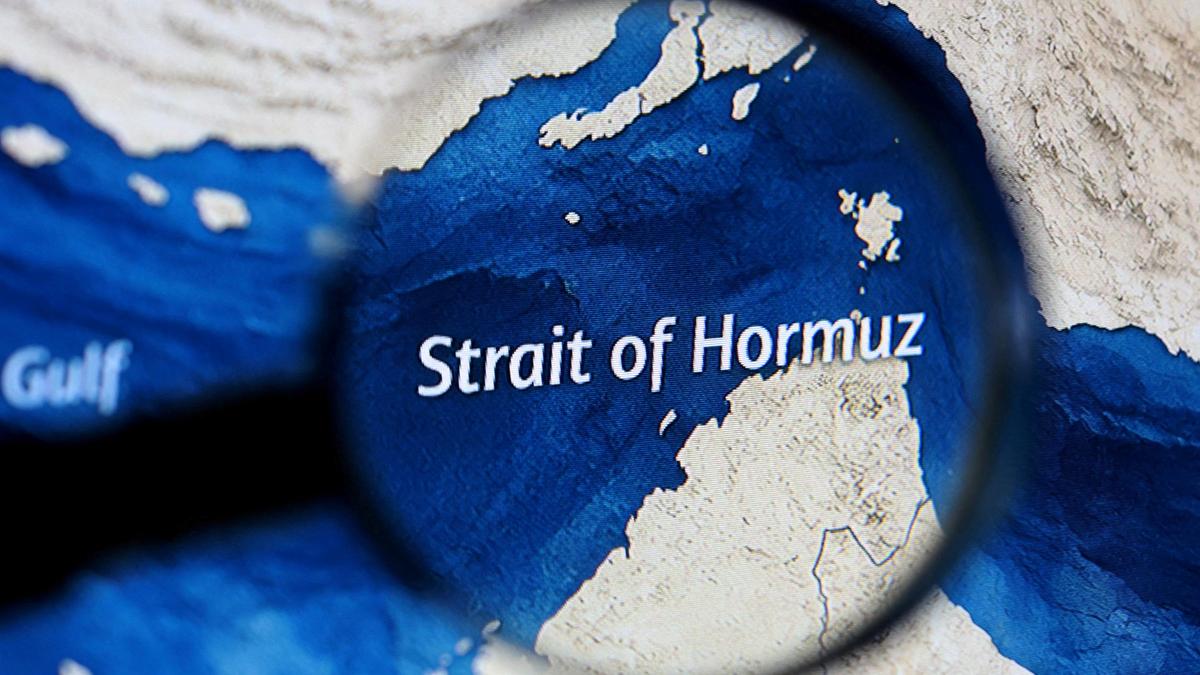
The maritime targeting of three commercial vessels in the Strait of Hormuz by Iranian forces represents more than a localized security breach; it is a calculated deployment of kinetic leverage designed to recalibrate the cost-benefit analysis of Western diplomatic engagement. This pattern of escalation follows a predictable logic of "asymmetric signaling," where tactical maneuvers at sea are used to influence strategic outcomes at the negotiating table. The immediate impact of these incidents is the creation of a risk premium on global energy transit, but the deeper structural intent is to dismantle the leverage held by the United States and its allies regarding nuclear and regional security mandates.
The Triad of Iranian Maritime Strategy
Iran’s actions in the Strait of Hormuz are governed by three distinct strategic pillars. Understanding these explains why harassment occurs even when diplomatic channels remain open.
- Pillar I: Controlled Escalation. Tehran utilizes maritime interference as a volume knob. By increasing the frequency or intensity of ship seizures and fire, they signal that the status quo—characterized by heavy sanctions and stalled talks—is more expensive for the West than for Iran.
- Pillar II: Sovereignty Assertion. The Islamic Revolutionary Guard Corps (IRGC) views the Strait as its "internal waters" rather than an international waterway. Harassing foreign-flagged vessels serves as a recurring legal and physical assertion of dominance over a chokepoint that handles approximately 20% of the world's petroleum liquids.
- Pillar III: Leverage Decoupling. By initiating conflict in the maritime domain, Iran forces the U.S. to address immediate security threats. This creates a scenario where the U.S. might offer concessions on sanctions or diplomatic recognition simply to return to a baseline of maritime safety, rather than as part of a comprehensive nuclear agreement.
The Economic Mechanics of Chokepoint Volatility
The Strait of Hormuz functions as a high-stakes bottleneck. The economic impact of Iranian fire on commercial shipping is not merely measured in the damage to hulls but in the resulting shift in insurance and logistical variables.
- The War Risk Premium: Following kinetic activity, maritime insurers (such as Lloyd’s of London) often reassess the "Listed Area" status of the Persian Gulf. This leads to an immediate spike in Additional Premium (AP) charges for hull and machinery insurance.
- Freight Rate Inflation: As risks increase, shipping companies may divert vessels or demand higher rates to compensate for the danger to crew and assets. These costs are eventually passed through the global supply chain, manifesting as energy price volatility.
- Operational Friction: The threat of seizure or fire necessitates increased naval escorts. This diverts Western naval assets from other theaters, such as the Indo-Pacific, creating a secondary strategic cost for the United States.
The relationship between Iranian kinetic events and oil price fluctuations is rarely linear. Because the market often "prices in" a certain level of regional tension, only events that threaten a total closure of the Strait—a highly unlikely "suicide" move for Iran’s own economy—generate sustained price shocks. Instead, these smaller-scale attacks serve as psychological stressors for global markets.
Deconstructing the Failure of Conventional Diplomacy
The recent escalation complicates U.S.-Iran talks because it exposes a fundamental misalignment in the "escalation ladders" of both nations. The U.S. typically views diplomatic negotiations and military provocations as mutually exclusive; Iran views them as complementary.
The "Maximum Pressure" campaign initiated by previous administrations left Iran with few economic levers to pull. Consequently, Tehran transitioned to "Maximum Pressure" in the security domain. This creates a bottleneck in the negotiation process:
- The Credibility Gap: The U.S. cannot reward bad behavior with sanctions relief, as it appears to capitulate to maritime terrorism.
- The Domestic Constraint: Kinetic actions provide political ammunition to hardliners in Washington and Tehran, making the political cost of a compromise prohibitively high for both leaderships.
- The Decoupling Problem: While the U.S. seeks a "longer and stronger" nuclear deal, Iran uses maritime harassment to focus the conversation on immediate de-escalation, effectively narrowing the scope of what can be negotiated.
Tactical Methodology of IRGC Navy (IRGCN) Operations
The IRGCN employs a "swarm" doctrine that is specifically designed to overwhelm the sophisticated but limited defenses of commercial tankers and their potential naval escorts. This methodology relies on:
- Fast Inshore Attack Craft (FIAC): Highly maneuverable, small boats armed with heavy machine guns, rockets, and occasionally short-range missiles. They operate in groups of 10 to 30, making it difficult for a single destroyer to track and neutralize all threats simultaneously without causing a major international incident.
- Limpet Mines and Drone Strikes: These allow for "deniable" or lower-profile attacks that damage ships without necessarily sinking them, maintaining the "gray zone" of conflict where the threshold for a full-scale military response is not quite met.
- Coastal Defense Cruise Missiles (CDCMs): By positioning missile batteries along the rugged coastline of the Makran, Iran creates a "No-Go" zone for larger vessels, forcing them closer to the Iranian shore where small-boat harassment is most effective.
The Strategic Bottleneck: Why Total Closure is a Myth
While the threat of "closing the Strait" is frequently used in rhetoric, the actual mechanism for doing so would be economically catastrophic for Iran. China, Iran’s primary oil customer, relies heavily on the stability of the Strait. A total blockage would:
- Sever Iran’s own remaining economic lifelines.
- Alienate Beijing, removing Iran's most significant geopolitical shield in the UN Security Council.
- Trigger a "Global Commons" military response that the IRGC is not equipped to win in a sustained conventional war.
Therefore, the objective is never total closure, but "calibrated instability." The goal is to keep the threat of closure credible enough to demand a seat at the table, but the reality of the flow of goods stable enough to avoid a total war.
Framework for Maritime De-escalation
To move beyond the current cycle of harassment and stalled talks, a shift in the strategic framework is required. Relying on "International Maritime Security Constructs" (IMSC) is a necessary tactical step for physical protection, but it does not address the underlying political driver.
- Establishment of a Crisis Management Hotline: The absence of direct military-to-military communication between the U.S. Navy and the IRGCN increases the risk of a tactical miscalculation turning into a strategic war.
- Regionalizing Security: Shifting the burden of maritime security to a coalition that includes regional powers (Saudi Arabia, UAE) and major energy consumers (India, China) would force Iran to reckon with the costs of alienating its neighbors and customers, rather than just the "Great Satan."
- The "Dual-Track" Mandate: Diplomacy must be decoupled from maritime security. The U.S. should pursue maritime interdiction and deterrence as a separate, non-negotiable security requirement, while keeping nuclear talks on a parallel track that is not paused by every tactical flare-up.
The persistence of Iranian maritime aggression signals that the current U.S. strategy of "compliance for compliance" is failing to account for Iran’s internal power dynamics. The IRGC gains domestic prestige and budget allocations through these confrontations. Until the cost of maritime harassment is made to bear directly on the IRGC’s internal institutional interests—rather than just the Iranian civilian economy—the Strait of Hormuz will remain a theater of tactical friction.
The immediate tactical play for the U.S. and its allies is the deployment of unmanned surface vessels (USVs) and persistent aerial surveillance to provide a continuous, high-fidelity record of IRGCN maneuvers. This removes the "gray zone" advantage of deniability. By making every act of harassment a public, documented violation of international law with immediate diplomatic consequences for Iran’s remaining partners, the West can begin to increase the political cost of kinetic signaling to a level that outweighs its perceived benefits at the negotiating table.