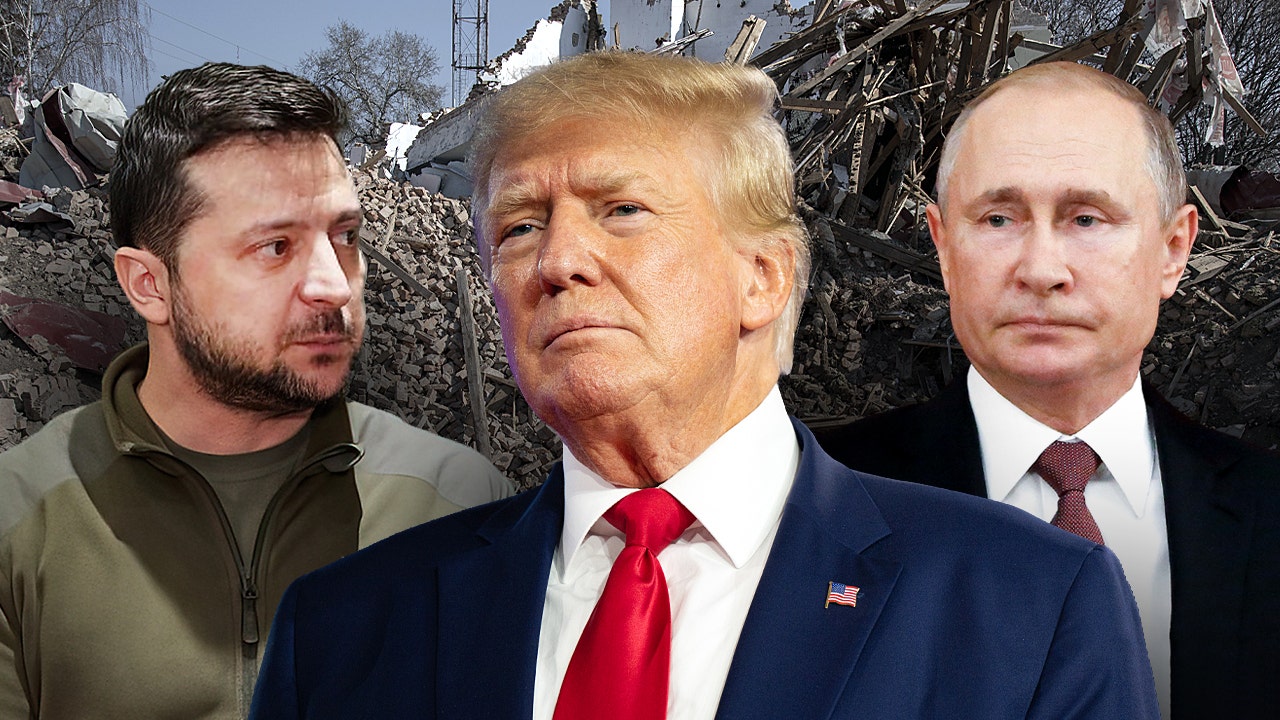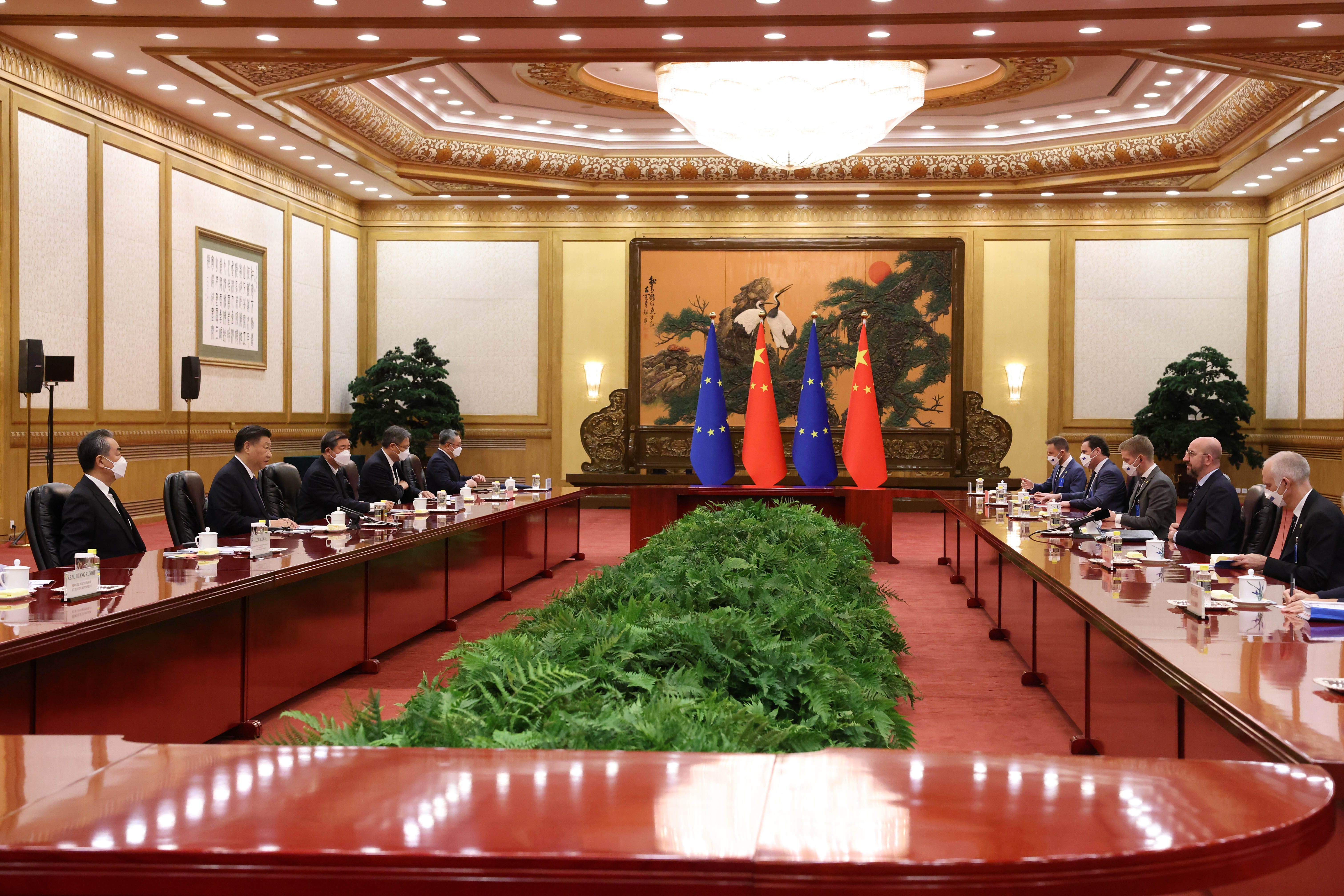
The sequential arrival of heads of state in Beijing reveals a deliberate diplomatic sequencing designed to exploit geopolitical leverage. Following the departure of United States President Donald Trump, Russian President Vladimir Putin’s scheduled arrival on May 19 demonstrates how China uses deliberate diplomatic intervals to optimize its strategic positioning between competing Western and Eurasian axes.
This sequence is a calculated chess move, not a random occurrence. By positioning itself as the central node between a volatile Washington and a dependent Moscow, Beijing maximizes its diplomatic return on investment. The structural reality of the contemporary international system dictates that China remains the primary beneficiary of this trilateral asymmetry. Meanwhile, you can read other developments here: Why the New US Deportation Deal with Sierra Leone Sparks Deep Concern.
The Triangulation Framework: Asymmetrical Interdependence
To interpret the mechanics of the May 19 summit, one must analyze the structural changes in Sino-Russian relations through the lens of asymmetrical interdependence. The relationship is driven by a clear calculation: Russia requires an economic lifeline to sustain its long-term strategic operations, while China requires a secure, continental energy supply and a reliable partner to absorb Western strategic focus.
       [United States]
          /       \
         /         \  (Strategic Containment)
        /           \
  (Diplomatic  [Beijing]
   Arbitrage)     /
      /          /
     /          / (Asymmetrical Reliance)
    /          /
[Moscow] -----/
This dynamic creates a specific utility function for Beijing, which can be broken down into three operational pillars: To understand the full picture, we recommend the detailed article by The Guardian.
- The Continental Energy Backstop: By consuming heavily discounted Russian Urals crude and expanded volumes of pipeline gas via the Power of Siberia network, China secures its energy supply chain against potential maritime blockades in the Malacca Strait.
- The Strategic Diversion Vector: Moscow’s active security posture in Europe and confrontation with the West divert American military assets, intelligence resources, and legislative attention away from the Indo-Pacific theatre.
- The De-Dollarization Sandbox: The bilateral trade corridor functions as a real-world testing ground for non-SWIFT financial infrastructure, specifically the Cross-Border Interbank Payment System (CIPS), reducing vulnerability to future Western secondary sanctions.
The Sequencing Strategy: Capitalizing on the Trump-Xi Precedent
The timing of Putin's visit—occurring exactly four days after the conclusion of the U.S.-China summit—is a clear exercise in diplomatic arbitrage.
President Trump departed Beijing without securing structural breakthroughs on the ongoing Eurasian conflicts or international proxy standoffs. This lack of resolution creates an immediate opening for Beijing. By listening to Washington’s red lines first, China can accurately price its diplomatic compliance before negotiating with Moscow.
This sequence allows Chinese leadership to present a dual-facing posture:
- To the United States, Beijing frames its engagement with Putin as an exercise in restraint and conflict management, positioning itself as the only global actor capable of moderating Moscow’s behavior.
- To Russia, Beijing leverages the threat of partial compliance with Western secondary sanctions to secure deeper discounts on commodities, technology transfers, and favorable terms for joint infrastructure initiatives.
This positioning creates a diplomatic buffer zone. Beijing avoids the formation of an explicit anti-Western military alliance that would trigger immediate economic decoupling, while simultaneously preventing a Russian strategic collapse that would leave China isolated against Western containment.
Operational Constraints and Capital Flight Bottlenecks
While the political rhetoric surrounding the 25th anniversary of the Treaty of Good-Neighborliness, Friendship and Cooperation emphasizes an unshakeable partnership, the underlying operational data reveals significant structural friction. The primary bottleneck is the growing risk of Western secondary sanctions on Chinese financial institutions.
The operational reality of this friction is evident in specific economic sectors:
The Banking and Settlement Friction
Bilateral trade value has expanded dramatically, but clearing those transactions has become highly inefficient. Major Chinese state banks have systematically tightened compliance protocols for Russian entities to protect their access to the clearing mechanisms of the U.S. dollar and Euro. Transactions are frequently delayed, rerouted through small regional banks in northeastern China, or settled through complex barter networks. This friction functions as an internal tax on the partnership, capping the velocity of bilateral capital.
The Asymmetrical Trade Mix
The trade relationship remains deeply unequal. Russia exports raw materials—such as crude oil, liquefied natural gas, coal, and timber—and imports high-value finished goods like automotive vehicles, semiconductors, machinery, and consumer electronics from China. Russia’s manufacturing base is increasingly dependent on Chinese industrial inputs, creating a structural vulnerability where Beijing holds complete pricing power.
Infrastructure Investment Hesitation
The long-delayed Power of Siberia 2 pipeline project highlights Beijing's disciplined negotiating stance. Despite Moscow's urgent need to redirect gas volumes away from European infrastructure, Beijing continues to stall on final investment decisions. China expects Russia to fund the domestic infrastructure while demanding price parity with heavily subsidized domestic Chinese markets.
The Strategic Balance Sheet
For the Kremlin, the May 19 state visit is a critical exercise in domestic and international signaling. It demonstrates to internal elites and Western observers that the Russian economy remains anchored to the world’s primary industrial engine. The presence of a large Russian delegation—including economic ministers and industrial heads—indicates that Moscow is seeking to convert political alignment into structural economic integration.
For Beijing, the summit is a controlled exercise in risk management. The strategic goal is to deepen the bilateral partnership just enough to maintain its utility as a geopolitical counterweight, without crossing the line into material violations that would trigger systemic Western financial retaliation.
The final strategic move will not feature an explicit military pact or an open defiance of international sanctions. Instead, expect a series of granular, highly targeted agreements on agricultural market access, joint scientific research in non-sensitive sectors, and localized currency swap arrangements. This approach allows Beijing to extract long-term structural value from a dependent partner while maintaining essential access to Western consumer markets.