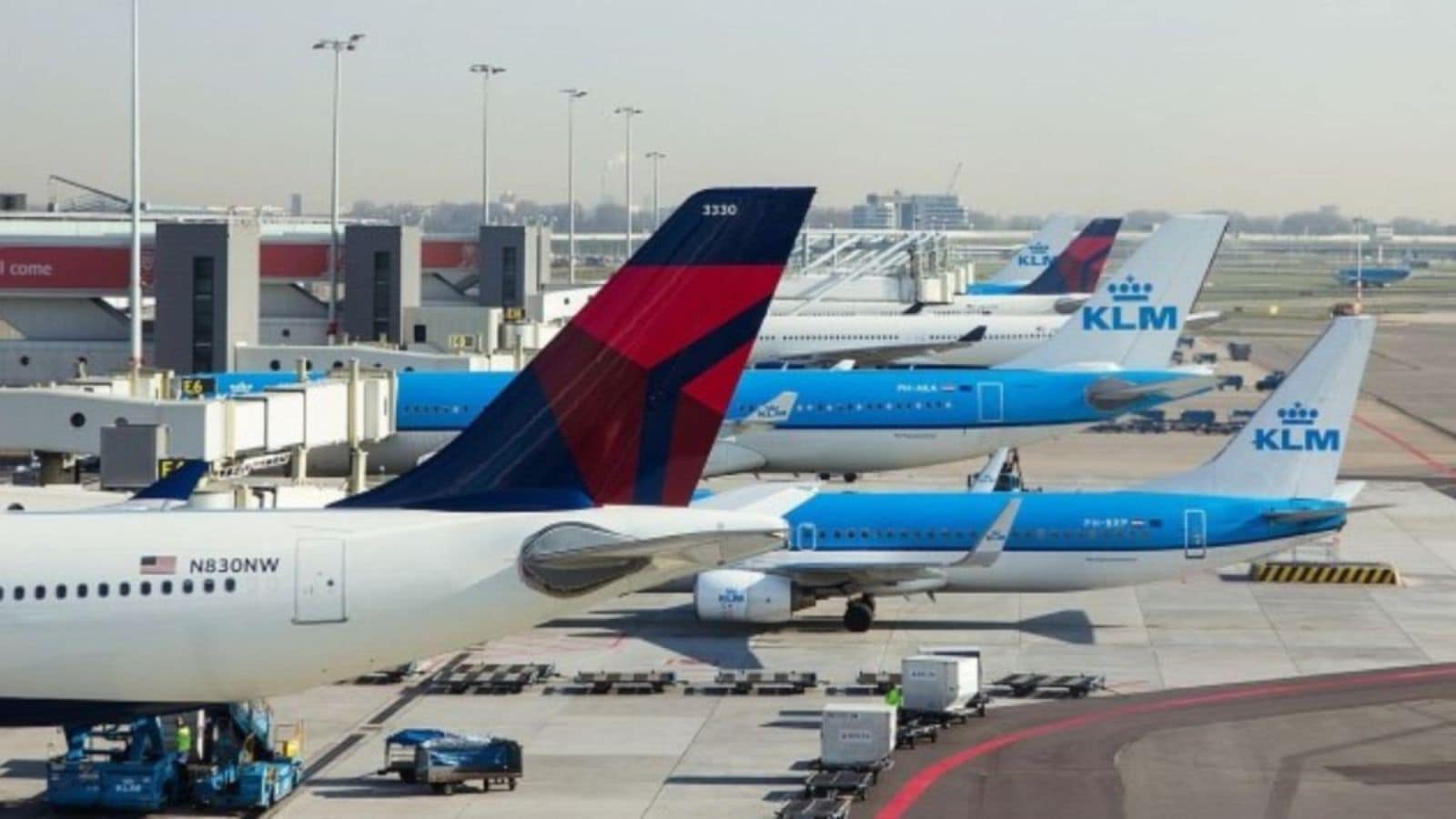
A standard boarding procedure at Johannesburg’s OR Tambo International Airport recently turned into a quiet case study for international biosafety failures. A passenger, later confirmed to be infected with Hantavirus, managed to board a KLM flight destined for Amsterdam. While the individual was removed before the aircraft pushed back from the gate, the incident highlights a staggering lack of coordination between clinical diagnostics and aviation security. We are told the system works because the person was caught. The reality is that the person was caught by luck, not by a structural safety net.
Hantavirus isn't a new threat, but it is a brutal one. Primarily transmitted through contact with the urine, feces, or saliva of infected rodents, certain strains carry a mortality rate of up to 38%. It is not typically known for person-to-person transmission—a fact the airline industry has used to downplay the event—but that misses the point entirely. The point is the breach. If a patient with a known, high-consequence pathogen can successfully check in, pass through security, and take a seat in a pressurized cabin, the global "health shield" we've spent billions on since 2020 is effectively a sieve.
The Illusion of the Pre Boarding Safety Net
Grounding a plane because of a sick passenger is an expensive logistical nightmare. Airlines hate doing it. Airports hate the delays. However, the timeline of the Johannesburg incident suggests a breakdown in the communication loop between health authorities and transportation hubs.
In most modern jurisdictions, laboratories are required to report "notifiable diseases" to health departments immediately. This data, however, rarely moves at the speed of a traveler. By the time a local health official flags a name, that person is often already at 35,000 feet. In this specific case, the passenger was identified while the plane was still on the tarmac. This saved the airline from a massive decontamination bill and a mid-air diversion, but it doesn't change the fact that the passenger moved through the highest-density areas of the airport while symptomatic or infectious.
The current strategy relies on "self-reporting" and visual screening. Neither works. Travelers are incentivized to hide symptoms to avoid losing money on non-refundable tickets or missing critical life events. Visual screening by gate agents—people trained in customer service, not infectious disease—is a desperate move at best.
Why Hantavirus Changes the Risk Profile
Most aviation health protocols are built around respiratory viruses like Influenza or Coronaviruses. Hantavirus is a different beast. It belongs to the Bunyaviridae family and is often categorized under Viral Hemorrhagic Fevers (VHF) in its more severe forms. While the risk of a "super-spreader" event for Hantavirus on a plane is low, the clinical severity for the individual and the potential for environmental contamination is high.
When we look at the biology of the virus, we see why the aviation environment is so poorly equipped to handle it.
- Aerosolization: While Hantavirus usually spreads via rodent dust, the air filtration systems in modern planes (HEPA filters) are designed to catch particles. However, those filters only work when the engines are running and the air is circulating. During boarding and deboarding—the exact time this passenger was present—airflow is often reduced or stagnant.
- Surface Stability: The virus can remain viable in the environment for several days depending on temperature and humidity. A seat pocket, a tray table, or a bathroom door handle becomes a reservoir.
- Diagnostic Lag: The early symptoms of Hantavirus—fever, muscle aches, and fatigue—are identical to a common cold or simple travel exhaustion.
The industry’s reliance on "lack of person-to-person transmission" as a defense is a dangerous crutch. It assumes we will always be lucky enough to only face Hantavirus. It ignores the precedent that this breach sets for more communicable threats like Ebola or Marburg, which share similar early-stage symptoms.
The Cost of Silence and Standard Operating Procedures
KLM’s response followed the standard corporate playbook: minimal disclosure, a focus on "following protocol," and a quick pivot to business as usual. This lack of transparency is exactly what fuels public distrust. What were the specific protocols? How many people occupied the seats immediately adjacent to the passenger before the removal? Was the aircraft taken out of service for a deep-clean, or was it a quick wipe-down before the next leg?
The aviation industry operates on razor-thin margins. Taking a Boeing 777 or a Dreamliner out of rotation for a 24-hour bio-decontamination costs hundreds of thousands of dollars in lost revenue and rerouting fees. There is a massive, unspoken financial pressure to minimize these incidents.
We see this play out in the way "incidents" are reported. They are framed as anomalies. But when you look at the increasing frequency of zoonotic spillovers—diseases jumping from animals to humans—and the fact that we are more mobile than at any point in human history, these are no longer anomalies. They are the new baseline.
Beyond the Boarding Gate
To fix this, the conversation has to move past "better cleaning." We need a hard integration of health databases with passenger manifests. This is a controversial take because it touches on the third rail of privacy.
Civil liberties groups argue that a "No Fly List" for the sick is a step toward a surveillance state. They aren't wrong to be concerned. However, from a public health perspective, the current gap is wide enough to fly a wide-body jet through. If a diagnostic lab confirms a high-risk pathogen, that data should trigger an automatic, temporary hold on that individual’s passport or boarding pass.
Currently, the process is manual. It involves phone calls, emails, and physical searches of the gate area. It is a 1950s solution to a 21st-century problem.
The Johannesburg Factor
South Africa has some of the most sophisticated infectious disease monitoring systems in the world, largely a byproduct of its long battle with HIV and TB. If this breach happened at OR Tambo, one of the best-equipped hubs on the continent, imagine the vulnerability at smaller, less-resourced regional airports.
Johannesburg serves as the gateway for the entire Southern African region. Travelers from rural areas, where rodent-borne diseases are more prevalent due to environmental factors and housing conditions, funnel through this single point. The city is a bottleneck. When a bottleneck fails, the entire network is compromised.
The Commercial Fallout
Airlines that fail to address these biosecurity gaps aren't just risking public health; they are risking their brand equity. In a post-2020 world, the "cleanliness" of a cabin is a top-tier consumer priority.
A single documented case of a passenger contracting a severe illness because an airline failed to intercept a known carrier is a multi-million dollar liability suit waiting to happen. The industry has been shielded by the difficulty of proving exactly where a person caught a virus. But as genomic sequencing becomes faster and cheaper, "tracking the source" is becoming an exact science. We can now trace the specific lineage of a virus to a specific flight and even a specific seat. The "plausible deniability" for carriers is evaporating.
The Technical Reality of Cabin Air
Let’s talk about the HEPA myth. Airlines love to brag that cabin air is as clean as an operating room. This is technically true during flight.
The systems are designed to cycle air every 2 to 3 minutes. But this process requires the plane’s auxiliary power unit (APU) or engines to be active and the packs to be switched on. During the boarding process, to save fuel and reduce noise, these systems are often operating at a fraction of their capacity. Passengers are packed into a tube, breathing shared air, with the very filters the airline touts as a "shield" barely moving any volume. This is when the risk is highest. This is exactly when the Hantavirus patient was on the KLM flight.
Rebuilding the Barrier
We have to stop treating aviation and public health as two separate silos. They are the same system.
- Real-Time Data Handshakes: Digital health certificates must be able to communicate with airline Departure Control Systems (DCS) without human intervention.
- Boarding Airflow Mandates: Regulators should require full-capacity air filtration from the moment the first passenger steps on the plane until the last one leaves.
- Liability Shifting: If a lab fails to report a case, or an airline fails to act on a report, the financial burden of the subsequent quarantine and cleaning should fall on them, not the taxpayer.
The Johannesburg incident didn't end in a catastrophe, but it served as a final warning. We are playing a game of statistical probability. Every time a carrier like KLM allows a high-consequence pathogen into the cabin, the odds of a global incident shift. We have the technology to close these doors; we simply lack the political and corporate will to do it because it’s "inconvenient."
The next time a passenger sits down and feels a slight fever, they will likely do exactly what this passenger did: stay quiet and hope for the best. The system is designed to let them. Until the cost of an infected passenger exceeds the cost of a delayed flight, the gates will remain open to whoever has a ticket, regardless of what they are carrying in their bloodstream.
Check the manifest. Update the software. Turn on the fans.