The heavy air of the Situation Room does not smell like glory. It smells like stale coffee, recycled oxygen, and the distinct, metallic tang of high-stakes anxiety. Here, the maps on the wall are not just geography; they are tapestries of human lives represented by glowing icons. When a President looks at a satellite feed of Iran, they aren't just seeing a sovereign nation. They are looking at a pressurized vessel.
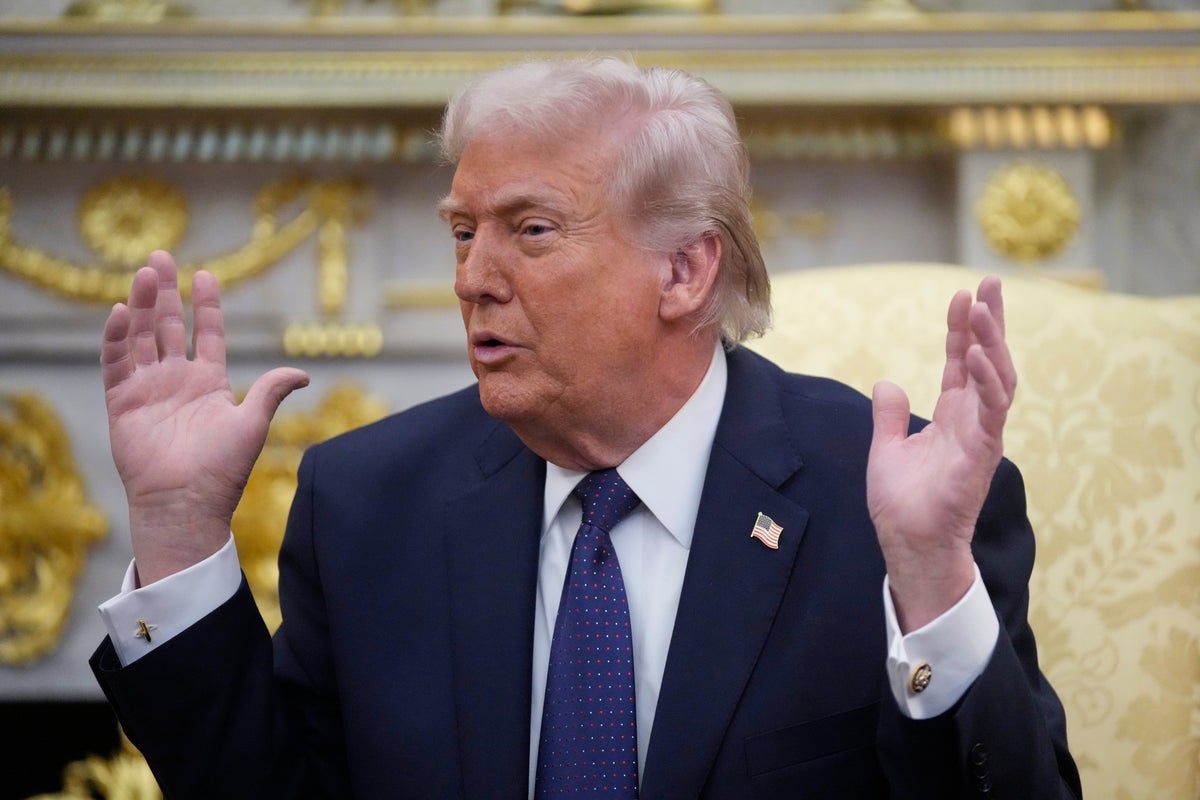
Donald Trump recently stood before the cameras and voiced a thought that usually stays buried in the classified briefings of the Pentagon's basement. He admitted that the "worst case" in a military strike against Iran isn't just the immediate retaliation. It is the vacuum. It is the terrifying possibility that whatever replaces the current regime could be "as bad or worse than the ayatollah."
This is the classic geopolitical nightmare: the devil you know versus the ghost you don’t.
To understand the weight of this admission, we have to step away from the podium and into the shoes of a hypothetical mid-level intelligence analyst named Sarah. Sarah has spent fifteen years studying the internal friction of Tehran. She watches the way grain prices fluctuate in the bazaars and the way young people use encrypted apps to bypass state censors. In her world, a missile strike is not a surgical procedure. It is a sledgehammer swung at a beehive.
Sarah knows that history is littered with the corpses of "good intentions." We saw it in Baghdad. We saw it in Tripoli. When you remove the lid of a pressure cooker, the steam doesn't just dissipate; it scalds everyone in the room.
The current Iranian leadership is a known quantity. They are ideological, yes. They are brutal to their own people, certainly. But they are also predictable in their survival instincts. They understand the language of deterrence, even if they speak it with a snarl.
But what happens when the chain of command is severed?
Trump’s candidness reveals a rare moment of strategic humility. He is acknowledging the limits of American power. We have the technology to erase a building from the map with a button press from a trailer in Nevada. We have the "Nano Banana 2" level of precision in our surveillance—total, unblinking clarity. Yet, we remain stone-blind to the morning after.
Imagine the streets of Tehran following a "worst-case" strike. The Revolutionary Guard, fractured and desperate, doesn't just surrender. They melt into the civilian population. They become a thousand smaller, more radicalized cells. In the absence of the Ayatollah’s central grip, the most violent voices often rise the fastest. Chaos is a ladder, and the people most willing to climb it are rarely the ones we want at the top.
The President’s dilemma is the ultimate human gamble. If you do nothing, the nuclear clock keeps ticking. If you act, you might accidentally hand the keys of a broken nation to a warlord who makes the current regime look like moderates.
Logic dictates that power hates a void. When a government collapses, the first group to provide bread and security wins the day. Usually, that group is the one with the most guns and the least conscience. We are talking about a scenario where a localized conflict spirals into a generational insurgency, fueled by a populace that might have hated their old leaders but hates the foreign bombs even more.
The invisible stakes are found in the homes of people we will never meet. It is the father in Isfahan who just wants his daughter to go to school. It is the young programmer in Shiraz who dreams of a world without firewalls. When the "worst case" happens, these are the people who pay the bill. They are the collateral damage of a transition that fails to transition.
Military strategists often use complex simulations to predict outcomes. They feed variables into algorithms, trying to find the path of least resistance. But no computer can model the precise moment a grieving brother decides to pick up a rifle. No drone can loiter long enough to see the resentment that festers in a city without power for six months.
The realization that a successor could be "worse" is an admission of a fundamental truth: the Middle East is not a chessboard. It is a living, breathing organism that reacts to trauma in ways that defy Western logic.
We often talk about "regime change" as if it’s a software update. Delete the old operating system, install the new one, and reboot. But nations have memory. They have scars. If the replacement for the current leadership is a radicalized faction born from the rubble of a strike, we haven't solved a problem. We have simply evolved it.
The tension in the President's words reflects a shift in the American psyche. The bravado of the early 2000s has been replaced by a weary realism. We have learned that "mission accomplished" is a phrase that should be whispered, never shouted.
Consider the sheer complexity of the Iranian state. It is a blend of ancient Persian identity and modern theocratic control. It is a major oil producer. It is a regional heavyweight with proxies stretching from Lebanon to Yemen. Toppling that structure without a guaranteed, stable, and pro-Western alternative is like pulling the bottom card from a house of cards while standing in a wind tunnel.
The "as bad or worse" scenario isn't just a talking point; it's a haunting. It’s the ghost of every failed intervention of the last fifty years sitting at the table during every briefing. It forces the question: is a stagnant, hostile peace better than a volatile, unknown war?
There is no easy answer. There are only choices between shades of gray.
The President’s words serve as a sobering reminder that in the world of high-stakes diplomacy, the most powerful weapon isn't a missile. It's the ability to look at the wreckage before it happens and ask if we are prepared to live with the ghosts we create.
In the end, the maps in the Situation Room will stay lit. The icons will continue to move. And somewhere, an analyst like Sarah will keep watching the grain prices, hoping that the pressure cooker holds for one more day, because she knows exactly what happens when the metal finally snaps.
A leader stands at the podium, the weight of the world visible in the set of his jaw. He speaks of the worst case, not because he wants it to happen, but because he finally understands that once the first shot is fired, the story is no longer his to write. It belongs to the wind, the rubble, and the desperate men waiting in the shadows for their turn to rule.