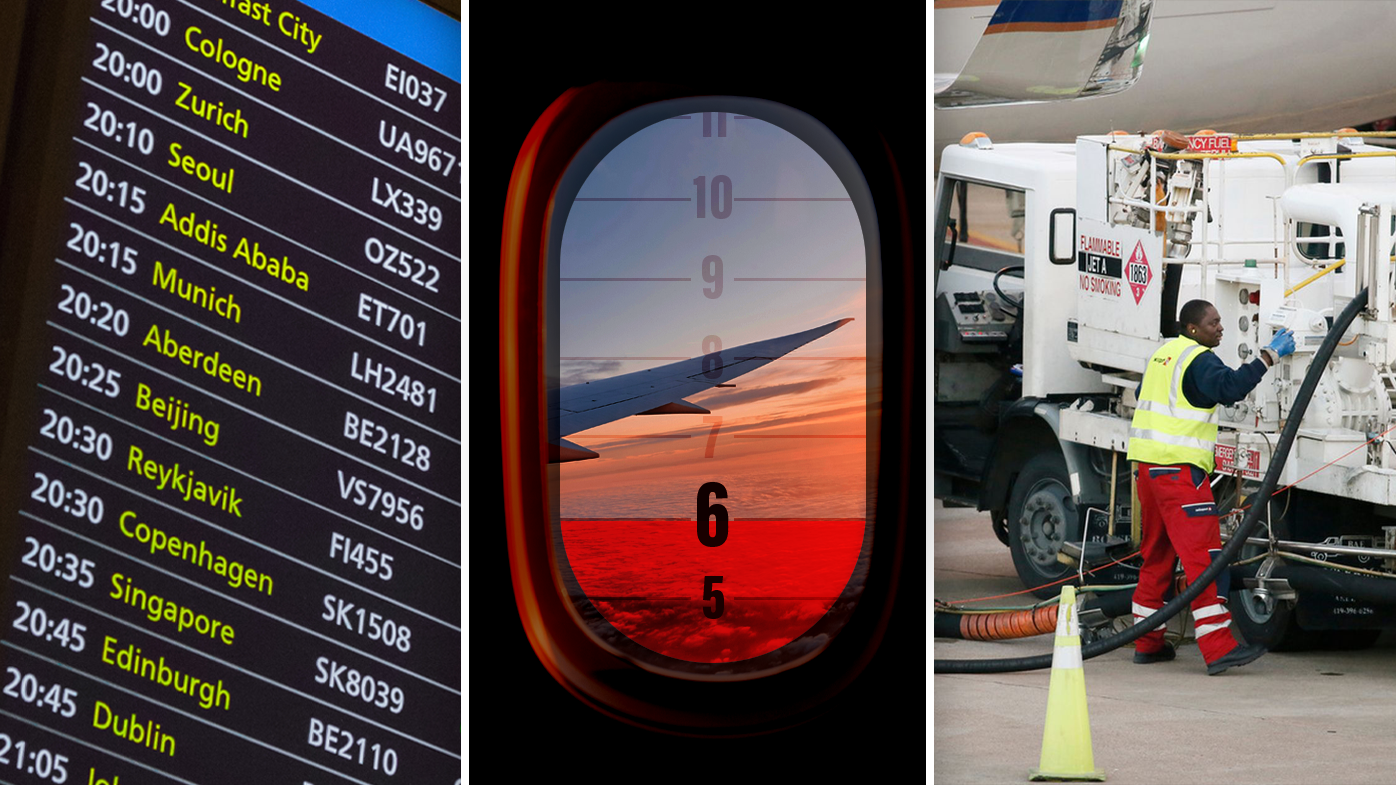
The kerosene smell at Heathrow or Charles de Gaulle is usually a backdrop to boredom. It is the scent of expensive duty-free perfume, the hum of rolling suitcases, and the muffled announcements of gates closing. We treat the fluid pumping through the veins of these airports like water from a kitchen tap. It is just there. It is the invisible, oily guarantor of our modern right to be anywhere else on Earth in twelve hours.
But right now, that guarantee has an expiration date.
Toril Bosoni, the head of the International Energy Agency’s oil market division, recently sat in a room and looked at the math. The math was not kind. Europe is currently operating on a knife-edge, with roughly six weeks of jet fuel sitting in reserve. If the ships stop coming, or the refineries stumble, or the geopolitical tinderbox in the Middle East catches a new spark, the continent's aviation industry doesn't just slow down. It stops.
Six weeks. That is forty-two days. It is the length of a long summer vacation or a standard corporate probationary period. It is an alarmingly short fuse for a continent that has offshored its energy security while keeping its appetite for global connectivity at an all-time high.
The Ghost of Energy Past
To understand how a continent becomes a hostage to a six-week clock, you have to look at the skeletons of Europe’s industrial heart. For decades, Europe refined its own crude. The smoke stacks of Rotterdam and the Mediterranean coast were the lungs of the economy. But those lungs have been scarred.
Since the pandemic, the math for European refiners stopped adding up. Environmental regulations—necessary but expensive—pushed costs higher. Competition from massive, state-of-the-art refineries in the Middle East and Asia made older European plants look like relics. So, Europe did what the modern world does best: it outsourced the mess. We closed the refineries and decided to buy the finished product from someone else.
The problem with buying your breath from a neighbor is that you are only as safe as the path between their house and yours.
Currently, Europe is importing record amounts of jet fuel from across the oceans. It arrives on massive tankers that must navigate narrow straits and avoid the growing reach of regional conflicts. Every time a drone swarms a vessel in the Red Sea or a storm surges in the Atlantic, the forty-two-day clock ticks a little louder.
Consider a hypothetical traveler named Elena. She is a consultant in Berlin, booking a flight to New York for a wedding two months away. In her mind, the seat is a certainty. She has paid the fare; she has the digital QR code. But Elena’s seat is actually a bet. It is a wager that a complex, fragile chain of tankers, pipelines, and blending facilities will remain perfectly synchronized for sixty days. Based on the current stockpiles, the fuel for Elena’s flight hasn't even reached European soil yet. It might still be a crude liquid deep beneath the desert sands of a country that is currently weighing the pros and cons of a regional war.
The Invisible Thirst
Jet fuel is a finicky beast. You cannot simply swap it for the diesel that runs a truck or the heating oil that warms a home. It is a highly specific, highly regulated substance called Kerosene Type A-1. It has to stay liquid at -47 degrees Celsius so it doesn't freeze in the wings at thirty thousand feet. It has to be pure.
When Bosoni warns of a six-week supply, she isn't just talking about a minor inconvenience at the pump. She is talking about the structural integrity of the European economy. The "just-in-time" delivery model, which works wonders for sneakers and smartphones, is a terrifying way to run a transport system that requires millions of barrels of specialized combustible liquid every single day.
The stakes are hidden in the mundane. A fuel shortage doesn't start with grounded planes; it starts with "tankering." This is a practice where airlines, sensing a price spike or a shortage at their destination, fill their planes to the brim at their point of origin. They carry more weight than they need, burning more fuel just to transport the extra fuel. It is an expensive, carbon-heavy survival tactic.
But when the reserves hit the bottom of the barrel, tankering isn't enough.
The first thing to go is the price. You see it in the "fuel surcharge" that quietly bloats your ticket price. Then comes the "rationalization" of routes. The flight to the small regional airport is cut to save fuel for the lucrative London-to-Singapore run. Suddenly, the world starts to shrink. The easy mobility we took for granted—the ability to see a dying relative across the continent or close a deal in a different time zone—begins to feel like a luxury from a more stable era.
The Geopolitical Tightrope
Why is the cushion so thin?
The shift away from Russian oil was a moral and strategic necessity, but it left a void that hasn't been comfortably filled. Europe traded a pipeline for a fleet of ships. A pipeline is a fixed constant; a ship is a variable. Ships can be diverted. Ships can be attacked. Ships can be delayed by a strike at a port.
Market analysts watch the "crack spread"—the difference between the price of crude oil and the price of the refined product. Lately, the spread for jet fuel has been dancing. It signals a market that is nervous, one that knows there is no backup plan. There is no "Strategic Jet Fuel Reserve" equivalent to the massive underground salt caverns of crude oil the U.S. maintains. Aviation is the high-wire act of the energy world, performing without a net.
The irony is thick. Europe is leading the world in the transition to Sustainable Aviation Fuel (SAF). We are dreaming of planes powered by used cooking oil and synthetic carbon. But the infrastructure for SAF is still in its infancy. It accounts for less than one percent of global usage. We are trying to build a bridge to a green future while the wooden pier we are standing on is being eaten by termites.
The Quiet Panic in the Boardroom
If you walked into the operations center of a major European airline today, you wouldn't see people screaming into phones. You would see data scientists staring at logistics maps. They are tracking the "days of cover."
Imagine a large bathtub with a very small drain and a very temperamental faucet. To keep the water at a certain level, the faucet must stay wide open. If the faucet splutters for even a moment, the level drops instantly because the drain—the thousands of flights taking off every hour—never stops.
Europe’s bathtub is nearly empty.
The "six weeks" figure is an average. Some hubs have more; some have significantly less. The vulnerability is not distributed evenly. A strike in a French refinery or a technical failure in a German pipeline doesn't just affect that country. It creates a vacuum that pulls fuel from neighboring regions, creating a domino effect of shortages.
We are living through a period of "energy precariousness" that most of us haven't felt since the 1970s. But back then, we weren't a society built on the assumption that we could fly across a border for a weekend stag party or a twenty-four-hour business meeting. We have built a high-speed civilization on a low-storage reality.
The Human Cost of a Grounded Continent
What happens on day forty-three?
In the worst-case scenario, the "Force Majeure" notices go out. These are the legal white flags flown by suppliers when they simply cannot fulfill their contracts. Airlines are told the fuel isn't coming.
At first, it’s the cargo that suffers. The overnight delivery of a life-saving medicine or a critical microchip is delayed. Then, the charter flights. Finally, the scheduled carriers. The images wouldn't be of crashes, but of silence. Terminals filled with people staring at "Cancelled" boards. The eerie quiet of a sky without vapor trails.
This isn't a prophecy of doom, but a cold assessment of a margin for error that has vanished. We have traded resilience for efficiency. We have traded security for the lowest possible price point.
The warning from the IEA isn't just a business headline. It is a reminder that our modern life is a miracle of logistics that requires constant maintenance. We are currently flying on fumes, not because we lack the money or the technology, but because we forgot that the most important part of a journey isn't the destination or the airplane—it’s the stuff in the tanks.
As the sun sets over the tarmac at Schiphol, the refueling trucks continue their endless patrols. They look like beetles scurrying toward the bellies of great silver birds. For now, the fuel flows. The engines roar. The travelers sleep in their reclined seats, oblivious to the fact that the liquid powering their journey is part of a dwindling forty-two-day stash.
The clock is ticking. The ships are at sea. And all we can do is hope the faucet doesn't flicker.