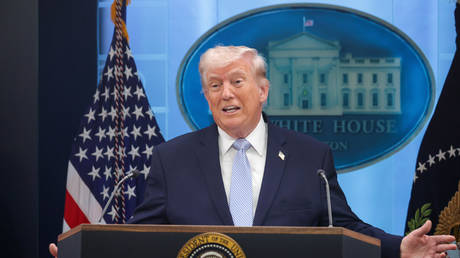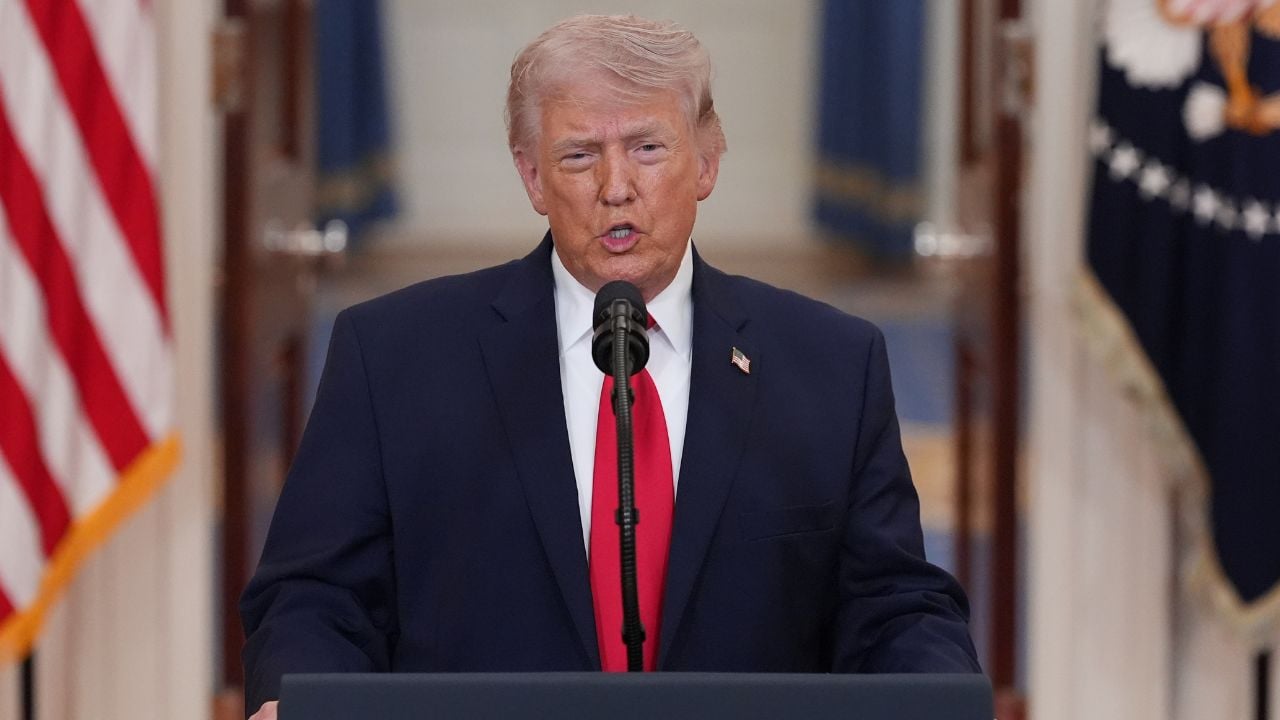
Donald Trump has issued a final ultimatum to Federal Reserve Chair Jerome Powell: vacate the chair by May 15 or face a formal firing. The threat, delivered during a Fox Business interview on Wednesday, marks the most aggressive attempt by any modern president to dismantle the central bank’s operational shield. By tying Powell's removal to an ongoing, controversial Department of Justice probe into the Fed’s $2.5 billion office renovations, the White House is attempting to define "for cause" removal in a way that would effectively end the era of independent monetary policy in the United States.
At the heart of this confrontation is a fundamental disagreement over interest rates. Trump has spent the early months of 2026 demanding deep cuts to the federal funds rate, currently sitting between 3.50% and 3.75%. Powell has resisted, maintaining a data-dependent stance that prioritizes long-term inflation targets over short-term political cycles. This resistance has turned a technical expiration of a four-year chairmanship into a constitutional crisis.
The Renovation Pretext and the Search for Cause
Under the Federal Reserve Act, the president can only remove a Fed governor "for cause." The law does not define this term, but historical and legal precedent has generally interpreted it as inefficiency, neglect of duty, or malfeasance. Firing a chair because of their interest rate decisions has long been considered legally out of bounds.
To bypass this, the administration has focused on a $2.5 billion renovation project at the Fed's Washington D.C. headquarters. Prosecutors from the U.S. Attorney’s office, led by Jeanine Pirro, made a surprise appearance at the construction site just twenty-four hours before Trump’s latest threat. They are looking for evidence of corruption or gross incompetence.
Trump’s strategy is clear. If the Department of Justice can frame the renovation costs as "malfeasance" or "inefficiency," the president gains the legal leverage to fire Powell for cause. Powell has already fired back, calling the investigation a "pretext" designed to intimidate the Board of Governors.
The Two Hats of Jerome Powell
A critical nuance often lost in the headlines is that Powell holds two distinct roles. He is the Chair of the Board of Governors, a four-year term that ends on May 15, 2026. However, he is also a Governor on the board, with a term that does not expire until 2028.
If Trump does not reappoint Powell as Chair, Powell can legally choose to stay on as a regular Governor. This would give him a vote on interest rates for another two years. More importantly, if the Senate fails to confirm Trump’s hand-picked successor, Kevin Warsh, Powell could theoretically remain as "acting" chair. Trump’s threat to fire him is an attempt to force him out of the building entirely, preventing him from exercising that holdover power.
The Warsh Factor and the Senate Blockade
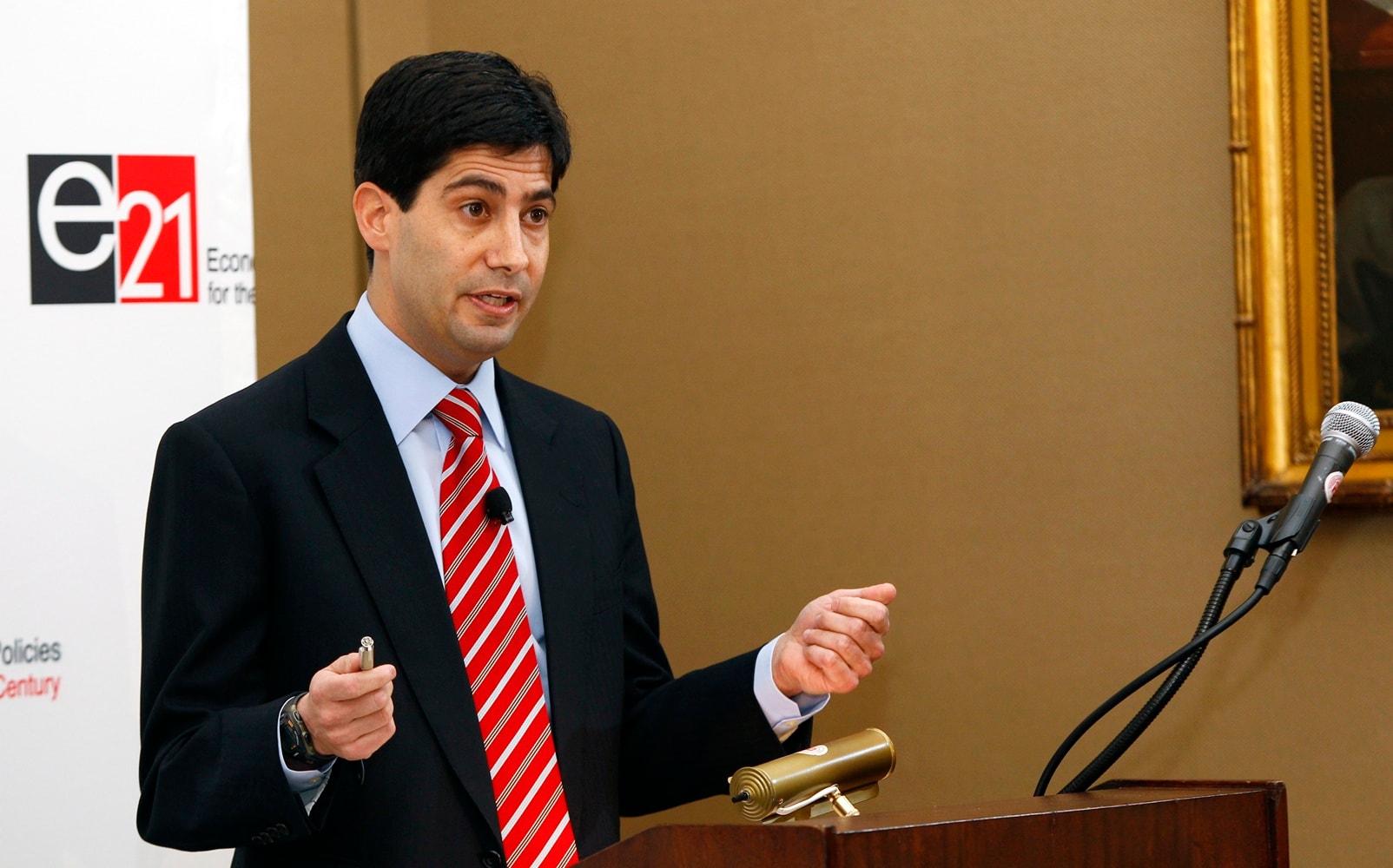
Trump's nominee to replace Powell, former Fed Governor Kevin Warsh, is currently caught in a legislative vice. While Warsh is generally respected by markets, his path to confirmation is blocked by Senator Thom Tillis (R-NC). Tillis has vowed to hold up the nomination until the DOJ ends its investigation into the Fed’s renovations, calling the probe "absurd."
The irony is thick. The very investigation Trump is using to pressure Powell to leave is the same investigation preventing his chosen successor from taking the job. This creates a vacuum of leadership that could leave the world's most important central bank in a state of legal limbo during a period of global economic volatility.
Financial Disclosure and the $100 Million Question
Warsh’s path was further complicated this week by financial disclosures revealing assets worth over $100 million. These include significant stakes in opaque funds with confidentiality agreements. While Warsh has pledged to divest these assets if confirmed, the complexity of his holdings provides ample ammunition for a prolonged confirmation battle in a divided Senate.
The Shadow of the Supreme Court
This is not the administration's first attempt to test the "for cause" boundary. The White House is currently embroiled in a legal battle over the attempted firing of Fed Governor Lisa Cook last year. The Supreme Court is expected to rule on that case soon, and oral arguments in January suggested that even the conservative wing of the court is skeptical of the president's power to fire Fed officials at will.
If the Court rules in favor of Cook, Trump’s threat to fire Powell over a building renovation becomes much harder to execute. A ruling against the president would reinforce the "for cause" barrier, requiring a much higher standard of proof of wrongdoing than "the building cost too much."
Market Reaction to the Siege
The global economy hates uncertainty. The mere threat of firing a Fed chair has historically sent ripples through bond markets. Investors view Fed independence as the primary guarantee against hyper-inflationary political spending.
If the executive branch successfully seizes control of interest rate policy, the "inflation risk premium" on U.S. Treasuries would likely skyrocket. International investors would demand higher yields to compensate for the risk that the dollar might be devalued by a president seeking a quick economic boost before an election.
The current federal funds rate range:
| Rate Type | Current Range |
|---|---|
| Federal Funds Target Rate | 3.50% – 3.75% |
| Discount Rate | 4.00% |
| Interest on Reserve Balances | 3.65% |
A forced exit of Powell without a confirmed successor would likely trigger an immediate sell-off in both stocks and bonds. We have already seen the sensitivity of the markets this month; when a conditional ceasefire with Iran was announced, stocks rallied on the hope of stability. A war with the central bank offers the exact opposite.
The Unitary Executive Theory in Practice
The pressure on the Fed is a live-fire exercise of the "Unitary Executive" theory. This legal philosophy argues that the president should have absolute control over all executive branch agencies. For decades, the Fed has been the ultimate exception to this rule.
By targeting the Fed, the administration is attempting to move the United States toward a model seen in some emerging markets, where the central bank serves as an arm of the Treasury. The long-term cost of such a shift is often the loss of a stable currency.
Jerome Powell has spent his career avoiding the political fray, but he now finds himself as the last line of defense for a 112-year-old institution. He has signaled he will not go quietly. If he refuses to resign on May 15, and Trump follows through on the threat to fire him, the resulting legal and economic firestorm will be unprecedented.
The deadline is no longer a date on a calendar; it is a stress test for the American financial system. Whether the Fed survives as an independent entity or becomes a political tool will likely be decided in a D.C. courtroom, not in the marble halls of the Eccles Building.