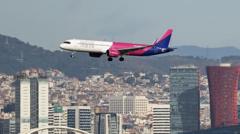
Low-cost flying in Europe is hitting a weird patch, and for once, your wallet might actually benefit. After years of prices climbing faster than a plane on takeoff, Wizz Air’s chief executive, József Váradi, just confirmed what frequent flyers have started to notice. The aggressive fare hikes we’ve endured since the world reopened are losing steam. Wizz Air is seeing a dip in ticket prices, specifically in the short term, and it’s a massive signal for anyone trying to plan a trip without getting gouged.
You've probably felt the sting of a "budget" flight costing as much as a legacy carrier recently. That era of unchecked price growth is cooling off. Váradi noted that the airline's revenue per available seat kilometer—basically how much money they make for every seat they fly—is trending downward. It isn't just one airline's problem. It's a market correction.
The end of revenge travel pricing
We've been living through a period of "revenge travel" where everyone was so desperate to get out that they paid whatever the airlines asked. Airlines knew it. They squeezed every cent out of the post-lockdown surge. But that frantic energy is fading. People are getting pickier. They're looking at a €200 ticket for a two-hour flight and saying "no thanks."
This drop in pricing isn't happening because airlines suddenly grew a conscience. It's happening because they've hit a ceiling. Demand is still there, but the willingness to pay premium prices for basic service has evaporated. When Wizz Air, one of the most aggressive cost-cutters in the sky, admits they have to lower prices to fill planes, you know the tide has turned.
Why the summer surge didn't last
Early projections for this year were sky-high. Most industry insiders expected another record-breaking summer of expensive seats. Instead, we're seeing a softer market. The "short term" Váradi mentions refers to the immediate booking window. Airlines are finding that seats aren't filling up as fast as they did last year. To fix that, they drop the price. It's basic supply and demand.
If you're looking at flights for the next few weeks, you'll see more "sale" banners than you did in 2023. This is a direct response to a consumer base that is finally feeling the squeeze of inflation elsewhere. When your rent and groceries go up, that spontaneous weekend trip to Prague needs to be cheap, or it's not happening.
Engine troubles and grounded planes
There's a massive irony at play here. Usually, when planes are grounded, prices go up because there's less supply. Right now, Wizz Air has a huge chunk of its fleet—roughly 20%—sitting on the tarmac due to issues with Pratt & Whitney GTF engines. You’d think fewer planes would mean higher prices for the remaining seats.
It hasn't worked out that way.
Even with a smaller fleet, Wizz Air is struggling to maintain those high fare levels. This suggests the consumer slowdown is even stronger than the capacity constraints. They're flying fewer people, but they still have to lower prices to get them on board. It’s a double whammy for the airline's bottom line, but a win for you.
Competition is heating up again
Ryanair and easyJet aren't sitting still. The budget airline space in Europe is a dogfight. If Wizz Air drops prices to capture the remaining budget-conscious travelers, Ryanair will almost certainly follow suit to protect its market share. This price war is the best thing that could happen to your summer holiday plans.
I’ve watched these cycles for years. When one major player blinks and admits that "pricing power" is weakening, it triggers a domino effect. No airline wants to fly empty seats. They’d rather sell a seat for €30 than let it go for €0, even if they were hoping for €80 a month ago.
The truth about those hidden fees
Don't celebrate too hard yet. While the base fares are falling, airlines are getting craftier with the extras. The "lower prices" Váradi talks about usually refer to the ticket itself. They'll try to make that money back elsewhere.
- Bag prices are soaring. You might save €20 on the flight but pay €40 to bring a carry-on.
- Seat selection is becoming a luxury. On some routes, choosing a middle seat costs more than a meal.
- Priority boarding is a trap. It’s often just a way to pay extra for the right to stand in a different line.
If you want to actually take advantage of these falling prices, you have to play the game perfectly. Use a small backpack that fits under the seat. Skip the overpriced sandwich. The moment you add an "extra," you’ve handed back the savings the market just gave you.
How to find the actual deals right now
Wait until the last minute? Usually, that's terrible advice. But in a softening market, the "last-minute" window is changing. Váradi’s comments suggest that the weakness is in the "short term." This means the sweet spot for booking might be closer to your departure date than it was a year ago.
I’m seeing great rates three to five weeks out. That used to be the danger zone where prices spiked. Now, it's where airlines are panicking and slashing rates to ensure the plane isn't half-empty. Keep an eye on mid-week departures. Everyone wants to fly Friday to Sunday. If you can swing a Tuesday to Thursday trip, you’re looking at the lowest fares we’ve seen in three years.
Where to fly for the best savings
The biggest price drops are happening on the most crowded routes. Think London to Palma, or Budapest to Berlin. Where there's more competition, there's more pressure to cut costs. If you're looking at a niche route where only one airline flies, don't expect a discount. They still have a monopoly there.
Focus on the major hubs. The price wars are fiercest in places like Luton, Stansted, and Gatwick. If you're flexible with which London airport you use, you can save a fortune right now.
What this means for the rest of the year
Wizz Air’s admission is a bellwether for the industry. If the "ultra-low-cost" kings are feeling the pinch, the mid-tier airlines will feel it too. We’re moving out of the post-pandemic pricing bubble and back into a reality where airlines have to actually compete for our money.
The strategy is simple. Stop booking months in advance for standard European hops. The urgency isn't there anymore. Watch the prices, wait for the inevitable "flash sale," and be ready to move when the algorithm flinches. Airlines are nervous about their quarterly earnings, and their nervousness is your opportunity.
Start by checking your favorite routes for dates about four weeks away. Compare the "Basic" fare to what you paid last year. You'll likely see a double-digit percentage drop. Grab those tickets, pack light, and ignore every prompt to "upgrade" your experience. The best way to enjoy a flight is knowing you paid half of what the person sitting next to you did.