The confirmation of a positive Andes hantavirus case in British Columbia—originating from passengers aboard the MV Hondius cruise ship—exposes a critical vulnerability in global biosecurity protocols: the compounding risk of confined-space transmission intersecting with long-incubation viral kinetics. While initial media coverage framed the Canadian diagnostic finding as an isolated, alarming headline, an empirical assessment of the outbreak reveals a highly predictable epidemiological pattern. The incident demonstrates the precise operational mechanics required to contain a pathogen with a 50% case-fatality rate when human-to-human transmission is biologically viable.
To understand why this specific outbreak triggered international biocontainment interventions across Canada, France, the United States, and the United Kingdom, the underlying pathogen dynamics must be isolated from standard respiratory models. The Public Health Agency of Canada (PHAC) confirmed that the infected individual, a Yukon resident in their 70s currently isolated in a Victoria hospital, shed the Andes strain of hantavirus. This distinction dictates the entire structural logic of the global response framework.
The Vector-to-Human Transmission Matrix
The classical epidemiological model for hantavirus infections relies on an strictly zoonotic pathway. Standard strains, such as the Sin Nombre virus prevalent in North American deer mouse populations, present zero risk of secondary human amplification. The transmission dynamics of the Andes strain deviate from this baseline through a dual-mode infection matrix.
- Primary Environmental Spillover: The index cases aboard the MV Hondius contracted the pathogen via the inhalation of aerosolized excreta (saliva, urine, or feces) from infected oligoryzomys rodents during land excursions in South America prior to embarking from Ushuaia, Argentina. This environment defines the initial viral load entering the vessel.
- Secondary Horizontal Amplification: Unlike any other known hantavirus variant, the Andes strain possesses the molecular capacity for direct inter-human transmission. This horizontal passage occurs primarily during the prodromal phase—the window where initial non-specific symptoms like fever and cephalalgia manifest—and requires close, prolonged mucosal or fluid proximity.
The cruise ship hull serves as a physical catalyst for this secondary vector. Micro-environments featuring shared air handling systems, close-quarter cabins, and communal dining facilitate the exact dense, prolonged contact thresholds required to bypass the low baseline transmission efficiency of the virus.
Linear Progression and Incubation Bottlenecks
The structural challenge of managing this outbreak lies in the asymmetric timeline between exposure and symptom onset. The temporal mechanics of the Andes strain demand an extended observation window that disrupts standard 14-day quarantine paradigms.
[Day 0: Environmental Exposure] ---> [Day 11-21: Median Incubation / Repatriation] ---> [Day 21-42: Maximum Viral Latency Horizon]
The four Canadian passengers returned to British Columbia on May 10 under strict containment protocols, presenting as completely asymptomatic. The positive diagnostic shift occurred on May 15, establishing an incubation latency exceeding two weeks from their last potential onboard exposure. This long temporal tail creates a structural tracking bottleneck. Genomic sequencing conducted by France’s Pasteur Institute on parallel passengers confirmed a 97% sequence homology with known wild-type South American rodent strains. This genetic stability proves that the outbreak was driven by environmental exposure and subsequent close-contact transmission rather than an adaptive mutation increasing viral velocity.
The extreme length of the incubation period requires a multi-tiered public health response. If isolation protocols are terminated prematurely based on early negative PCR assays, the probability of community leakage escalates. This reality led public health authorities to extend potential monitoring parameters up to 42 days for high-risk cohorts.
The Biocontainment Cost Function
Containing an outbreak of this severity requires a heavy allocation of public health resources. The total operational friction ($C_{total}$) of managing an exotic horizontal-transmission pathogen can be quantified through a distinct functional framework:
$$C_{total} = L_{log} + V_{diag} + Q_{opp}$$
Where:
- $L_{log}$ represents the logistical expenditure of secure, isolated repatriation (e.g., government-chartered aircraft, dedicated quarantine transport, and military-assisted supply drops to isolated regions like Tristan da Cunha).
- $V_{diag}$ represents the cost of continuous molecular validation, shifting from presumptive localized assays to high-tier confirmatory testing at specialized infrastructure like the National Microbiology Laboratory in Winnipeg.
- $Q_{opp}$ represents the economic and clinical opportunity costs of dedicating high-level isolation beds, such as those at the BC Biocontainment Treatment Centre at Surrey Memorial Hospital, to asymptomatic or mildly symptomatic individuals under long-duration surveillance.
The deployment of these resources is justified by the clinical progression of Hantavirus Pulmonary Syndrome (HPS). The disease profile transitions rapidly from mild prodromal symptoms to acute, non-cardiogenic pulmonary edema, causing severe respiratory failure through bilateral pleural effusions. Because the transition from initial fever to critical respiratory distress can occur within hours, reactive hospital placement after severe symptom onset dramatically increases mortality risks. Pre-emptive, resource-intensive isolation is the only viable strategy to lower mortality rates.
Jurisdictional Execution and Containment Realities
The containment strategy deployed by British Columbia’s public health infrastructure illustrates a zero-leakage protocol designed to neutralize the human-to-human transmission vector before it interfaces with the domestic population. The protocol relies on complete spatial segregation from the moment of domestic entry.
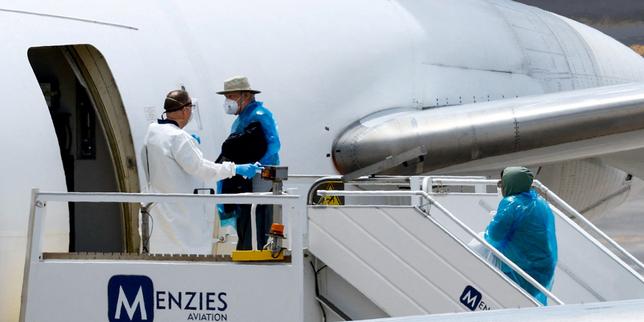
The four exposed travelers were routed through a dedicated logistical pipeline directly from the tarmac to pre-arranged isolation facilities in Victoria, completely bypassing public transit, commercial airport terminals, and standard customs processing. When the primary patient developed a fever and headache, the clinical response scaled up immediately to hospital-level isolation without introducing an environmental exposure pathway for the public.
The primary limitation of this defensive strategy is its reliance on absolute participant compliance and comprehensive contact tracing. While effective for small, trackable cohorts like the 134 passengers of the MV Hondius, this strategy cannot scale to handle broader community transmission. The protocol works as a closed loop. The negative test result of the primary patient’s traveling partner confirms that the transmission chain stopped within their immediate cabin micro-environment.
Strategic Outlook for Maritime Biosecurity
The MV Hondius outbreak demonstrates that the maritime sector's current sanitation protocols are ill-equipped to handle pathogens that combine environmental spillover with horizontal transmission capabilities. Standard cruise line health screenings rely almost entirely on passive self-reporting and temperature checks at the gangway. This defense is completely ineffective against a pathogen with a multi-week incubation timeline.
The maritime industry must update its biosecurity framework from passive screening to active environmental asset protection. Operators working in high-risk geographic corridors, such as the rural biomes of Chile and Argentina, must treat land excursions as high-level bio-risk events. This approach requires enforcing strict hand and respiratory hygiene after wilderness exposure, banning the storage of local organic souvenirs in passenger cabins, and deploying specialized rodent-proofing protocols for vessel hulls docking in regional ports.
Furthermore, shipboard medical centers must be redesigned to support immediate, high-efficiency particulate air (HEPA) filtered isolation capabilities. If a vessel cannot reliably segregate suspect respiratory or febrile cases from the main air handling matrix, the ship effectively becomes an incubator. The strategic imperative for public health agencies is clear: containment must happen at the point of origin. Once a pathogen with horizontal transmission capabilities forces a multi-nation repatriation effort, the financial and logistical costs rise exponentially, shifting the burden of biosecurity from commercial operators to state infrastructure.