Stop waiting for the vibe shift. It isn't coming because the "bad economy" you keep reading about is a ghost.
Mainstream financial media loves a tragedy. They keep asking when Americans will feel better about the economy, treating the current national mood like a medical mystery. They point to cooling inflation and steady jobs and wonder why the public isn't throwing a parade. Here is the cold reality: The economy is doing exactly what it was designed to do, but the metrics we use to measure "success" are relics of a world that died in 2020.
We are obsessed with the wrong data points. We track GDP like it’s a scoreboard for human happiness. It isn't. It’s a measure of activity. If you get into a car wreck, GDP goes up because of the repairs, the medical bills, and the insurance payout. The fact that you’re in pain doesn't matter to the spreadsheet.
The disconnect between "the data" and "the feel" isn't a glitch. It’s the feature.
The Inflation Hallucination
The biggest lie told by the "everything is fine" crowd is that because the rate of inflation has dropped, prices should feel manageable. This is a fundamental misunderstanding of math.
When a pundit says inflation is down to 3%, they expect you to cheer. But to the person buying eggs, that 3% is stacked on top of the 20% jump from the year before. Prices don't go back down; they just stop climbing quite as fast. We are living in a permanent state of sticker shock, and telling people they should feel good because the bleeding slowed down is gaslighting of the highest order.
I’ve spent years watching analysts ignore the "cost of life" in favor of the "cost of goods." You can buy a flat-screen TV today for cheaper than you could ten years ago. Great. But you can't live in a TV. You can't use a TV as a down payment on a house. The items that have plummeted in price are the ones we don't need to survive. The items that have skyrocketed—housing, healthcare, education—are the ones that determine your quality of life.
The Consumer Price Index (CPI) is a flawed basket. It’s a weighted average that masks the carnage in the essentials. If your rent goes up $500 a month but your Netflix subscription stays the same, the "average" doesn't reflect your reality.
The Housing Trap is a Features Not a Bug
The competitor's narrative suggests we are just in a "high-interest rate environment" that will eventually settle. This is wishful thinking.
We have entered the era of the Neo-Feudal Economy. The barrier to entry for the American Dream isn't just high; the ladder has been pulled up and turned into firewood. When interest rates were near zero, institutional investors—the private equity sharks and hedge funds—bought up the inventory. They didn't buy houses to live in; they bought "yield-generating assets."
Now, with rates higher, the supply is locked. If you have a 3% mortgage, you aren't moving. You’re a prisoner in your own home. This "golden handcuff" effect has paralyzed the market.
Traditional economists say "just wait for the Fed to pivot." That’s a trap. A rate cut might make borrowing cheaper, but it will also trigger a fresh wave of demand that will send home prices into the stratosphere. There is no version of this where the average buyer wins under the current system. We aren't waiting for a recovery; we are waiting for a structural collapse that nobody is willing to admit is necessary.
The Wage Growth Myth
You’ll hear that wages are finally outpacing inflation. On paper, this is true. In the real world, it’s a wash.
Wage growth is heavily skewed toward the bottom and the very top. The middle class—the people who actually drive the economy—are being squeezed dry. If you make $75,000 a year, your 4% raise was swallowed by the increase in your health insurance premiums and the cost of gas before you even saw the check.
I’ve sat in boardrooms where "labor costs" are discussed as a threat to be mitigated. Companies aren't looking to share the wealth; they are looking to automate, outsource, or "optimize" their way out of paying you more. The "strong labor market" is a mirage built on part-time "gig" work and people holding down two jobs just to stay afloat.
Stop Asking When It Gets Better
The question "When will it get better?" is a loser's query. It implies that the economy is a weather system you just have to wait out.
It’s not getting better in the way you want it to. The 2010s are gone. The era of cheap money, cheap gas, and cheap houses is over. We are transitioning into a high-friction economy.
If you want to survive this, you have to stop following the standard playbook:
- Abandon the Lifestyle Subsidy: Most people are living a life subsidized by debt. They are trying to maintain a 2018 lifestyle on a 2026 budget. It’s a mathematical impossibility. Stop trying to "keep up" with a middle class that is currently drowning.
- Skill Up for Scarcity: Generalists are being replaced by algorithms. If your job involves moving data from one spreadsheet to another, you are a walking ghost. You need to pivot into roles that require physical presence, high-stakes decision-making, or complex empathy.
- Ignore the GDP: Start measuring your personal economy by your "Time to Freedom" rather than your net worth. How many months could you survive if your primary income vanished? That is the only stat that matters.
The "bad feeling" everyone has isn't a lack of information. It’s a gut-level realization that the old rules no longer apply. The economy is "good" for the people who own the assets and "bad" for the people who trade their time for a currency that is losing its grip.
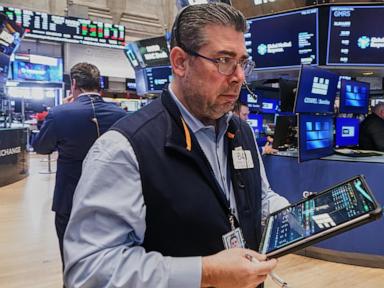
Stop looking at the Dow Jones. It isn't a reflection of your life; it’s a reflection of corporate profit margins. Those margins stay high specifically because your costs are going up and your wages are staying flat.
The system isn't broken. It’s doing exactly what it was built to do. It’s extracting value from the many to secure the few. If you don't like the feeling, stop waiting for a "recovery" and start building a fortress. The cavalry isn't coming because they’re busy charging you interest on the horse.