Public health brochures want you to believe that Hantavirus is a booby trap waiting in every dusty corner of your garage. They paint a picture of a relentless, invisible killer lurking in every mouse dropping, ready to leap into your lungs the moment you pick up a broom. This narrative isn't just tired; it’s statistically illiterate.
The standard advice—wear a respirator, soak everything in bleach, live in fear of the "closed space"—ignores the biological reality of the virus and the ecological theater required for a spillover event. We are obsessing over the wrong risks while ignoring the systemic shifts that actually drive outbreaks.
The Viral Fragility Nobody Mentions
Hantavirus Pulmonary Syndrome (HPS) is terrifying. With a mortality rate hovering around 35%, it should be. But the "competitor" narrative suggests the virus is a hardy survivor, waiting for months in a dormant state.
It isn't.
Sin Nombre virus, the primary culprit in North America, is an enveloped virus. In virology 101, "enveloped" means "fragile." The virus is wrapped in a lipid membrane that is exceptionally sensitive to sunlight (UV radiation), heat, and desiccation. If a deer mouse leaves a "gift" on a sun-drenched porch, the virus is often inactive within hours.
The obsession with "closed spaces" like sheds and cabins isn't wrong because those places are dangerous; it's wrong because it implies the space is the catalyst. The catalyst is actually the microclimate stability. We treat Hantavirus like a static hazard, like asbestos. It’s not. It’s a biological flash fire that requires specific humidity and temperature windows to remain viable in the environment.
Stop Counting Mice and Start Counting Seeds
Health departments love telling you to "seal up your home." It’s the equivalent of telling someone to carry an umbrella during a hurricane. It feels productive, but it misses the macro-drivers.
If you want to know if you're at risk for Hantavirus, stop looking at your baseboards and start looking at the trees. The "Trophic Cascade" is the only metric that matters. In the Southwest, we saw this clearly with the 1993 Four Corners outbreak. It wasn't caused by a sudden lapse in cabin cleaning standards. It was caused by a massive El Niño event.
- Heavy rainfall leads to a surplus of piñon pine nuts and grass seeds.
- Deer mouse populations explode (sometimes 20-fold in a single season).
- Intraspecies competition forces infected mice out of their natural burrows and into human structures.
The virus doesn't "travel" to humans; it is pushed into human environments by ecological pressure. By the time you’re reaching for the bleach in your shed, the ecological war has already been lost. We spend millions on "awareness" campaigns telling people how to mop, yet we spend pennies on the longitudinal ecological monitoring that would actually predict a high-risk year.
The Aerosolization Obsession
The "lazy consensus" says: Don't sweep, you'll aerosolize the virus.
While technically true, this has led to a bizarre "cleanliness theater." I’ve seen homeowners don full-body Tyvek suits to move a single cardboard box. Here is the nuance they missed: the concentration matters more than the act.
A single mouse in a well-ventilated garage is a statistical zero. HPS cases are vanishingly rare—we’re talking about 20 to 50 cases a year in the entire United States. You are significantly more likely to die falling off the ladder while trying to "mouse-proof" your gutters than you are to contract HPS from the dust inside them.
The real danger isn't "dust." It’s viral load.
You need a high density of infected rodents in a space with zero air exchange to create a high enough viral titer in the air to overcome the human innate immune response. The "closed space" isn't a shed; it's a tomb-like environment where air has stagnated for months.
Why Your "Deep Clean" Might Be Making It Worse
Here is a counter-intuitive truth: aggressive, amateur attempts to eradicate rodents often increase the risk of disease shedding.
When you stress a rodent population—through haphazard trapping or non-lethal deterrents—you increase their cortisol levels. In many mammals, including the Peromyscus species that carry Hantavirus, stress leads to increased viral shedding in urine and saliva.
If you go into a space and start moving things around without a plan, you aren't just "cleaning"; you are triggering a stress response in the resident population. You are essentially "milking" the mice for virus before you even start the mop.
The Expertise Gap: Distinguishing Peromyscus
Most "expert" advice treats all mice as equal. This is lazy science.
If you have house mice (Mus musculus), the ones with the hairless tails and the pungent "mousy" smell, your risk of HPS is effectively zero. They don't carry it.
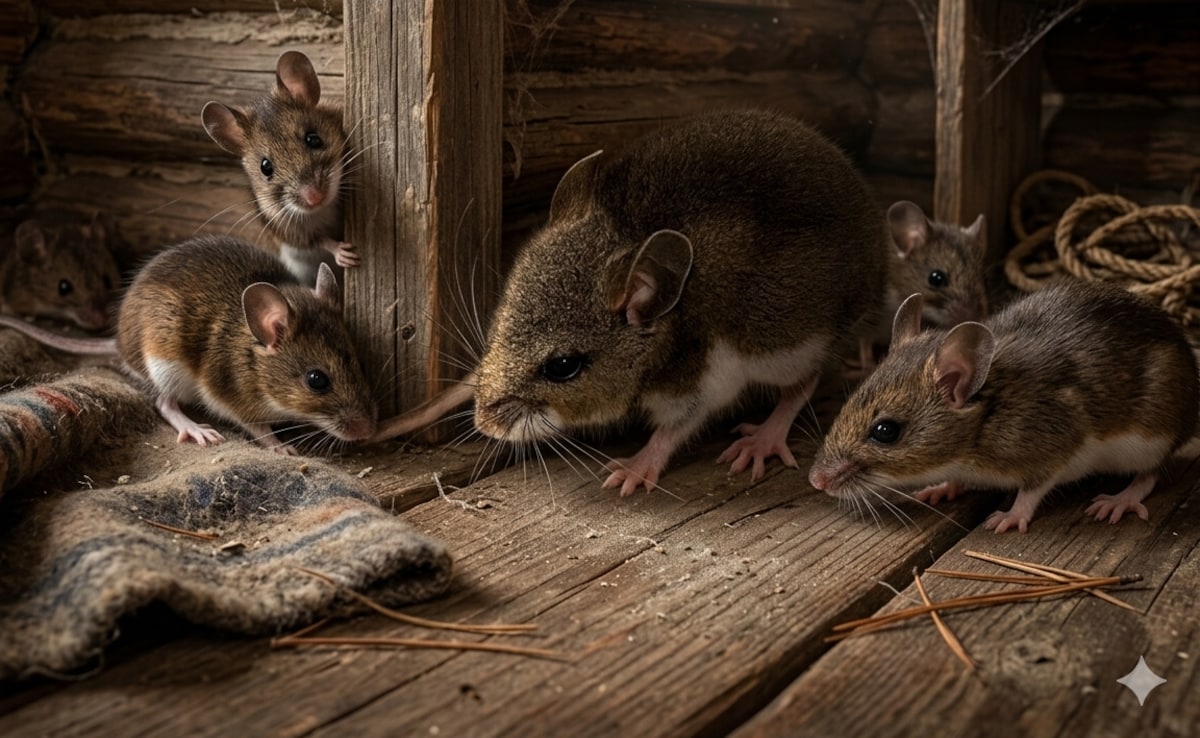
The threat comes almost exclusively from the Deer Mouse (Peromyscus maniculatus) and the White-footed Mouse (Peromyscus leucopus). These are "clean" looking mice—big eyes, big ears, white bellies, and furry tails. If you can’t tell the difference between a common house mouse and a Peromyscus, you shouldn't be giving health advice.
I’ve seen "professionals" charge thousands to decontaminate suburban basements infested with common house mice, citing Hantavirus risks. It’s a scam. It’s predatory fear-mongering based on a fundamental ignorance of host-specificity.
The Myth of the "Safe" Season
Common wisdom says you’re safe in the winter because the mice are "hibernating" or less active.
Wrong.
Winter is when the interface between humans and rodents tightens. When the temperature drops, the thermal gradient pulls rodents toward your insulation. This is when the "closed space" becomes a literal pressure cooker for viral accumulation.
Furthermore, the virus survives longer in cold, damp conditions than in the summer heat. A cold, dark crawlspace in February is a much more effective incubator for Sin Nombre than a hot attic in July.
Re-Engineering the Response
If we were serious about Hantavirus, we would stop focusing on the individual’s ability to mop a floor and start focusing on:
- Standardized Ecological Forecasting: Using satellite imagery to track vegetation "green-up" and issuing regional "Viral Load Alerts" months before the mice even reach the houses.
- Precision Rodent Management: Teaching people to identify host species so they don't panic over a common house mouse.
- Architectural Ventilation: Moving away from "sealing" structures toward "breathing" structures that prevent the stagnant air titers required for infection.
The Brutal Reality of HPS
The "People Also Ask" sections usually focus on: "Can I get Hantavirus from a bite?" (Rare, but yes) or "Can I get it from my dog?" (No, they are dead-end hosts).
But the question they should be asking is: "Why does the medical system fail to catch this until it’s too late?"
HPS starts like the flu. Fever, aches, fatigue. By the time the "leakage" phase begins—where your capillaries start pouring fluid into your lungs—you have hours, not days. The "counter-intuitive" advice here isn't about cleaning; it's about medical advocacy. If you have been in a high-risk environment (a long-vacant, rodent-infested building in a rural area) and you develop a fever, you do not wait. You tell the ER doctor specifically: "I have had significant exposure to Peromyscus feces in a confined space."
If you don't say those words, they will give you Tylenol and send you home to drown in your own plasma.
The Cost of False Security
We love a "how-to" list. Step 1: Wear a mask. Step 2: Spray bleach.
These lists provide a false sense of agency. They make you think you can control a microscopic biological event with a piece of cloth and a spray bottle.
The reality is that Hantavirus is a symptom of an ecosystem out of balance. It is the price we pay for encroaching into wild spaces during periods of ecological flux. You can bleach your garage until the concrete turns white, but if you live in a piñon-juniper woodland during a post-El Niño population boom, your risk profile is dictated by the sky and the soil, not your cleaning supplies.
Stop worrying about the stray mouse in your kitchen. Start worrying about the "masting" event in the forest behind your house.
The virus isn't looking for you. You are simply walking into its habitat at the wrong time. If you want to survive the encounter, stop reading cleaning tips and start studying the landscape.
Leave the broom. Open the windows. Let the sunlight do the work you think your chemicals are doing.