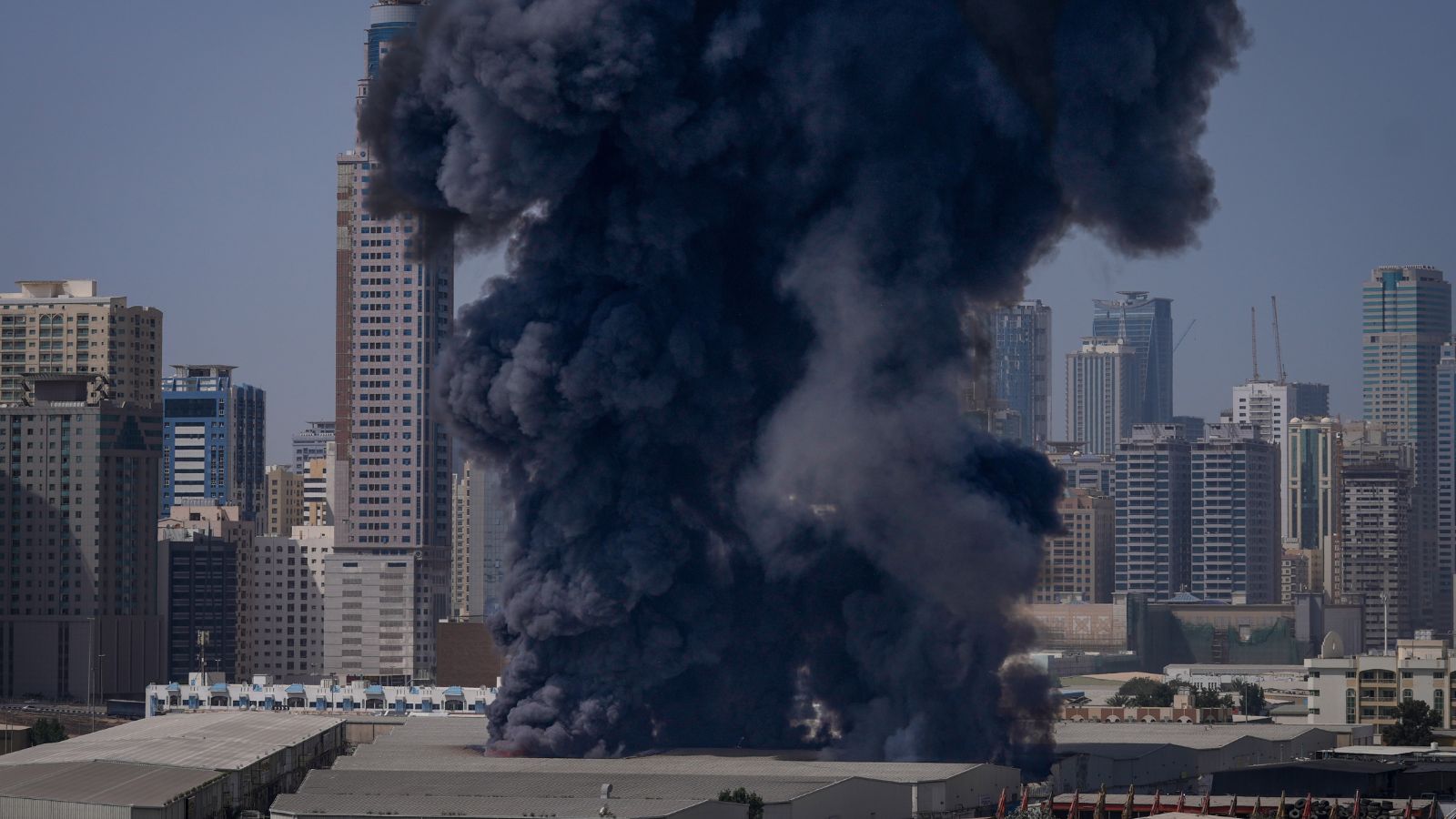
Dubai is currently facing its toughest test in decades. The city that built its entire brand on being a "safe haven" in a volatile region is waking up to a reality where that safety isn't guaranteed. After a weekend of unprecedented strikes and counterstrikes between Iran, the US, and Israel, the "City of Gold" is on a knife-edge. It's not just about the loud booms in the sky; it's about the fundamental stability of a global crossroads that's suddenly been told it's a target.
If you've been watching the news, you know the broad strokes. But the reality on the ground in the UAE is far more visceral than the headlines suggest. This isn't just "regional tension." It's a systemic shock to the world's most connected aviation hub. Expanding on this theme, you can also read: Why the Green Party Victory in Manchester is a Disaster for Keir Starmer.
What's actually happening on the streets of Dubai
The weekend was surreal. On Sunday, March 1, 2026, the UAE government sent out an emergency alert that every resident felt in their bones. A loud, piercing alarm hit millions of phones at once, ordering people to seek immediate shelter and stay away from windows. This isn't the kind of thing that happens in Dubai.
I’ve spoken to residents who described the sound of interceptions over the Palm Jumeirah and the industrial areas of Sharjah as "earth-shaking." While the UAE’s air defense systems—some of the best in the world—knocked down the vast majority of incoming threats, the debris had to go somewhere. Analysts at The Washington Post have shared their thoughts on this matter.
- The Fairmont Palm Hotel was hit by a missile strike, causing visible damage and panic among tourists.
- Dubai International Airport (DXB) sustained minor damage to a concourse, with four staff members injured.
- Jebel Ali Port, the lifeblood of regional trade, saw plumes of black smoke rising after a reported strike.
The government is trying to keep things calm, and they're mostly succeeding. They’ve emphasized that the "explosions" people are hearing are actually the sounds of successful interceptions. But when you’re a tourist who paid $500 a night for a beach view and now you're being told to hide in a windowless hallway, "successful interception" is cold comfort.
The travel chaos is worse than you think
Dubai International (DXB) is the world's busiest international airport. When it stops, the world stops. We aren't just talking about a few delayed flights. Over the weekend, more than 700 flights were canceled at DXB alone.
Think about the ripple effect. If you were flying from London to Sydney through Dubai, you weren't just delayed; you were stranded in a region that suddenly felt like a war zone. Two Emirates flights from California—one from SFO and one from LAX—literally turned around mid-air over Europe and landed in Munich and Rome because the pilots knew they couldn't safely enter UAE airspace.
Currently, Emirates and Flydubai are trying to restart "limited" operations as of Monday evening, March 2. But don't let that fool you. More than 80% of flights are still grounded. The airlines are prioritizing passengers who were already stuck at the airport, meaning if you have a flight scheduled for tomorrow, there’s a massive chance you’re not going anywhere.
Why Iran is targeting the UAE now
You might wonder why Iran is hitting the UAE when the primary conflict is with the US and Israel. It’s a strategic play. Iran is trying to show that no one in the region is safe if Tehran is under fire.
The US and Israel launched "Operation Lion's Roar" on February 28, 2026, which reportedly killed high-ranking Iranian officials. Iran's response hasn't just been aimed at Israel; they've fired ballistic missiles and drones at US-linked assets in Qatar, Kuwait, and the UAE.
By hitting Dubai, Iran hits the global economy where it hurts. They're trying to prove that the Gulf's "stability" is a fragile illusion. For the UAE, this is a diplomatic nightmare. They’ve spent years trying to de-escalate with Iran while maintaining a close security relationship with the West. Now, they’re caught in the middle of a hot war they didn't start.
The human cost in numbers
While the UAE has been lucky to avoid mass casualties, the numbers are still sobering:
- 165 ballistic missiles launched toward the UAE since February 28.
- 541 drones tracked, with 35 reaching UAE territory.
- 3 deaths confirmed in the UAE so far, with dozens of injuries.
- Indefinite suspension of operations at both DXB and Al Maktoum International (DWC) for most commercial traffic.
Survival steps for travelers and residents
If you're in Dubai or have travel planned, you need to stop checking the "Flight Status" on your app every five minutes. It’s not going to give you the full picture.
- Don't go to the airport. This is the biggest mistake people are making. DXB is crowded and tense. Unless you have a direct notification from your airline that your specific flight is boarding, stay at your hotel or home.
- Contact your embassy. If you're a foreign national, register with your embassy's emergency system. The US, UK, and India have all issued high-level alerts for the region.
- Verify everything. Misinformation is spreading like wildfire on social media. Follow the Dubai Media Office or the National Emergency Crisis and Disaster Management Authority (NCEMA) for actual facts.
- Prepare for the long haul. This isn't going to be resolved in 48 hours. If you're stranded, look into the government decrees offering free shelter for those caught in the chaos.
The "old" Dubai—the one where you could ignore regional politics while sipping a latte—is gone for now. The city is resilient, but it’s currently a place of sirens and smoke. It’s time to be realistic about the risks. If you're outside the region, cancel your trip. If you're inside, stay low and wait for a clear window to leave.
Check your airline's website for the specific "rebooking" link rather than calling the general customer service line, which is currently overwhelmed. Most carriers are offering full refunds or free changes, but the backlog will take weeks to clear.