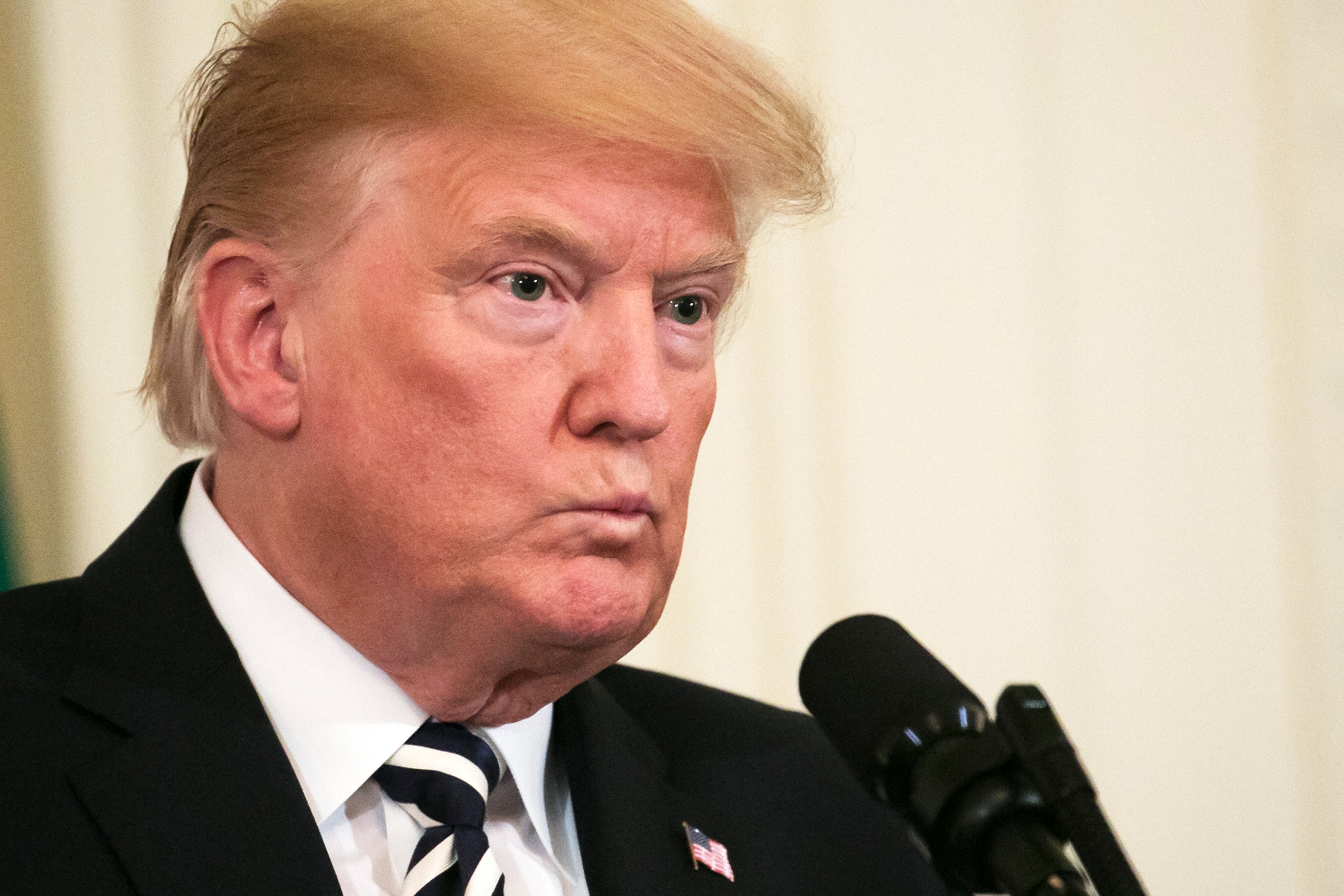
The Middle East is screaming. Missiles are crossing borders that used to be red lines, and the body count in Lebanon and Gaza isn't just a statistic—it's a geopolitical earthquake. Yet, if you listen to Donald Trump, he’s not using the "W" word. He’s dancing around it. He’s calling it a "mess," a "disaster," or "total chaos." You’d think with cities crumbling and regional powers trading heavy fire, the terminology would be obvious. It isn't.
There’s a calculated reason for this linguistic gymnastics. Trump isn't just being stubborn. He’s protecting a brand he spent four years building: the president who didn't start new wars. If he admits this is a full-scale war, he has to admit his "Maximum Pressure" campaign and the Abraham Accords didn't permanently "fix" the region. He’s betting that by refusing to label it a war, he can keep the chaos pinned on the current administration while keeping his own record pristine.
The Brand of the Non-Interventionist
Trump’s political identity leans heavily on the idea that he’s a dealmaker, not a warmonger. During his first term, he bragged constantly about being the first president in decades to avoid entering a new foreign conflict. It’s his favorite shield against the "globalist" wing of the GOP.
If he calls the current situation a war, he enters a different rhetorical space. A war demands a commander-in-chief response. It requires a specific kind of American involvement that he spent years railing against. By framing the violence as "stupidity" or "incompetence" by the Biden-Harris team, he keeps the focus on leadership style rather than structural Middle Eastern instability. He wants you to believe the fire started because the current guy forgot how to use the extinguisher, not because the building was already soaked in gasoline.
Why the Abraham Accords Matter Here
You can't talk about Trump’s view of the Middle East without the Abraham Accords. He views those deals as his legacy's crown jewel. The narrative he pushes is simple: I brought peace, and they broke it.
The reality is messier. The Accords normalized relations between Israel and several Arab nations, but they largely bypassed the Palestinian issue. Critics argued then—and the current violence suggests now—that ignoring that friction point was a gamble. Now that the gamble has resulted in a regional explosion, Trump has to distance the Accords from the current bloodshed.
If it’s a "war," it’s a systemic failure. If it’s just "chaos," it’s a management failure. Trump is banking on the latter. He needs voters to think the Middle East was a finished puzzle that the current administration simply knocked off the table.
The Fear of the Forever War Label
Voters are tired. They’re exhausted by the idea of American boots on the ground or endless billions flowing into the "sand," as Trump often dismissively calls it. He knows this better than anyone.
By avoiding the word war, he avoids the trap of having to explain how he’d end it. War implies a beginning, an end, and a cost. "Chaos" implies something that can be hushed by a strong personality and a few phone calls. It’s a classic sales tactic. You don't call the engine failure a "wreck"; you call it a "temporary setback" that only you know how to fix.
The rhetoric also serves to keep his base focused on domestic issues. If the world is at war, the U.S. has to care about global stability. If the world is just "messy," the U.S. can focus on its own borders. It’s a populist pivot that hasn't changed since 2016.
Rhetoric Versus the Reality on the Ground
While the terminology stays vague in Florida or at rallies in the Midwest, the reality in the Levant is undeniable. We’re seeing a multi-front escalation involving Iran’s proxies, direct Iranian missile strikes, and Israeli incursions into Lebanon.
Trump’s refusal to call it a war ignores the technical definitions of armed conflict. We’re seeing:
- State-on-state violence.
- Massive civilian displacement.
- The total breakdown of previous ceasefire boundaries.
But Trump’s "America First" lens doesn't care about technicalities. It cares about the bottom line for the American taxpayer. He’s using the current violence as a campaign prop. He points at the television and says, "See? I told you they’re incompetent." It’s an effective, if cynical, way to handle a tragedy.
The Tehran Factor
Trump’s stance on Iran has always been about strangulation through sanctions. He believes his "Maximum Pressure" had Tehran on the ropes. In his mind, the current war—even if he won't call it that—is a direct result of the U.S. softening its stance on Iran.
He views the money released for humanitarian purposes or the lack of strict oil sanction enforcement as the literal fuel for the missiles flying today. By not calling it a war, he avoids validating the idea that Iran is a peer competitor. He wants them seen as a nuisance that he had under control and that the current administration "re-funded."
What This Means for 2026 and Beyond
If you’re waiting for a detailed white paper from the Trump camp on Middle East strategy, don't hold your breath. The strategy is the man. He’s positioning himself as the "unpredictable" factor that kept everyone in line.
The danger in this approach is obvious. If he returns to power, the "chaos" won't just vanish because he’s back in the Oval Office. The regional dynamics have shifted. Relationships have hardened. The blood spilled over the last two years has created a generational grievance that a "deal" might not be able to paper over.
His refusal to use the word war tells us everything we need to know about his potential second-term foreign policy. It’ll be transactional. It’ll be loud. It’ll be focused on keeping the U.S. out of the bill while claiming credit for any lull in the fighting.
If you want to track how this develops, stop looking at the casualty counts and start looking at the language. When a politician refuses to name a thing, it’s usually because they’re afraid of what that name requires them to do. Trump is staying away from the "war" label because he wants to remain the "peace" candidate, even if the world around him is in flames.
Watch the primary debates and the rally speeches. Notice how often he uses the word "trillions." That’s his real metric. It’s not about the ethics of the conflict; it’s about the cost. To him, a war is just a bad investment he didn't sign off on.
Start paying attention to the specific ways he talks about the "Red Sea" and "shipping lanes." These are the areas where he might actually take action because they affect the U.S. economy directly. Everything else is just noise in his playbook. You should be looking for whether he starts linking Middle East stability to domestic gas prices—that’s when the rhetoric will shift from "their mess" to "our problem."