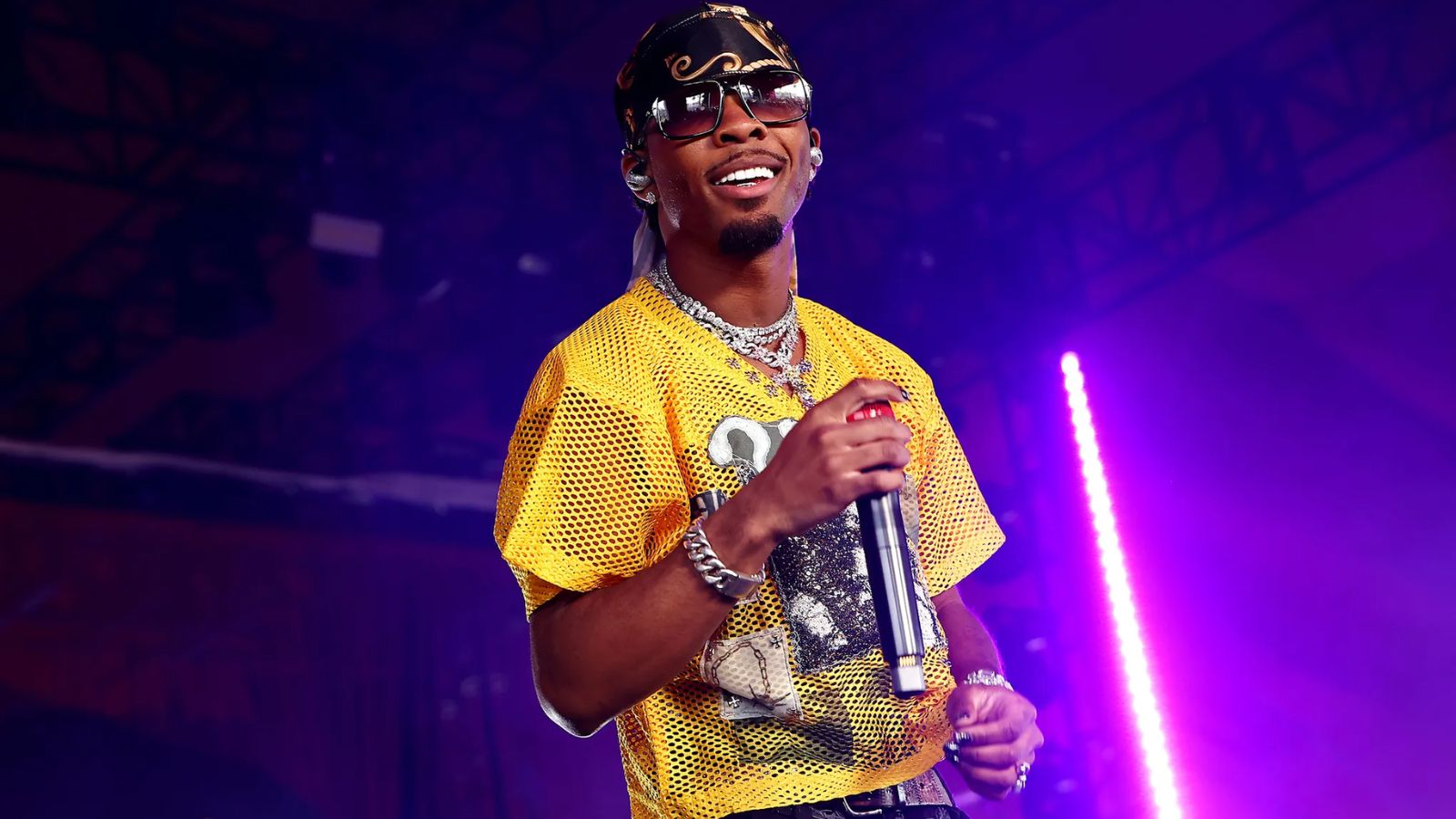
Survival in the comedy industry usually requires a series of surgical extractions. To reach the masses, most performers eventually cut away the jagged edges of their persona, smoothing out the localized grit that made them interesting in the first place. They trade the smoky basement authenticity for a polished, focus-grouped version of themselves that fits comfortably inside a streaming thumbnail or a sitcom pilot. Deon Cole did the opposite. After decades in the trenches, he has maintained a rare level of psychological symmetry, where the man seen on screen remains indistinguishable from the man who spent years writing jokes in obscurity.
Cole’s endurance is not an accident of luck. It is the result of a calculated refusal to participate in the typical Hollywood sanitization process. While his peers often chase the "crossover" moment by diluting their cultural specificities, Cole leaned into a hyper-observational style that feels both deeply black and universally human. This wasn't just a creative choice; it was a survival strategy for a veteran who saw the industry chew up and spit out those who tried to be everything to everyone.
The Chicago Blueprint for Resilience
Understanding Cole requires looking at the Chicago comedy circuit of the 1990s and early 2000s. This wasn't a place for the thin-skinned. It was a brutal proving ground where the audience expected a specific brand of honesty. If you lied to them about who you were, they would smell it before you reached the microphone. Cole emerged from this environment with a hardened sense of self that most modern "influencer-comics" lack.
He spent years as a "writer's writer," a title that often serves as a polite way of saying someone is too talented for the mainstream but not marketable enough for the billboard. His time at Conan was the turning point. It was an odd-couple pairing on paper: a deadpan, sharp-witted Black man from the South Side of Chicago writing for a Harvard-educated, whimsical white late-night host. Yet, that friction created a distinct comedic voice. Instead of mimicking the house style, Cole brought the house to his style.
He didn't just write sketches; he forced the audience to look at the world through his specific lens. This period taught him that you don't have to change your reflection to be seen. You just have to make the reflection so clear that people can't look away.
The Economics of Staying Authentic
There is a massive financial risk in refusing to pivot. In the entertainment business, the "safe" money is in broad appeal. Advertisers and networks crave predictability. A comic who insists on being their "authentic self" is a liability because authenticity is, by its very nature, unpredictable. It can be offensive. It can be niche. It can be uncomfortable.
Cole’s career trajectory proves that there is a secondary, more sustainable economy for those who hold their ground. By building a loyal base that trusts his perspective, he has insulated himself against the whims of the industry. He isn't dependent on a single network or a single "big break." He has built a brand on the concept of the "Cold Blooded" truth—a moniker that isn't just a catchphrase, but a mission statement.
When he looks in the mirror today, he isn't looking at a character he created to satisfy a boardroom. He’s looking at the guy who did the work. This lack of cognitive dissonance is what allows him to perform with such high levels of confidence. There is no mask to slip.
The Pivot from Sidekick to Center Stage
For years, Cole was the "secret weapon" in other people's projects. Whether it was his scene-stealing turns in the Barbershop franchise or his role as Charlie Telphy on Black-ish, he was the seasoning, never the main course. The transition to becoming a leading man in his own right—typified by his dramatic turns and his heavy-hitting stand-up specials—required a shift in gravity.
Most character actors fail when they try to carry a show because they don't know who they are without the quirks of a supporting role. Cole avoided this trap by realizing that Charlie Telphy wasn't a character he was playing; it was just one exaggerated facet of his own personality. By keeping the core of his identity consistent, he made the jump to center stage feel like a natural expansion rather than a desperate reach.
The Mechanics of the Poker Face
One of Cole's most effective tools is the deadpan. In a comedy world that currently rewards high-energy antics and physical slapstick, his stillness is a weapon. It forces the audience to lean in. It demands attention. This stylistic choice mirrors his career philosophy: don't chase the audience; make them come to you.
This technique is harder than it looks. It requires a level of self-assurance that only comes from years of bombing in rooms where no one wanted to hear what you had to say. If you can stay still while a room is silent, you can do anything. Cole’s "mirror" isn't just about vanity; it’s about the peace that comes from knowing you didn't blink when the pressure was on.
The Cultural Weight of the Veteran Comic
We are currently seeing a thinning of the herd in professional comedy. The middle class of stand-up is disappearing, leaving a gap between the viral TikTok creators and the arena-filling legends. Cole occupies a vital space in the middle. He is a bridge between the old school "road dog" mentality and the modern multi-platform mogul.
His success provides a template for younger performers who feel pressured to perform a persona. He proves that the long game is still winnable. You don't have to go viral in six months if you are willing to be undeniable for twenty years. The "why" behind his longevity is simple: he stayed in his lane until the lane became the highway.
The Burden of the Mirror
Looking at oneself honestly is a painful process for most people in the public eye. Fame acts as a distorting lens, surrounding celebrities with people who are paid to tell them exactly what they want to hear. To maintain a clear reflection, a performer has to actively fight against the ego-stroking of the industry.
Cole has managed this by keeping his circle tight and his roots in Chicago accessible. He doesn't behave like a man who has "arrived." He behaves like a man who is still working the problem. This groundedness is his greatest asset. It allows him to comment on culture from a position of observation rather than a position of superiority. He is in the world, but not necessarily of the Hollywood machine.
The "brutal truth" of Cole’s career is that his success was never guaranteed. There were a dozen moments where he could have traded his soul for a faster paycheck or a bigger role. He didn't. He chose the slower path, the one that required him to face his own reflection every morning without flinching.
The industry eventually caught up to him. It usually does for those who are patient enough to wait. By the time the world decided it wanted what Deon Cole was selling, he had already perfected the product. He didn't have to change a thing. He just had to keep showing up.
In an era defined by reinvention and "pivoting," there is something deeply subversive about a man who refuses to move. Deon Cole didn't find himself in Hollywood. He brought himself to Hollywood, unpacked his bags, and waited for everyone else to realize he was the most interesting person in the room. He is still standing there, and he still likes what he sees.