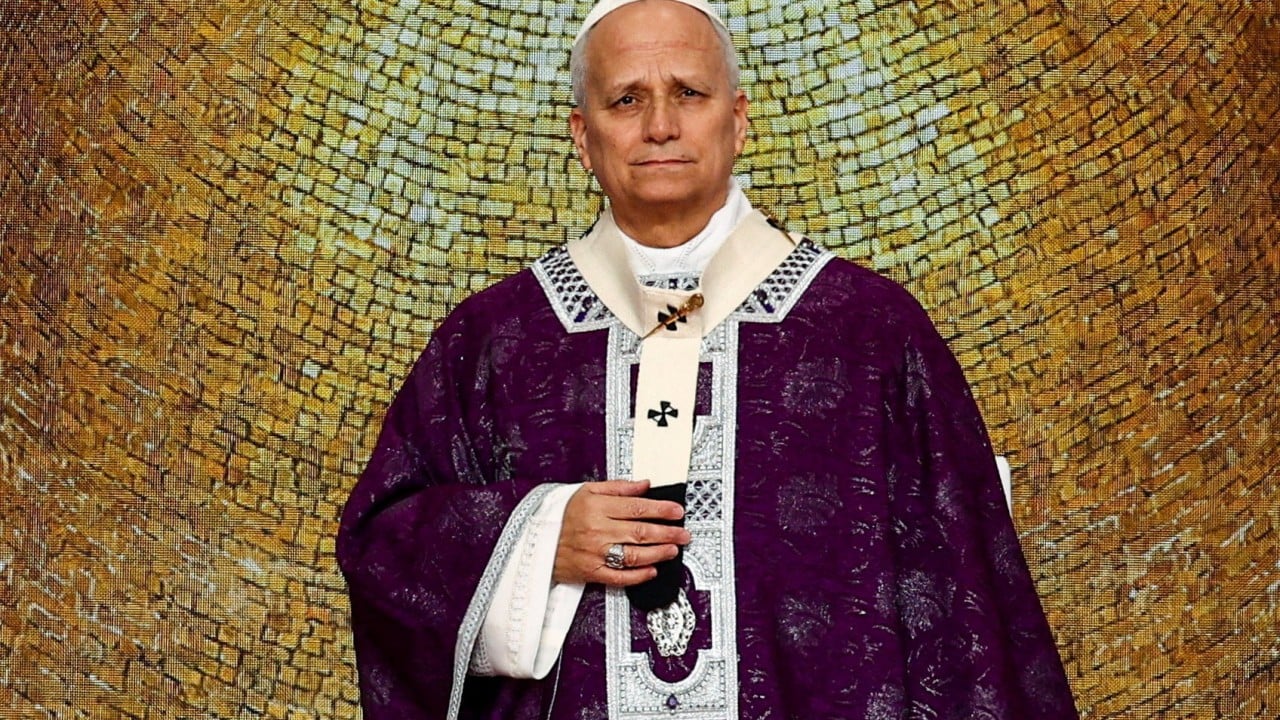
The Pentagon is working overtime to convince the public that its relationship with the Vatican remains on stable ground, but the polished press releases are masking a fundamental collapse in diplomatic alignment. While Defense Department officials characterize recent friction as a mere difference of opinion on tactical implementation, the reality is a widening gulf over the morality of autonomous warfare. This isn't just about a disagreement on policy. It is a collision between the world's most powerful military machine and the century-old moral authority of the Catholic Church.
At the heart of the dispute is the Pentagon’s aggressive push into Autonomous Weapon Systems (AWS). Pope Leo has moved beyond general calls for peace, specifically targeting the logic of "algorithmic warfare" that removes human agency from the decision to take a life. The Vatican’s position is clear: a machine cannot possess a soul, and therefore, it cannot exercise the judgment required to deliver lethal force. The Pentagon, meanwhile, views these systems as a necessity for maintaining a competitive edge against near-peer adversaries who are not bound by the same ethical constraints. In similar news, take a look at: Khawaja Asif and the Digital War of Words with Israel.
The Illusion of Policy Alignment
The official line from the Department of Defense suggests that their "Responsible AI" guidelines satisfy the Vatican’s ethical demands. They point to the requirement for "appropriate levels of human judgment" as a bridge between secular military strategy and religious doctrine. This is a PR sleight of hand.
The Vatican’s diplomats are well aware that "appropriate levels" is a flexible term. In high-speed combat environments, the window for human intervention shrinks to milliseconds. When the human is only there to press a "cancel" button on a process they don't fully understand, the human element becomes a vestigial organ. The Holy See isn't asking for a human in the loop; they are demanding a human in command. The Pentagon’s current trajectory favors speed over deliberation, a choice that Pope Leo has labeled a "surrender of the human spirit to the cold logic of the processor." Al Jazeera has provided coverage on this fascinating issue in extensive detail.
The Shadow of Project Replicator
Much of the recent tension stems from Project Replicator, the Pentagon’s ambitious plan to field thousands of cheap, expendable autonomous units. To the military, this is a way to offset the mass of larger traditional forces. To the Vatican, this is the beginning of the "devaluation of the individual."
When machines fight machines, the threshold for entering a conflict drops significantly. The Church argues that the "blood price" of war has historically acted as a deterrent. By removing the immediate risk to one's own soldiers through mass-produced robotics, the Pentagon may be making war more palatable to the public and more frequent in practice. Investigative circles within Rome suggest that the Pope’s upcoming encyclical will go further than any previous document in condemning the industrialization of "bloodless" slaughter.
The Ghost in the Machine
Defense analysts often argue that AI will actually make war "cleaner" by reducing collateral damage through superior targeting. This is the argument they use to mollify religious critics. If a drone can identify a target with 99% accuracy, isn't that more moral than a human pilot making a mistake in the heat of a dogfight?
The Vatican rejects this utilitarian math. Their concern is not the accuracy of the strike, but the moral accountability of the act. If an autonomous system commits a war crime, who goes to trial? You cannot imprison a line of code. You cannot excommunicate a motherboard. This "accountability gap" is a black hole in international law that the Pentagon has yet to adequately address. They speak of "command responsibility," but that concept is stretched to the breaking point when a commander is deploying a swarm of five thousand drones operating on decentralized logic.
Internal Dissent and the Catholic Officer Corps
The rift isn't just happening at the diplomatic level. It is vibrating through the ranks. A significant percentage of the United States military identifies as Catholic. When the Pope issues a direct moral challenge to the very technology these officers are tasked with developing and deploying, it creates a crisis of conscience.
Behind closed doors, some Pentagon officials are concerned about a "conscientious objector" movement within the tech-heavy branches of the service. If the Holy See declares the use of certain autonomous systems to be a "grave sin," the recruitment and retention of top-tier talent could crater. This is the nightmare scenario for the Joint Chiefs: a military where the brightest minds refuse to work on the most advanced systems because their faith forbids it.
The Geopolitical Chessboard
The Pentagon's refusal to back down is fueled by the fear of a "Sputnik moment" in artificial intelligence. They see the Vatican’s interference as a luxury that the United States cannot afford while competitors are racing toward full autonomy.
- Asymmetric Pressure: While the US deals with moral critiques from the Vatican, other global powers face no such internal or external religious pressure.
- The First-Mover Trap: The Pentagon believes that whoever masters autonomous swarms first will dictate the terms of global security for the next century.
- The Silicon Valley Connection: Private tech firms, many of whose employees share the Vatican’s concerns, are becoming increasingly hesitant to sign defense contracts, citing the same ethical "black box" problems.
The Vatican’s strategy is to build a global consensus that treats autonomous weapons like landmines or chemical weapons—tools that are so inherently inhumane that their use is a stain on any nation. They are successfully lobbying European allies, many of whom are already more skeptical of AI warfare than the Americans. This creates a secondary problem for the Pentagon: interoperability. If NATO allies refuse to use or even support the infrastructure for autonomous systems, the US military's integrated strategy falls apart.
The Rhetoric of De-escalation
Publicly, the Pentagon’s spokespeople use words like "dialogue" and "mutual respect." They insist that the Secretary of Defense and the Vatican’s Secretary of State are in constant communication. This is true, but "communication" is not the same as "agreement." The transcripts of these meetings, if they were ever made public, would reveal a conversation occurring in two different languages. One side speaks of "kinetic efficiency" and "force multipliers"; the other speaks of "natural law" and "the dignity of the person."
The Pentagon has attempted to frame its AI development as a "defensive necessity." They argue that these systems will be used primarily to intercept incoming missiles or protect shipping lanes. But the Vatican’s analysts are not naive. They see the offensive potential inherent in any "defensive" swarm. The transition from a defensive shield to an offensive sword is nothing more than a software update.
The Problem of Data Bias
Another point of contention is the data used to train these autonomous systems. The Vatican has raised alarms about "digital colonialism," where AI systems trained on Western data sets might misinterpret the behaviors or intentions of people in the Global South, leading to catastrophic errors in judgment.
Military AI is only as good as the scenarios it has been fed. If the training data lacks the nuance of local cultures, the "judgment" the Pentagon speaks of becomes a series of biased stereotypes executed at supersonic speeds. The Church, with its global footprint, sees this as a direct threat to the marginalized populations it serves. They aren't just worried about the soldiers; they are worried about the civilians who will be caught in the "logic" of a machine that doesn't know how to see them as human.
A Conflict Without a Middle Ground
Most diplomatic rifts can be settled with a compromise—a bit of funding here, a slight change in wording there. This is different. You cannot have a "half-autonomous" weapon that satisfies a theologian who believes the entire concept is an abomination.
The Pentagon is betting that the sheer momentum of technological progress will eventually force the Vatican to modernize its views. They believe that once these systems are the industry standard, the Church will have no choice but to adapt its moral framework, just as it eventually did with other military advancements. But the current papacy is showing no signs of blinking. Pope Leo has signaled that he views this as a defining moral battle for the 21st century.
This isn't a misunderstanding. It is a fundamental disagreement on what it means to be human in the age of the machine. The Pentagon can play down the rift all they want, but the cracks are reaching the foundation. As the military moves from testing to deployment, the friction will only increase. The United States is finding that its most difficult adversary isn't a foreign power with a matching arsenal, but an old man in white who refuses to accept that killing can be outsourced to a chip.
The next phase of this conflict won't be fought in a boardroom or a press briefing. It will be fought in the hearts of the programmers and the commanders who have to decide if they are serving a mission or a machine. If the Pentagon continues to ignore the ethical gravity of the Vatican's warnings, they may find themselves with a high-tech arsenal that their own people are afraid to use.
Stop looking at the diplomatic schedules and start looking at the doctrine. The Pentagon is building a future where the machine is the master of the battlefield, while the Vatican is desperately trying to keep the human at the center of the story. These two visions cannot coexist. One will eventually have to break.