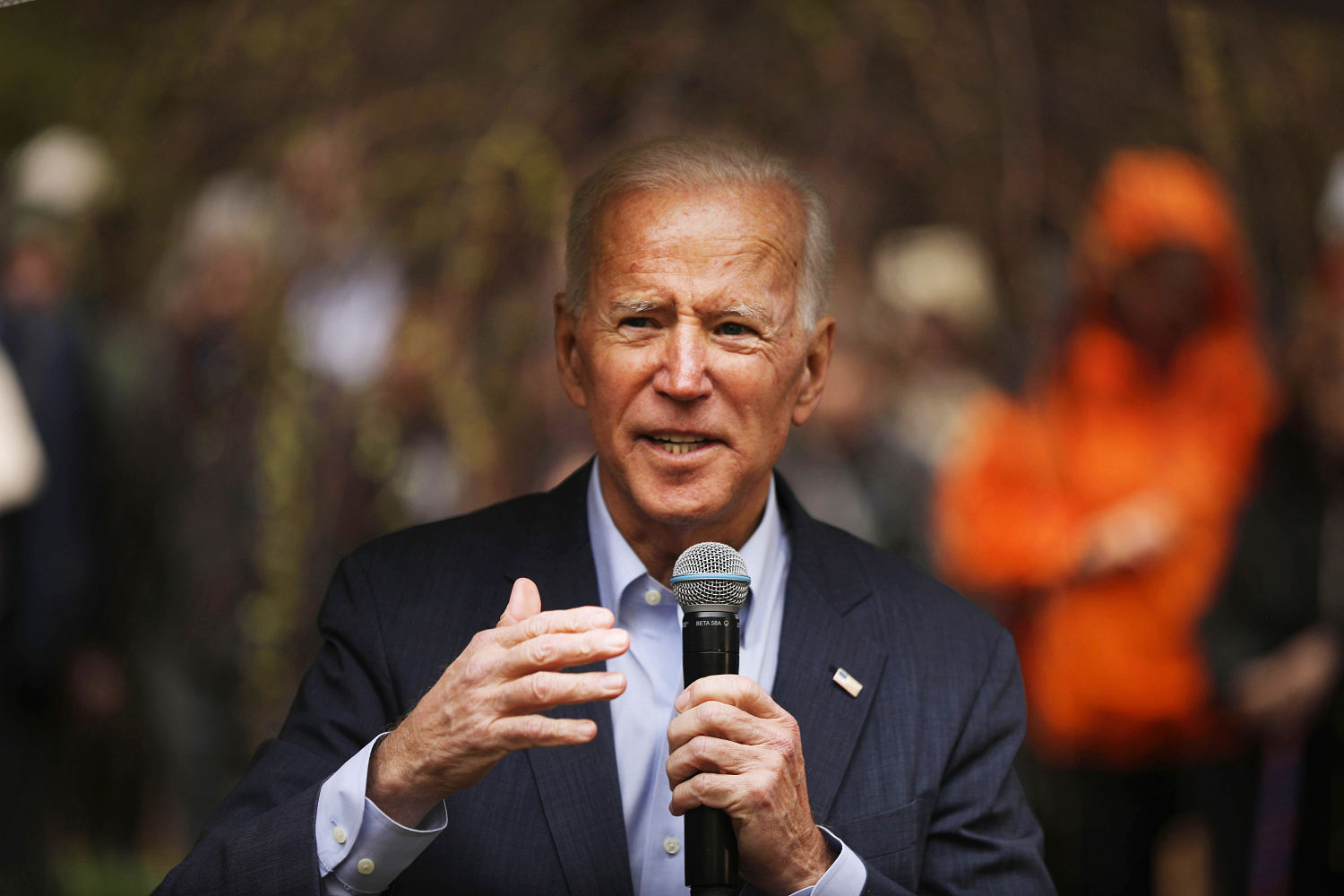
Joe Biden’s promise that the Republican Party would experience an epiphany after Donald Trump left office was the foundational myth of his presidency, and its total collapse has fundamentally altered the DNA of Democratic politics. Speaking to voters in Nashua, New Hampshire, seven years ago, Biden staked his political brand on the idea that Trump was a historical aberration, a temporary fever that would break once the traditional guardrails of Washington were restored. Instead, Trump’s subsequent recapture of the White House and his absolute dominance over the conservative movement proved that the fever was actually the new normal. Democratic voters have abandoned the dream of a bipartisan restoration, replacing it with a hardened, transactional demand for institutional warfare.
The shift is visible in the data and felt in the pockets of the party that once prided itself on institutional norms. According to polling conducted last year, 65 percent of Democrats now want their congressional representatives to block Republican initiatives even if it results in total legislative gridlock. Contrast that with the start of Trump’s first term, when a clear majority of Democrats preferred compromise over confrontation. The romantic notion of the Senate cloakroom, where rivals clashed by day and drank whiskey by night, has died a quiet death.
The Institutionalist Blindspot
For decades, the leadership class of the Democratic Party operated under a shared psychological framework forged during the late twentieth century. Biden, alongside figures like Nancy Pelosi and Chuck Schumer, viewed political polarization as a product of bad manners and individual personalities rather than structural incentives. They believed that the machine of American governance possessed an inherent homeostatic quality. When pushed too far out of alignment, it would naturally snap back into place.
This mindset ignored twenty years of institutional decay. The reality is that the Republican base had been sorting itself into an ideological monoculture long before Trump descended his golden escalator. The transformation was structural, driven by geographic polarization, a fragmented media environment, and a primary system that systematically punishes moderation.
When Biden predicted that his "Republican friends" would change their tune, he was misreading fear as temporary cowardice. It was actually structural survival. A Republican lawmaker who bucked the populist wave did not face a loss of social standing at Washington dinner parties. They faced an immediate, well-funded primary challenge that would end their career. By treating this systemic transformation as a temporary psychological hiccup, the Democratic establishment spent years preparing for a political partner that no longer existed.
The Mirage of the Obama Breakthrough
The epiphany doctrine was not entirely original. It was a direct descendant of the political strategy that hobbled the early years of the Obama administration. In 2012, after winning a second term, Barack Obama similarly predicted that the Republican "fever" would break once the reality of his re-election sank in. Instead, the opposition hardened, culminating in the total blockade of a Supreme Court nomination and the eventual rise of the Tea Party.
The failure to learn this lesson came down to a misinterpretation of the 2020 election results. The Biden campaign viewed their victory as a national exorcism, a mandate for normalcy. What they failed to see was that Trump’s loss was largely a referendum on his chaotic management of a once-in-a-century pandemic, not a rejection of his underlying political philosophy. The voters who rejected the chaos did not necessarily reject the policy agenda.
By the time the Democratic establishment realized the base of the opposition had not shrunk, the structural advantage had already shifted. The illusion that a core of institutionalist Republicans would eventually seize back control of their party was completely shattered when the movement rebuilt itself around the exact same figures who led the populist revolt.
The Grassroots Revolt Against the High Road
The death of the epiphany has triggered an aggressive realignment in Democratic primary politics, where voters are actively punishing candidates who preach the gospel of conciliation. The traditional path to advancement within the party—waiting one’s turn, building consensus, and appealing to moderate suburbanites—is being rejected in favor of an unapologetic combativeness.
Consider recent special elections where establishment-backed candidates, running on records of bipartisan achievement, were soundly defeated by progressive activists promising total resistance. The message from the rank-and-white voter is unmistakable. The era of taking the high road while the opposition plays by a different set of rules is over.
This internal fury is driving a massive strategic pivot. Political consulting firms that once advised clients to soften their rhetoric to appeal to independent voters are rebranding themselves around conflict. The focus has shifted from persuasion to mobilization. If the opposition cannot be reasoned with, the new logic dictates, they must be overwhelmed by raw numbers.
Democratic Voter Preferences (2017 vs. 2025)
==================================================
Year    Prefer Compromise    Prefer Holding Firm
--------------------------------------------------
2017           59%                   38%
2025           32%                   65%
==================================================
The Trap of Pure Resistance
While the shift toward a more combative posture satisfies the emotional demands of an exhausted base, it introduces an existential tactical dilemma. A political strategy built entirely around fighting fire with fire risks reducing the party's platform to mere opposition, leaving it without a distinct identity.
Some lawmakers have begun warning that a strategy of pure pugilism is an electoral dead end. The danger lies in misunderstanding the economic anxiety that drives the populist movement. Large segments of the opposition base are not motivated by abstract constitutional theories, but by a tangible sense of economic abandonment. When Democrats focus exclusively on institutional combat, they cede the ground of economic populism.
The challenge for the post-epiphany Democratic party is to construct an aggressive, material agenda that offers concrete solutions for the working class while simultaneously engaging in the necessary legislative warfare. Winning an occasional election through high voter turnout is a temporary fix. Without a structural economic appeal that can chip away at the margins of the populist coalition, the cycle of gridlock and institutional erosion will only accelerate.
American politics has entered a period of enduring ideological conflict where the concept of consensus is treated as a sign of weakness. The Democrats did not choose this environment, but they have finally stopped pretending it doesn't exist. The party is no longer waiting for a change of heart from across the aisle. They are preparing for a long, generational war of political attrition.