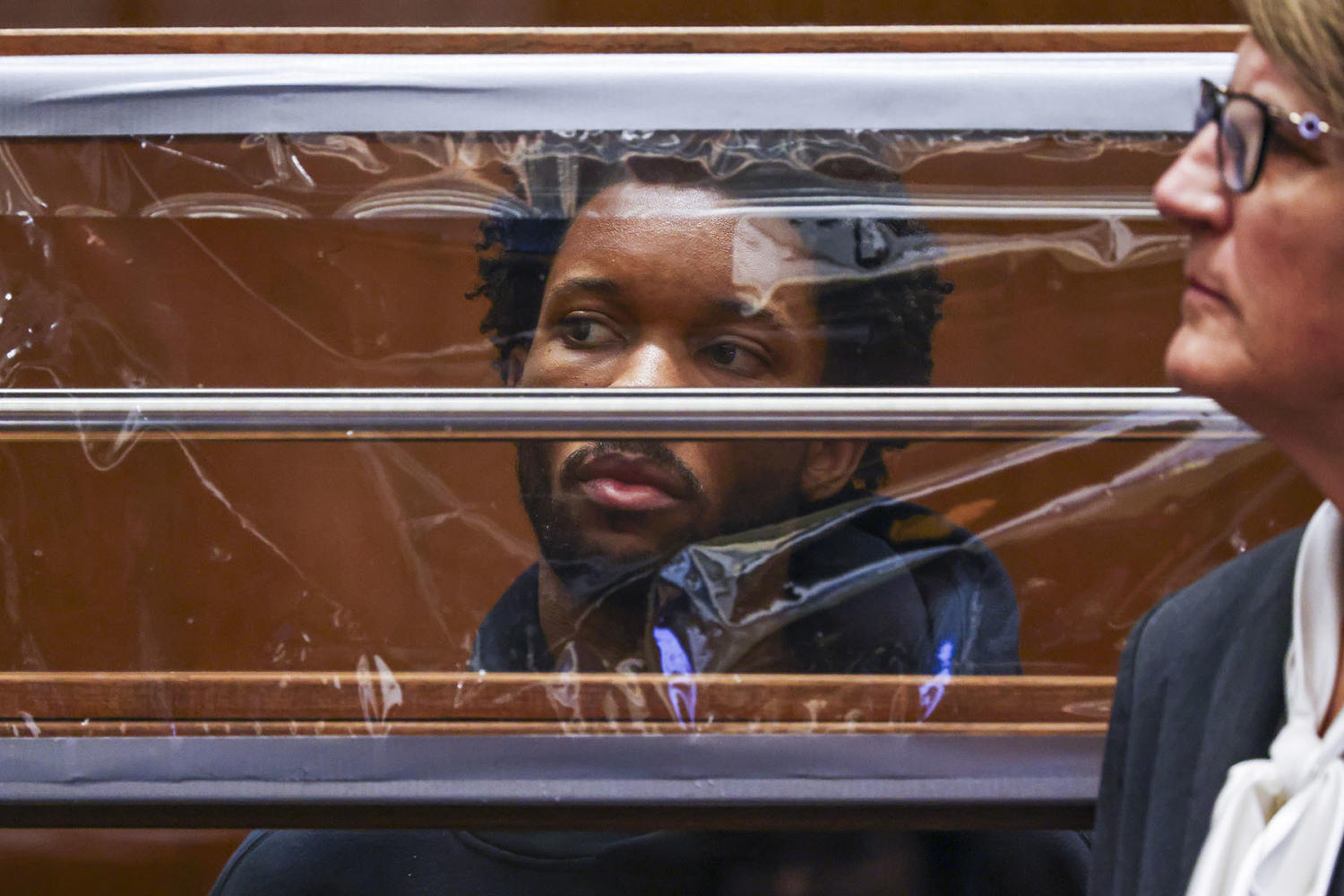
The meteoric rise of David Anthony Burke, known professionally as d4vd, has collided with a federal investigation of the most harrowing kind. Federal prosecutors in New York recently unsealed an indictment charging the nineteen-year-old "Romantic Homicide" singer with the possession of child sexual abuse material (CSAM). According to the government’s filing, investigators discovered a staggering volume of illicit images and videos stored within his personal iCloud account. This isn't a case of a misinterpreted social media post or a stray link. This is a targeted federal prosecution based on a massive digital footprint that authorities claim belongs exclusively to the artist.
The shockwaves are hitting an industry that was just beginning to treat the Houston-born artist as the future of indie-pop. Emerging from the world of Fortnite montages to chart-topping dominance, d4vd represented the ultimate Gen-Z success story. Now, that narrative is being replaced by a criminal docket that carries a mandatory minimum sentence of five years and a maximum of twenty. The severity of these charges usually triggers an immediate distancing from labels and partners, yet the complexities of his digital life and the mechanisms of the Apple ecosystem remain central to the defense’s uphill battle.
The Digital Audit Trail
Federal investigations into cloud-based storage rarely begin with a random search. They typically start with a NCMEC (National Center for Missing & Exploited Children) report. When a service provider like Apple detects known hashes—digital fingerprints of previously identified illegal content—moving through their servers, they are legally required to notify authorities. In this instance, the sheer volume cited by prosecutors suggests a long-term accumulation rather than an accidental download.
The prosecution’s case hinges on the "unique identifiers" associated with the account. Every iCloud account is tied to a series of devices, IP addresses, and login credentials. To prove possession, the government must demonstrate that Burke not only owned the account but was the sole person with access to its contents. This is where the technical reality of modern celebrity becomes a factor. Many high-level artists share account access with managers, assistants, or creative partners. However, the private nature of an iCloud backup, which often includes personal messages and synchronized photo libraries from a primary smartphone, makes a "shared access" defense notoriously difficult to sustain in federal court.
The Mechanics of Federal CSAM Prosecutions
The Department of Justice maintains a conviction rate north of 90% in cases involving digital possession. They do this by utilizing specialized forensic software that can reconstruct deleted files and track the exact timestamps of when a file was viewed or moved. In the d4vd case, the indictment alleges that the material was not merely "present" but actively curated within the account.
Prosecutors often use a "nexus of use" strategy. This involves showing that the same device used to upload a song to Spotify or post a selfie to Instagram was also the device used to access the illegal material. If the timestamps for a professional career milestone and the viewing of illicit content overlap on the same hardware, the argument for third-party interference evaporates.
The Role of Technology Providers
Apple’s role in this case highlights a tension the company has struggled with for years. While they market themselves as the champions of user privacy, their automated scanning systems are the primary funnel for federal CSAM referrals.
- Hash Matching: Apple uses a database of known illegal images to scan file uploads.
- Metadata Analysis: Files often contain GPS coordinates or device serial numbers.
- Log Files: Every time a user logs in, a "digital breadcrumb" is created.
If the evidence is as extensive as the prosecution claims, the defense will likely pivot toward a mental health or age-based mitigation strategy. Burke was a minor during the early stages of his sudden fame. The transition from a bedroom gamer to a global touring artist is a psychological gauntlet that defense attorneys often argue contributes to a detachment from reality or a lapse in judgment. However, in the eyes of federal law, the age of the possessor is secondary to the age of the victims depicted in the files.
Industry Silence and the Financial Fallout
The music industry is currently in a state of paralysis regarding d4vd’s catalog. Usually, a scandal involving a public outburst or drug use results in a PR-managed "rehab" stint. Charges of this nature are different. They are radioactive. Streaming platforms face immense pressure to remove content from artists facing such indictments, though they rarely do so until a conviction is reached to avoid breach-of-contract lawsuits.
Labels invested millions in d4vd’s branding as a sensitive, vulnerable songwriter. That image is now irreconcilable with the details of the indictment. The financial implications extend beyond touring and merch. Publishing rights, sync deals for film and television, and high-profile festival slots are disappearing. This is the "kill switch" of a career. When the government alleges the exploitation of children, the commercial infrastructure around an artist tends to dissolve overnight to protect the parent corporation’s stock price.
The Burden of Proof and Precedent
History shows that federal prosecutors do not bring charges against high-profile figures unless the evidence is overwhelming. They prefer "slam dunk" cases to avoid the embarrassment of a public acquittal. In the d4vd matter, the defense will likely scrutinize the "chain of custody" for the digital evidence. They will ask if the account was compromised. They will investigate if any malware could have autonomously downloaded files—a defense that has historically failed in almost every major federal trial due to the specific ways modern operating systems handle file permissions.
The legal process will be slow. It will involve months of "discovery," where the defense gets to see the exact images and data logs the government is holding. During this time, the public is left with a void. On one side, there is the artist who sang about heartbreak and longing; on the other, there is a federal defendant accused of participating in a digital ecosystem that thrives on the suffering of the most vulnerable.
Beyond the Headline
The focus on d4vd’s celebrity often obscures the reality of the crimes alleged. Possession is not a victimless act; it is the fuel for a global industry of abuse. Every image stored in a cloud represents a real-world crime against a child. While the internet debates the "cancellation" of a pop star, the legal system is focused on the data. The data doesn't care about hit records or sold-out shows. It only tracks bits, bytes, and timestamps.
This case serves as a grim reminder that the digital world is never truly private. The tools we use to build our lives and careers are the same tools that can be used to dismantle them. As the court dates approach, the industry is forced to look in the mirror and ask how a star could be born and burned out in the same digital space. There is no simple path back from an indictment of this caliber. The evidence remains locked in a server, waiting to be presented in a courtroom where talent is irrelevant and the law is absolute.
The legal system moves with a cold, mechanical precision that does not account for artistic potential.