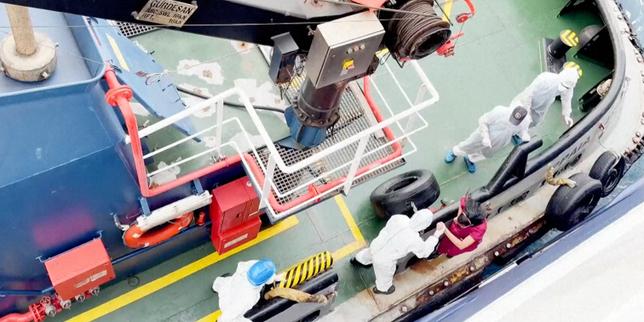
A luxury cruise should be about icebergs and open seas, not a high-stakes standoff over a viral outbreak. The recent situation surrounding the Hondius, a polar expedition vessel, has turned into a massive headache for everyone involved. We’re looking at a scenario where the World Health Organization (WHO) and the Spanish government can’t even agree on the basic facts of the case. It’s a mess. At the center of it all is Hantavirus, a pathogen we usually associate with dusty barns and rodents, not a high-end ship in the middle of the ocean.
What’s truly alarming isn't just the presence of the virus. It’s the WHO’s suspicion that we might be seeing interhuman transmission. If that’s true, it changes the entire playbook for how we manage this disease. Traditionally, Hantavirus stays between mice and men. If it’s jumping from person to person on a boat, we have a problem that a simple quarantine might not solve. Spain’s refusal to let the ship dock initially created a diplomatic and humanitarian logjam that left hundreds of passengers in limbo. You’ve got to wonder how a modern maritime system breaks down this quickly.
Why the Hondius Case Shatters Everything We Know About Hantavirus
Hantavirus is usually a "dead-end" infection in humans. You breathe in dried rodent droppings or urine, you get sick, and that’s the end of the line. You don't pass it to your spouse or the person sitting next to you at dinner. At least, that’s what the textbooks say. The WHO is now looking at the Hondius and suggesting otherwise. This isn't just a minor technicality. It’s a terrifying prospect for the travel industry.
When the WHO flags "interhuman transmission," they aren't doing it for fun. They’ve likely seen a cluster of cases that can't be explained by a single shared exposure to a rodent-infested storage locker. Think about the layout of a cruise ship. It’s a closed loop. Air is recirculated, people eat together, and living quarters are tight. If the virus has mutated or adapted to move between people, a ship is the perfect laboratory for it to spread. This suspected shift is why the Spanish authorities went into full-blown panic mode.
Spain’s Ministry of Health took a hardline stance. They blocked the Hondius from docking, citing the risk to public health. But here’s the kicker: the WHO was reportedly pushing for the ship to be allowed into port so the sick could be treated and the outbreak studied under controlled conditions. This created a bizarre imbroglio where the international health body and a sovereign nation were actively working against each other while people were suffering on board.
The Science of Hantavirus and Why It’s Lethal
We need to talk about what this virus actually does to the body. It’s not a common cold. Most Hantavirus strains in the Americas cause Hantavirus Pulmonary Syndrome (HPS). It starts with fever and muscle aches, but it quickly moves to the lungs filling with fluid. You’re basically drowning from the inside out. The mortality rate is staggering—often around 38%.
- Early Symptoms: Fever, chills, fatigue, and deep muscle aches in the thighs and back.
- The Pivot: About four to ten days later, the coughing and shortness of breath start.
- The Crisis: Rapid respiratory failure.
In Europe and Asia, you’re more likely to see Hemorrhagic Fever with Renal Syndrome (HFRS). This version attacks the kidneys. While the mortality rate is lower than the pulmonary version, it’s still a brutal illness that requires intensive hospital care. The Hondius situation is particularly tricky because the ship had been traveling through various regions, making it harder to pin down exactly which strain they’re dealing with without extensive lab work that you just can't do in a ship’s small infirmary.
The Spanish Standoff and Maritime Law
Spain’s refusal to let the ship dock wasn't just about fear. It was about jurisdiction. Under International Health Regulations, ships are supposed to be given "free pratique"—permission to enter a port and take on passengers or cargo—unless there's a clear infectious threat. Spain argued the threat was too high. The WHO argued that refusing entry only makes the situation more dangerous because you can't contain what you can't monitor.
I’ve seen this before during the early days of the 2020 pandemic. When countries close their doors, ships become floating petri dishes. The Hondius was stuck in a legal gray zone. If the Spanish government wouldn't let them in, where were they supposed to go? Forcing a ship to stay at sea with a potentially new form of viral transmission is a recipe for disaster. It increases the viral load on the ship and ensures that nearly everyone on board will eventually be exposed.
How Rodents Get On Modern Ships
You’re probably thinking, "How does a luxury expedition ship get a rat problem?" It's easier than you think. Ships are massive, complex structures with thousands of nooks and crannies. Rodents can board via mooring lines, inside food crates, or during maintenance periods in dry dock. Once they’re in, they stay in the "bones" of the ship—the areas behind walls and under floors where passengers never go.
Preventing a Floating Outbreak
If you’re running a vessel, you can't just hope for the best. You need a proactive strategy.
- Mooring Line Guards: Those large plastic discs on the ropes aren't just for show. They keep rats from climbing up from the pier.
- HEPA Filtration: Standard HVAC systems aren't enough. You need medical-grade filtration to catch viral particles if they become airborne.
- Rigid Cargo Inspection: Every crate of kale and every box of bedsheets needs to be checked for signs of nesting or droppings before it enters the hull.
- Thermal Imaging: Some modern ships use thermal cameras in cargo holds to detect the heat signatures of small animals.
Most people don't realize that the "dust" created when cleaning up after rodents is the primary delivery vehicle for Hantavirus. If a crew member sweeps a storage area without a mask, they’re inhaling the virus directly. On a ship, that dust can get sucked into the ventilation system. This is why the suspicion of person-to-person spread is so significant. It might not be the rats anymore; it might be the air itself.
What This Means for Future Travelers
If you have a cruise booked, don't cancel it yet, but you should be asking better questions. We’re entering an era where "standard cleaning" isn't enough. You want to know about the ship’s air turnover rate. You want to know if they have a dedicated medical officer trained in infectious diseases, not just a general practitioner who can patch up a scraped knee.
The Hondius incident is a wake-up call for the entire industry. It’s a reminder that our global connectivity is also a massive vulnerability. When a ship becomes a pariah, the system has failed. The imbroglio between Spain and the WHO shows that we don't have a solid plan for when the next "weird" virus shows up. We’re still making it up as we go, and that’s a dangerous way to run a global travel network.
Check the latest health notices from the CDC and the WHO before you board. If a ship has a history of sanitation issues or "vessel sanitation program" failures, stay away. Your safety depends on the invisible infrastructure of the ship—the parts you'll never see but that keep you breathing. Pay attention to the news coming out of Spain. The final report on the Hondius will likely change maritime health protocols for the next decade. Don't be the last to know how these rules are shifting. If you feel sick after a trip, tell your doctor exactly where you were. Don't leave out the details about the ship. It could save your life.