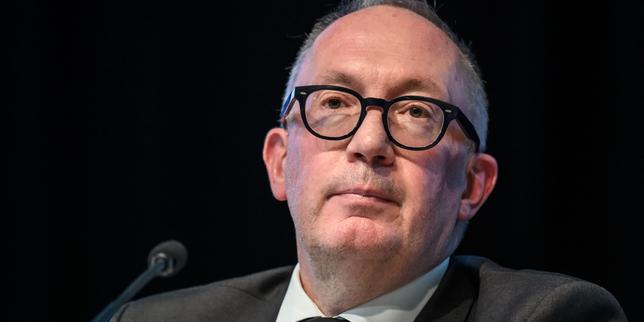
The long-awaited interrogation of Nicolas Féraud, the president of the commune of Crans-Montana, marks a significant shift in the criminal investigation into the devastating fire that tore through the heart of the Swiss ski resort in early 2024. For months, the silence from the Valais public prosecutor’s office and the local administration had fueled a growing sense of unease among residents and property owners. The news that Féraud has finally been heard by investigators confirms that the probe is moving beyond technical reports and into the realm of administrative responsibility. This isn't just about how a fire started. It is about whether the very people tasked with protecting the prestigious "Sun Plateau" failed to address known vulnerabilities before the smoke began to rise.
The fire was not a minor incident. It gutted significant portions of the local infrastructure, causing millions in damages and threatening the reputation of one of the world's most exclusive alpine destinations. In the immediate aftermath, the focus was predictably on the physical cause—electrical faults, accidental ignition, or perhaps human negligence. However, the legal trajectory has now pivoted. By bringing in the head of the commune for questioning, the authorities are looking at the framework of safety regulations, building permits, and the implementation of fire prevention mandates that fell under his jurisdiction.
The Weight of the Interrogation
Nicolas Féraud did not walk into that meeting as a bystander. In the Swiss political system, the president of a commune carries a heavy burden of legal accountability for the safety of the public domain. When an event of this scale occurs, the investigators must determine if there was a "breach of duty." This doesn't imply Féraud held the match, but it does ask if he ignored the warnings.
Valais is a region where tradition and modern luxury often collide. The pressure to develop real estate and maintain the high-gloss image of Crans-Montana is immense. Sources close to the investigation suggest that the questioning touched on several sensitive points, including the history of the buildings affected and whether previous safety inspections had highlighted risks that were never corrected. This is the classic "red tape" nightmare, where administrative oversight meets physical catastrophe.
The interrogation lasted several hours. While no formal charges have been filed against the president at this stage, the mere fact that he was "heard" as part of a criminal proceeding sends a clear message to the public. The days of treating this as a simple "act of God" are over. The justice system is peeling back the layers of municipal management to see what lies beneath the surface of the resort's polished exterior.
Crumbling Infrastructure Beneath the Luxury
Crans-Montana presents an image of pristine perfection. Yet, behind the five-star facades, many of the resort’s structures date back to the construction booms of the 1960s and 70s. These buildings often lack the compartmentalized fire safety systems required by modern Swiss law. Upgrading these properties is expensive and disruptive, often leading to a "wait and see" approach by both private owners and local authorities.
Investigators are reportedly examining the timeline of safety audits conducted over the last decade. If a pattern of ignored recommendations emerges, the legal liability for the commune could be staggering. In Switzerland, the principle of "causality" is strictly applied. If it can be proven that the fire spread more rapidly or caused more damage because the commune failed to enforce its own safety codes, the political and financial fallout will be felt for years.
The difficulty lies in the complexity of Valaisan politics. The commune of Crans-Montana was formed through a merger of several smaller entities, a process that created a massive administrative beast. Information gets lost in the cracks. Responsibility is often shifted between departments. Féraud, as the man at the top, is now being forced to answer for these systemic gaps.
The Economic Stakes of the Investigation
This isn't just a local news story. It is a business story with global implications. Crans-Montana is currently vying for a spot as a permanent fixture on the international sporting calendar, including hosting the 2027 Alpine World Ski Championships. Any perception that the resort’s infrastructure is unsafe or that its leadership is embroiled in a criminal negligence scandal could jeopardize the massive investments flowing into the region.
Investors hate uncertainty. The fire has already caused a dip in confidence among certain real estate sectors. If the investigation reveals a culture of cutting corners, the premium prices currently commanded by Crans-Montana property could begin to slide. The local economy is entirely dependent on tourism and high-end residential development. Any stain on the "Swiss Quality" brand is treated with the utmost gravity by the cantonal government in Sion.
The local population is divided. Some see the investigation into Féraud as a necessary step toward transparency. Others view it as a politically motivated attack on a leader who has navigated the commune through difficult transitions. Regardless of personal feelings, the data shows that fire incidents in older alpine structures are becoming more frequent as electrical systems age and climate conditions fluctuate.
Looking Beyond the Spark
To understand the "why" of the Crans-Montana fire, one must look at the mountain itself. High altitude complicates fire response. Water pressure can be inconsistent, and the chimney effect in steep valleys can turn a small flame into an inferno in minutes. These are known variables. The investigation is essentially asking if the commune’s leadership accounted for these variables in their emergency planning.
The questioning of Féraud also likely touched on the response time and the coordination between the local fire brigades and the cantonal support teams. In the minutes after the fire broke out, there were reports of confusion regarding access routes. These routes are supposed to be maintained and kept clear by the commune. If they were blocked by snow or construction debris, that falls squarely on the shoulders of the local administration.
The Swiss legal process is notoriously slow and deliberate. We should not expect a sudden indictment tomorrow. Instead, this interrogation is the first domino in a long sequence of depositions. The prosecutor will now cross-reference Féraud’s statements with technical evidence from the site and internal documents seized from the commune’s offices.
The Myth of the Unsinkable Resort
For decades, Swiss ski resorts have operated under a veil of perceived invincibility. The wealth concentrated in these villages often creates a sense that they are immune to the systemic failures that plague larger cities. This fire shattered that illusion. It proved that even in a place where a studio apartment costs a million francs, the basic laws of physics and the consequences of administrative neglect still apply.
The interrogation of Nicolas Féraud is a sobering reminder that titles do not grant immunity. In the coming months, the focus will likely shift to the specialized technical experts who will determine the exact point of failure. But the human element—the decisions made in wood-paneled offices long before the first smoke was smelled—will remain the core of the criminal case.
The people of Crans-Montana are waiting for more than just an insurance payout. They are waiting for an admission that the safety of the public should never be secondary to the speed of development. As the investigation deepens, the pressure on Féraud and his administration will only intensify. The "Sun Plateau" is currently under a cloud that won't dissipate until every question asked by the investigators is answered with total clarity.
There is no room for ambiguity when lives and livelihoods are on the line. The prosecutor’s office has signaled that no one is above scrutiny. This is the reality of modern governance in the Alps. You cannot promote a world-class destination while operating on a third-class safety budget. The fire was the symptom. The investigation into the commune’s leadership is the beginning of the cure.
Safety standards in the Valais are currently undergoing a massive re-evaluation. Every mayor in the region is watching the Féraud case with bated breath, knowing that their own files could be next if a similar tragedy strikes. This is the end of the era of "gentleman's agreements" in alpine development. From now on, every permit and every inspection will be scrutinized through the lens of potential criminal liability. The Crans-Montana fire has changed the rules of the game for every mountain town in Switzerland.
The interrogation of the president is a necessary, albeit painful, step in the evolution of the resort. It forces a confrontation with the past to secure the future. If the commune emerges from this with a cleaner, more transparent system of oversight, the fire may eventually be seen as the catalyst for a much-needed professionalization of local government. But for now, the smoke hasn't fully cleared, and the legal heat is only rising. Owners and visitors alike deserve to know that the buildings they inhabit are as solid as the mountains they sit upon. Anything less is a betrayal of the trust that has built Crans-Montana into the icon it is today.
The focus now turns to the evidence gathered during the site analysis. If the technical findings contradict the administrative records provided by the commune, the case enters a much more dangerous phase for those in power. Discrepancies in maintenance logs or the discovery of unauthorized modifications to the buildings would turn a general inquiry into a focused prosecution. Every signature on a safety certificate is now a potential piece of evidence. The investigators are not just looking for what happened; they are looking for who allowed it to happen. In the quiet, high-altitude air of Crans-Montana, the sound of the legal machinery turning is louder than ever. The resort is at a crossroads, and the path forward will be dictated by the findings of a prosecutor who seems determined to ensure that "Swiss Made" still means "Swiss Safe."
The immediate action step for the commune is clear: a total, independent audit of all public and large-scale residential infrastructure. Waiting for the conclusion of the criminal trial is a luxury the resort cannot afford. They must act now to restore confidence. This means moving beyond PR statements and into the hard work of retrofitting and rigorous enforcement. The fire was a wake-up call that cannot be snoozed. If Crans-Montana wants to host the world in 2027, it must first prove it can protect its own citizens today. The interrogation of Nicolas Féraud is just the start of that long, uphill climb.